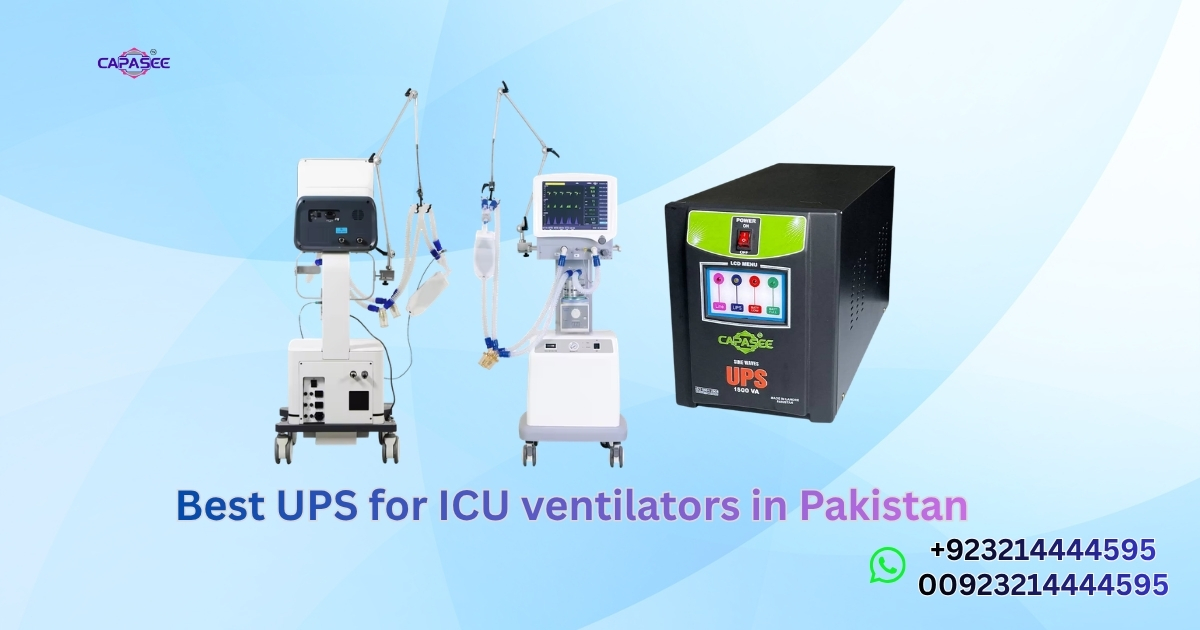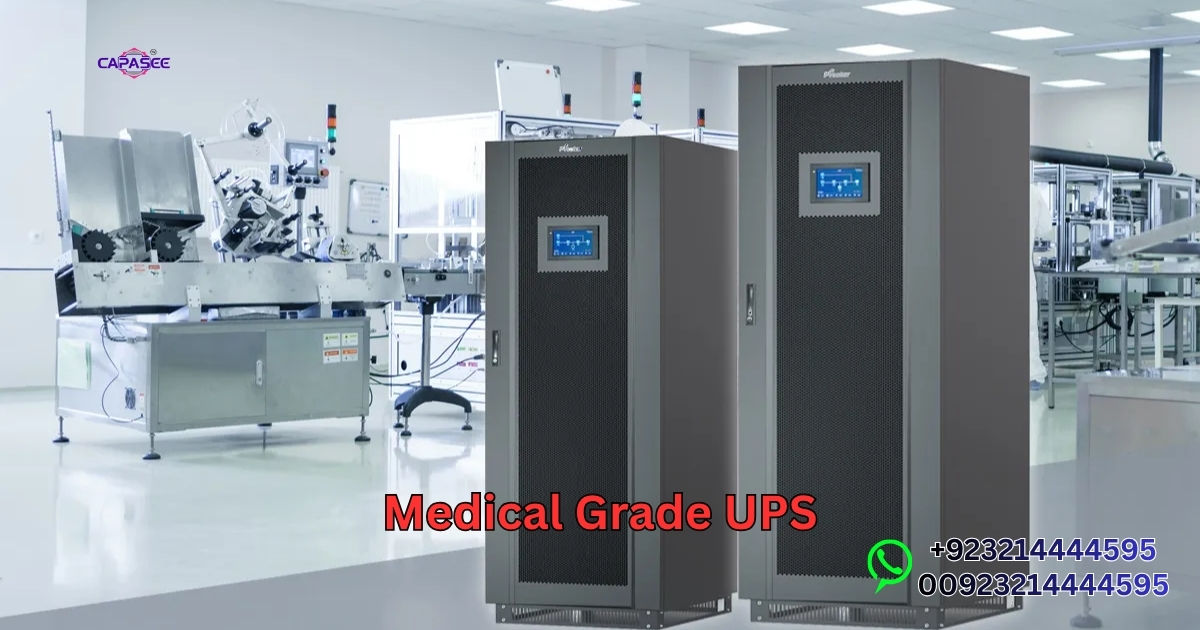
In an ICU, operating theatre, or dialysis room, every second of power loss has meaning that no hospital administrator would wish to deal with. But across most of Pakistan, from private hospitals in Karachi to diagnostic centres in Lahore, basic UPSs are safeguarding critical equipment that deserves so much more. Not only is a medical grade UPS a backup power device, but it is also a patient safety instrument designed to eliminate transfer time, reduce electrical noise, and satisfy the medical environment’s legal and ethical requirements for isolation.
This is a gap that is only revealed after an incident, usually. This guide, compiled by Capasee Electro Medical Engineering, will take you through it, from the mechanism of medical UPS technology to why it is better than regular UPS systems, what specifications you need to look for in a medical UPS in Pakistan and so on, and how you can choose your medical UPS for your facility the right way.
What Is a Medical Grade UPS and Why Is It Essential for Pakistani Healthcare Facilities?
A medical grade UPS is a specially engineered power protection system that is built to meet the highly demanding electrical safety and performance requirements of the medical environment. Unlike office or industrial UPS units, it is also certified to IEC 60601-1, which guarantees zero electromagnetic interference, full electrical isolation and instant switching during power failures. In Pakistan, where voltage instability and load shedding are a common occurrence, it is not a luxury; it’s a minimum requirement for healthcare facilities.
The Pakistan power network is one of the most erratic in the South Asian region, with a part of the country facing 8 to 12 hours of power cuts per day. A single voltage spike can cause all the damage to a machine worth millions of rupees that performs an MRI, or it could interrupt a ventilator mid cycle. Medical grade UPS systems are designed to prevent these risks at the source.
How a Medical Grade UPS Protects Critical Medical Equipment During Power Failures
There are three fundamental ways a medical grade UPS protects equipment; zero transfer time switching (usually less than 2 milliseconds), built in isolation transformers which isolate leakage current and active voltage regulation, which is able to compensate for fluctuations without transferring to the battery. Imagine a hospital in Lahore where a patient is breathing through a ventilator, after surgery and then when the power goes down, the UPS takes over seamlessly without indicating any power cut.
This is particularly important for patient monitoring equipment, infusion pumps, anaesthesia delivery systems and other equipment that can trigger alarms, reset dosing settings or lose data when it flashes. Another benefit for patients is that the isolation transformer keeps them safe from the danger of microshock, which is not a concern for standard UPS systems.
You May Also Read This Blog: Best UPS Brands in Pakistan
Difference Between Standard UPS and Medical Grade UPS Systems in Hospitals
A typical UPS is designed to safeguard data and to prevent equipment restarts. A medical grade UPS is configured to save lives. The biggest technical difference is the use of an isolation transformer, which keeps the leakage current below 500 microamperes, the limit recommended by international medical electrical safety standards.
The standard UPS will also take between 10 and 20 milliseconds to transfer, which is sufficient to reset sensitive digital medical equipment. Medical grade UPS systems are near zero transfer, meaning a near uninterrupted power supply at all times, regardless of what goes on to the grid outside.
Key Features to Look for in a Medical Grade UPS in Pakistan

The four most important elements to consider when choosing the medical grade UPS for a healthcare environment in Pakistan are; isolation transformer, transfer time, voltage regulation range, and battery autonomy. In the cities of Peshawar and Quetta, where the power quality is particularly bad, UPS systems must be capable of coping with the input voltage range of 140V to 280V without switching to battery unnecessarily.
One of the most common errors that facility managers make is underestimating the UPS capacity required for the current load and failing to consider future equipment additions or peak demands. It simply would not be worth purchasing a smaller protection device for a diagnostic lab, as the cost of a single damaged CT scanner is significantly more than the difference between a 10kVA unit and a 15kVA unit.
Battery Backup Time, Isolation Transformer and Voltage Regulation for Medical Devices
The battery backup time should be based on the average time of your outages at your facility, rather than the minimum outage time. The baseline for most urban hospitals in Pakistan is at least 30 to 60 minutes of full load backup with longer battery banks for the hospitals in areas where the duration of outages is higher. Medical grade UPS units offer external battery cabinet expansion, so that they can be scaled up as needs expand over time.
Voltage regulation is also essential. A medical grade UPS will keep the output voltage at 220V with a tolerance of ±2%, even when the input voltage is 140V or 280V, which will prevent the slow degradation of delicate microprocessor controlled medical devices due to sustained under or overvoltage conditions.
Best Medical Grade UPS Capacity for ICU, Operation Theater and Diagnostic Labs
Capacity needs to be determined with a load audit – a sum of all the wattage of the appliances to be powered by the UPS, plus a 20% to 25% headroom. The amount of protected power required by an ICU with six ventilators, patient monitors, infusion pumps and a nurse call system is normally between 5kVA and 10kVA.
The highest peak demand occurs at operating theatres, especially when the equipment is started up, which requires a motor current of 3 to 5 times its rated value. For most of the surgical suites in Pakistani private hospitals, the medical UPS of 10kVA to 20kVA with high crest factor tolerance is appropriate.
Recommended UPS Load Capacity by Medical Department
| Medical Department | Recommended UPS Capacity | Common Medical Equipment Supported |
| ICU | 3kVA – 10kVA | Ventilators, Patient Monitors |
| Operation Theater | 5kVA – 20kVA | Anaesthesia Machines, Surgical Lights |
| Diagnostic Labs | 2kVA – 15kVA | MRI, CT Scan, Ultrasound |
| Dental Clinics | 1kVA – 5kVA | Dental Chairs, X-Ray Systems |
| Small Clinics | 1kVA – 3kVA | Computers, ECG Machines |
Why Choose Capasee Electro Medical Engineering for Medical Grade UPS Solutions in Pakistan?
Capasee is one of the most trusted names supplying, installing and maintaining power protection systems for hospitals, diagnostic centres, and specialist clinics in Pakistan. Capasee Electro Medical Engineering uniqueness lies not only in the quality of medical grade UPS systems it provides, but also in the complete service the company offers with every installation, which includes site load auditing, post install commissioning and preventive maintenance.
Growing up in a professional relationship with Capasee consistently demonstrates two things; the technical depth of the Capasee installation team and the responsiveness of the after sales team. If you find a critical power system has a fault, you need a partner that is able to respond, not a brand that is shipping boxes.
Medical Grade UPS Installation, Maintenance and Technical Support by Capasee
The installation process starts with a thorough electrical load survey of the facility to determine which departments are required for dedicated UPS circuits, what their load profile (peak and average) is, and where the UPS cabinet should be placed for best cable run efficiency. All installations are performed by certified biomedical engineers and do not use general electricians, and meet PSQCA and IEC international standards.
Capasee preventive maintenance agreements cover scheduled battery health testing, capacitor testing, smart UPS firmware updates and load bank testing to ensure that the system performs at its rated capacity when it is needed. What distinguishes an 8 year UPS from a 3 year failure UPS is proactive maintenance.
Check More & Purchase: Our Products
Customized UPS Solutions for Hospitals, Clinics and Laboratories Across Pakistan
Each healthcare facility has unique power protection requirements. The needs of a 500 bed hospital in Islamabad are greatly different from those of a 5 chair dental clinic in Faisalabad. Capasee creates a custom medical grade UPS solution that is tailored to your actual load data, facility design, budget and foreseeable future expansion needs, and not a catalogue product.
The modular UPS configuration of Capasee is also available for large hospitals, where N+1 redundancy is essential, which means that no UPS failure should cause a power failure. This design, which is common in internationally accredited hospitals, is now being sought by ISO and JCI certified hospitals in Pakistan as well.
Benefits of Choosing Capasee Electro Medical Engineering
| Feature | Benefit for Healthcare Facilities |
| Professional Installation | Safe and compliant UPS setup |
| Technical Support | Reduced downtime in emergencies |
| Preventive Maintenance | Longer UPS lifespan |
| Customized Solutions | UPS systems tailored to hospital needs |
| Nationwide Service | Support available across Pakistan |
Medical Grade UPS Price in Pakistan – Buying Guide for Hospitals and Clinics
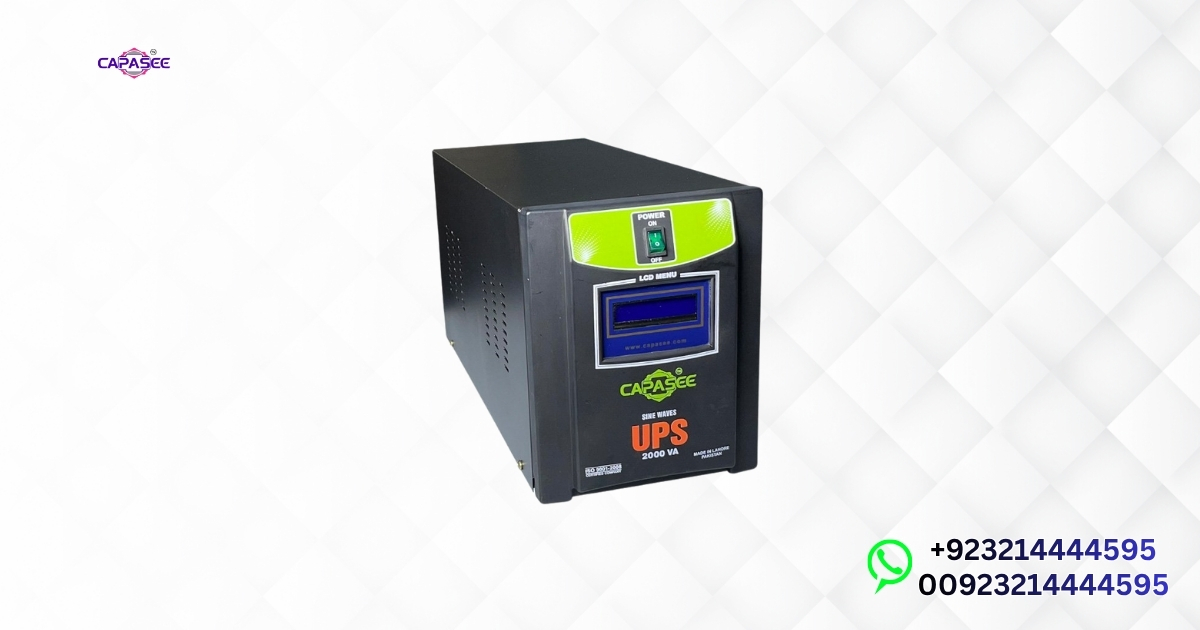
The cost of medical grade UPS in Pakistan ranges from its capacity to the brand, battery type, and whether it comes with an isolation transformer as standard or optional. The basic models for small clinics can be bought for as little as PKR 80,000, and the models for the hospital grade are available from PKR 700,000 to PKR 2,500,000 or even higher for high capacity setups.
The message Capasee always sends to its customers is that the costs per kVA are lower as the capacity of the power protection system increases, which is why it can be more cost effective to purchase fewer larger units in order to have fewer systems than to purchase several small units to protect individual departments. Usually, a single 20kVA medical grade UPS on a single floor is less costly than four 5kVA floor UPS’s.
Factors That Affect Medical Grade UPS Prices in Pakistan
There are various factors that directly impact the final medical grade UPS system price in Pakistan. The largest driver is battery technology, with standard battery types being valve regulated lead acid (VRLA) and lithium ion batteries with longer cycle life, quicker recharge and smaller footprint, though with higher initial cost. Other factors influencing final pricing include import duty, currency fluctuations and local after sales infrastructure.
If a facility needs longer battery life than 60 minutes, external battery cabinets would need to be added to the battery system and would be an additional cost. Don’t look at the units alone, a full quotation from Capasee for the system, including installation, commissioning and the first year of maintenance, is worth considering.
How to Select the Right Medical Grade UPS for Long Term Reliability
Begin with a professional load audit. Capasee provides this load audit as a free pre sales service for qualified healthcare facilities. Next, compare UPS capacity to your highest demand plus 25% headroom, choose the battery life based on the length of time you expect outages in your area, and check for medical certification from IEC 60601-1.
Please don’t just look at the price to make the purchase. A lower cost unit that is not properly isolated, has a transfer time of 20ms or is battery powered, will require additional equipment repairs and the replacement batteries that run at a low cycle life, costing more over a 5 year period than a properly specified medical grade UPS would cost initially.
Estimated Medical Grade UPS Price Range in Pakistan
| UPS Capacity | Suitable For | Estimated Price Range (PKR) |
| 1kVA – 2kVA | Clinics and Small Labs | 80,000 – 180,000 |
| 3kVA – 5kVA | Dental and Diagnostic Centres | 200,000 – 500,000 |
| 10kVA – 20kVA | Hospitals and ICUs | 700,000 – 2,500,000 |
| 30kVA+ | Large Healthcare Facilities | Custom Quotation |
Frequently Asked Questions
What is a medical grade UPS used for in hospitals?
Medical UPS ensures uninterrupted power to life critical components, like patient monitors, ventilators, infusion pumps, and more. It also removes electrical noise and loss of current that may cause damage to patients. It is a special UPS for clinical use that complies with IEC 60601-1 safety standards.
Which medical equipment requires a medical grade UPS?
Medical grade UPS are needed for any equipment directly connected to and around the patient. These include ventilators, anaesthesia machines, surgical lights, ECG machines, infusion pumps, patient monitors, dialysis machines and imaging systems such as ultrasound and CT scanners. Normal UPS will not offer the degree of isolation and transfer speed these devices require.
How long can a medical grade UPS provide backup power?
The battery backup time varies based on load size and battery bank capacity. The typical medical grade UPS system offers 30 to 60 minutes of full load backup. This may be extended to several hours by using extended battery cabinets. With the knowledge of outages in their area, Capasee Electro Medical Engineering can assist facilities in determining the precise level of autonomy required.
What is the difference between online UPS and medical grade UPS?
An online UPS is a continuous power converter that does not have medical specific safety features. A medical grade UPS features an isolation transformer, leakage current below 500 microamperes and complies with IEC 60601-1 certification. The standard UPS that is available online in the market cannot be a safe and compliant substitute for the medical grade UPS required in the hospitals of Pakistan.
What size medical grade UPS is best for an ICU in Pakistan?
A typical ICU in Pakistan will need from 5kVA to 10kVA for most of its configurations, like ventilators, patient monitors and infusion pumps, etc. More advanced ICUs with extra imaging and/or high dependency equipment could need 15kVA or more. You can hire the services of a Capasee Electro Medical Engineering professional load audit and be guaranteed that you are getting the correct size the first time.
What is the price of a medical grade UPS in Pakistan?
For medical grade UPS, the price of a small clinic grade UPS starts at about PKR 80,000, and for an excess of 10kVA, a hospital grade UPS will cost PKR 2,500,000 or higher. Final price is subject to capacity, battery type, installation needs and service contract. Capasee Electro Medical Engineering offers clear and precise quotes which are customized to your facility’s specific requirements.
Why is uninterrupted power important for medical equipment?
Digital medical devices can be reset, false alarms can occur, patient information can be corrupted, or life support equipment can be turned off for as little as 10 milliseconds. Power surges and outages are not uncommon in Pakistan, and a grid is not a place where being without power is a luxury. It is a patient safety issue that must be considered by all certified healthcare facilities.
Where can hospitals buy reliable medical grade UPS systems in Pakistan?
Capasee Electro Medical Engineering is a company that provides, sets up and services medical grade UPS for hospitals, clinics and diagnostic laboratories in Pakistan. Featuring certified biomedical engineers, nationwide service coverage and tailored solutions for all types of healthcare facilities, Capasee is the go to partner for healthcare power protection. Call Capasee today for a complimentary load assessment and load system quotation.
Final Thoughts
Protecting your patients begins well before your doctor gets into the room. The selection, sizing, and installation of the medical grade UPS, by qualified personnel, and its proper maintenance, have a direct impact on the clinical outcomes and the lifespan of your equipment. Venturing into acceptable medical power protection will ultimately save them much more in equipment repairs and will result in fewer disruptions of operations in the long run.
When it’s time to upgrade your facility’s power protection, Capasee Electro Medical Engineering is on hand to assist. Contact us now for a complimentary site assessment and have us create a solution tailored to your hospital, clinic, and diagnostic centre in Pakistan.
You are trusted by your patients with their lives. Provide them with a power free facility.
Related product: Sine Wave UPS 4000 VA