
Veterinary Cautery Machine: Uses, Features & Applications

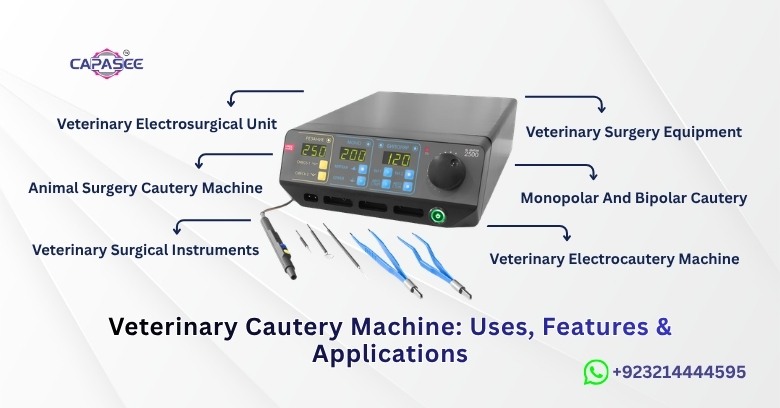
A veterinary cautery machine is useful in many surgical procedures, helping veterinarians cut and stop bleeding more precisely. Selecting the appropriate unit in a veterinary hospital or clinic in Pakistan is not an easy decision to make. The type and power of the cautery, available accessories, and the compatibility of the cautery with procedures most commonly performed in the practice should be considered.
The decision is important. The right machine could make surgery quicker, expand the types of surgeries you can perform, or help avoid replacement expenses. This guide introduces veterinary cautery machines, their working principle, primary applications in veterinary surgery, features to consider when choosing a veterinary cautery machine, and their clinical application. At the end, you’ll be more empowered to make the best equipment choice for your clinic.
What Is a Veterinary Cautery Machine and How Does It Work?
A veterinary cautery machine is an electrosurgical machine designed to cut tissue and control bleeding during animal surgical procedures. Vets use this equipment for more precise and controlled soft tissue surgeries.
What Is a Veterinary Cautery Machine?
High frequency electrical energy is produced by a veterinary electrosurgical unit (ESU) and sent to the tissue to be treated via a surgical electrode. This energy creates a controlled tissue effect which assists surgeons during procedures to cut tissue or coagulate blood vessels.
The cautery machine for animals is similar to other veterinary surgical tools like scalpels and scissors, but it produces cutting and coagulation effects by means of electrical energy. This technique is useful in procedures in which handling of tissue and bleeding management is important.
Difference Between Veterinary Electrosurgery and Traditional Cauterization
Electrosurgery is a high frequency electrical current passed through tissue that has a cutting or coagulating effect. Electrocautery involves using an electrically heated element to transfer heat to tissue without sending an electric current through the patient.
Conventional thermal cauterization is based on the destruction or sealing of the targeted tissue by direct heat. While effective for similar uses, veterinary surgeons need to be aware of the differences between these techniques when choosing the right surgical equipment.
How Does a Veterinary Electrosurgical Unit Work?
An electrosurgical unit for veterinary applications is an instrument that transforms electrical energy into high frequency surgical energy. This energy is imparted to the surgeon by a connected electrode.
The electrode comes into contact with the tissue to be treated during the surgery and generates a specific thermal effect. The output is controlled by the operator in accordance with the procedure and tissue requirements by adjusting the power settings and the selected operating mode.
With a monopolar system, the patient return electrode and the active electrode form the circuit. A bipolar system provides current between two electrode tips, which focus energy into the tissue space between the two tips.
Safe operation is ensured by proper electrode selection and output adjustment, as well as accessory compatibility. The settings selected by the veterinary professional should be appropriate for the animal, procedure, tissue characteristics, and the manufacturer’s instructions.
How Electrical Energy Produces Tissue Cutting and Coagulation
When high frequency electrical energy is applied to tissue, it will produce heat, which can have various effects depending on the type and power of the application, the design of the electrodes, and the technique with which they are applied. These actions aid veterinarians in cutting and coagulating tissues.
- Cutting: The heat of the cutting energy focuses on the cells in the tissue, which vaporize and split the tissue in the direction of the cutting energy.
- Coagulation: The controlled heating denatures tissue proteins, which aids in sealing small blood vessels and minimizing bleeding.
The surgeon sets the mode and output for the desired tissue effect. Appropriate technique helps to avoid unnecessary thermal damage to surrounding structures.
Uses and Applications of Veterinary Cautery Machines in Animal Surgery
A veterinary cautery machine is used for a variety of surgical procedures that involve cutting and controlling blood loss. Electrosurgical equipment is used in veterinary hospitals and clinics depending on the nature of their surgeries, the equipment available, and the treatment needs of their animals.
Common Veterinary Surgical Applications
Veterinary surgeons use veterinary surgical cautery in various soft tissue surgeries of companion animals and select livestock operations. Applications will vary depending upon the condition of the animal, surgical technique, and equipment capabilities.
Common applications include:
- Soft tissue surgery: Assists in controlled incision and coagulation in specific surgical procedures.
- Spaying and neutering: Assists in control of dissection and bleeding in sterilization procedures.
- Mass and tumor removal: Helps with separating tissues and stopping the bleeding during the removal of appropriate growths.
- Skin procedures: Selected skin surgeries, lesion removal, and wound related surgery.
- Dog and cat surgery: A cautery machine for pet surgery can help with various soft tissue surgeries.
- Livestock surgery: Electrosurgical equipment may be required for selected procedures with cattle, goats, sheep, and other animals.
Veterinary Cautery Applications in Dogs, Cats, and Livestock
Electrosurgical devices are frequently used in soft tissue surgeries, which are often performed on dogs and cats. The electrosurgical cautery to use with animals varies according to the procedure, animal size, and tissue.
Requirements and conditions for livestock procedures may vary. When choosing an animal surgical cauterizer, it is important for veterinary surgeons to take into account output capacity, electrode configuration, appropriate accessories, and manufacturer recommendations.
Benefits of Veterinary Surgical Cautery
A good choice of veterinary cautery machine provides practical benefits during appropriate animal surgery. It cuts and coagulates, facilitating veterinary treatment of tissue.
Key benefits include:
- Controlled tissue cutting: Assists in tissue separation during appropriate surgery.
- Bleeding control: Coagulation aids in sealing small blood vessels and controlling bleeding.
- Improved visibility: Any reduction in bleeding can help to make the operating field clearer for surgeons.
- Surgical precision: Targeted energy delivery to targeted areas is supported by suitable electrode designs.
- Procedure efficiency: In certain procedures, appropriate electrosurgical techniques can save time during the operation.
- Versatile applications: There are different surgical needs for monopolar and bipolar.
But these benefits will rely on the choice of the right equipment, surgical technique, training of the operator, and patient specific factors. Wrong power settings or inadequate use of the electrode can result in unwanted thermal injury.
Cutting vs. Coagulation: Understanding the Two Main Functions
A veterinary electrosurgical unit can operate in two modes; cutting and coagulation. Each mode of action will create a different tissue effect and is used for a specific purpose during surgery.
| Feature | Cutting Mode | Coagulation Mode |
| Main purpose | Separates tissue | Controls bleeding |
| Tissue effect | Rapid heating and vaporization | Protein denaturation |
| Surgical application | Incisions and tissue dissection | Sealing small blood vessels |
| Energy delivery | Concentrated energy | Controlled thermal effect |
| Practical benefit | Supports tissue separation | Helps maintain a clearer surgical field |
A monopolar veterinary cautery system provides flexibility in cutting and coagulation with compatible electrodes and the use of a return electrode. The bipolar veterinary cautery provides a focused concentration of the electrical energy between two electrode tips to be effective in localized coagulation.
Clinics need to consider output modes, power adjustment, safety requirements, handpiece compatibility, footswitch operation, and available veterinary electrosurgery accessories when purchasing veterinary operating room equipment. The surgical cautery pencil used in a veterinary surgery should be compatible with the generator in terms of connector and technical specifications.
Capasee Electro Medical Engineering offers solutions for surgical equipment needs in hospitals and clinics in Pakistan. Before buying an electrosurgical system, veterinary facilities should ensure that the system will be used for the intended applications, that it will meet their output needs, that it is compatible with the accessories they have in mind, that there will be installation support, and that there will be after sales service available.
Types, Features and Accessories of Veterinary Cautery Machines
Veterinary cautery machines come in various setups to accommodate different surgical operations of animals. These two electrosurgical technologies, monopolar and bipolar, have different methods of energy delivery and utilizes.
Monopolar vs. Bipolar Veterinary Cautery
The monopolar veterinary cautery system is a medical device that passes high frequency electrical energy through an active electrode into the area that is to be cauterized. The current flows in the patient’s body and is collected at the generator by a patient return electrode.
Bipolar veterinary cautery, on the other hand, conducts electric energy between two electrode tips, typically incorporated into bipolar forceps. This setup focuses the current in the tissue sandwiched between the tips, enabling more targeted coagulation.
Monopolar Veterinary Cautery
A surgical pencil typically equipped with an appropriate electrode for cutting or coagulating tissue is generally used in monopolar electrosurgery. The patient return electrode is the last piece of the electrical circuit; it is important that it is in good contact as directed by the manufacturer.
This setting is used by veterinary surgeons for some soft tissue surgeries where cutting and bleeding are necessary. Electrical safety risks are minimized with proper electrode placement, cable inspection, and return electrode monitoring.
Bipolar Veterinary Cautery
A bipolar system is made up of two electrode tips that are close together, and it provides electrical current without the need for any separate patient return electrode. Bipolar forceps are used to deliver energy to specific tissue during localized coagulation.
It can be beneficial in certain situations where veterinary surgeons require a controlled application of energy around sensitive areas. Bipolar equipment, in comparison to monopolar equipment, typically provides more localized current flow and fewer accessory requirements.
| Feature | Monopolar Cautery | Bipolar Cautery |
| Energy delivery | Through active electrode and return electrode | Between two electrodes |
| Return electrode | Required | Generally not required |
| Common instrument | Surgical pencil | Bipolar forceps |
| Applications | Cutting and coagulation | Localized coagulation |
| Current pathway | Through the patient | Between electrode tips |
Important Features and Veterinary Electrosurgery Accessories
A good veterinary diathermy machine must be able to offer proper working modes, adjustable output, and accessory compatibility. Veterinary hospitals need to consider its controls, protective features, equipment construction, and maintenance requirements prior to purchasing it.
Important features include:
- Cutting and coagulation modes: Provide different tissue effects during surgical procedures.
- Adjustable power output: Enables operators to choose the correct energy output.
- Output consistency: Energy is consistently delivered under specified operating conditions.
- Display and controls: Ensure modes and power settings are more easily viewed.
- Safety alarms: Help identify selected equipment faults or operating problems.
- Accessory compatibility: Makes sure the other instruments in use are compatible with the generator.
- Practical design: Facilitates easy use, cleaning, and maintenance.
Essential Veterinary Electrosurgery Accessories
Veterinary electrosurgery accessories are essential in ensuring the safe and effective use of electrosurgery equipment. The purchaser should verify that each accessory is the correct model, connector, and surgical use for the generator.
Common accessories include:
- Surgical cautery pencil: Handheld; compatible electrodes.
- Monopolar electrodes: Handle various cutting and coagulation situations.
- Bipolar forceps: Transport localized electric energy from their tips.
- Patient return electrode: Completes the circuit in monopolar applications.
- Footswitch: Enables the operator to turn on certain functions.
- Connecting cables: Connect handpieces and accessories to the generator.
The surgical cautery pencil used for veterinary purposes shall be properly insulated, have properly secured connections, and have fit and compatible electrode fittings. Prior to ordering veterinary surgical instruments, clinics should also inquire about the availability of replacement accessories.
How to Choose a Veterinary Cautery Machine in Pakistan
Some considerations for choosing the appropriate veterinary cautery machine involve the surgical volume at the clinic, equipment needs, and technical support. Local servicing, availability of accessories, warranty terms, and reliability of the supplier are also factors that should be taken into consideration in Pakistani veterinary hospitals.
Factors to Consider Before Buying a Veterinary Cautery Machine
First, find the procedures done on a regular basis, such as soft tissue surgery, sterilization, and some mass removal operations. This is useful to ascertain if the veterinary electrosurgical unit is a monopolar, bipolar, or combined unit.
Then check cutting and coagulation modes, power adjustment, display controls, and protective mechanisms. The appropriate animal cautery machine should have just the necessary functions and performance that are clinically required without excess functions or performance claims.
Other factors to consider include accessory compatibility, replacement parts, installation considerations, and routine maintenance. Veterinary clinic technical support services could be able to keep the equipment in good condition and solve the operating issues in time.
What Veterinary Hospitals and Clinics Should Check Before Purchasing
Before purchasing veterinary operating room equipment, the buyer should inspect all technical documentation and ensure they are purchasing the complete package. The following checklist may be useful for comparing options for hospitals and clinics.
- Technical specifications: Examine output capacity, operating modes, power adjustment, and electrical requirements.
- Accessories: Check for the supported pencil, electrodes, forceps, footswitch, cables, and return electrode if applicable.
- Compatibility: Check accessory connections and applications.
- Safety documentation: Inspect relevant safety features, operating procedures, and product documentation.
- Warranty: Make sure it is confirmed in writing regarding the duration, coverage, and service conditions of the warranty.
- Installation: Check if they provide assistance for installation, demonstration, and operator guidance.
- After sales support: Ensure that spare parts are available and local technical support is available.
Veterinary Cautery Machine Solutions by Capasee Electro Medical Engineering
Capasee Electro Medical Engineering is a company that provides solutions for electro medical and surgical equipment to healthcare institutions within Pakistan. Before choosing the right electrosurgical system for your needs, veterinary clinics and institutional buyers can have a discussion about equipment requirements.
When purchasing a veterinary electrosurgical unit, a buyer needs to consider the operating modes, output range, and accessories of the unit. Capasee can provide product information and technical discussion to help the customer to assess the appropriate equipment options.
Veterinary practitioners should also verify that the generator they have chosen can be used for the animal surgical procedures they want to utilize it for. Discussing the compatibility of the machines, accessories, and delivery requirements and arrangements before ordering will help prevent ordering mismatched machines.
Why Choose Capasee Electro Medical Engineering?
Choosing a supplier is not just about the equipment’s up front price. Users should take into account product data, technical support services, accessories, and support during the buying process.
Capasee Electro Medical Engineering can help hospitals and clinics with:
- Product information: Guidance on the available electro medical and surgical equipment.
- Equipment selection: Support for equipment configuration to meet clinical needs.
- Accessory compatibility: How to test handpieces, cables, electrodes, and connections.
- Warranty information: Clarification on terms of applicability of warranties before acquisition.
- After sales assistance: Details on the technical support and service that is available.
Veterinary hospitals, clinics, and veterinary equipment dealers throughout Pakistan can contact Capasee Electro Medical Engineering to get product specifications and quotations. Verify procedures, required configuration, and accessory set to determine the appropriate purchase.
FAQ’s
What are the two types of cautery?
There are two main types of electrosurgical systems; monopolar and bipolar, with different delivery of energy and applications to tissue.
What is the best cautery machine?
The best veterinary cautery machine is determined by surgical procedures, the level of power needed, operating modes, safety features, and accessory compatibility.
What is a veterinary electrocautery unit?
The veterinary electrocautery unit is the device which is used to assist tissue cutting or bleeding during animal surgery, with the help of electrical energy or controlled heat.
What is the price of a cauterization machine?
The cost of a cauterization machine in Pakistan depends on the type of technology, power capacity, modes of operation, accessories, warranty, manufacturers, etc.
What is the difference between electrosurgery and electrocautery?
Electrosurgery is a form of high frequency electrical current that passes through tissue, and electrocautery is the transfer of heat from an electrically heated instrument.
What is a veterinary electrosurgical unit (ESU)?
A veterinary electrosurgical unit is used to produce high frequency electrical energy for controlled cutting and coagulation of tissue during surgery to be used on animals.
What are Monopolar and Bipolar modes?
In monopolar mode, a current is delivered through an active electrode and a return electrode; in bipolar mode, a current is delivered between two tips of the active electrode.
Why is proper patient grounding critical in monopolar surgery?
In addition to providing a complete electrical circuit, placement of the return electrode helps prevent accidental heating, burns, and electrical injury.
Why is surgical smoke a concern and how is it handled?
The surgical smoke is filled with particles that are airborne and harmful substances, which can be minimized by using appropriate smoke evacuation and operating room ventilation.
How much does a veterinary cautery and electrosurgery machine cost?
The cost of the machine varies according to its configuration, power output, monopolar or bipolar functionality, accessories, warranty, and technical support.
Final Thoughts
Choosing an appropriate veterinary cautery machine enables veterinary personnel to conduct appropriate surgical procedures safely and effectively while maintaining proper cutting and coagulating of tissue. Prior to buying, think about the operating modes, power output, safety features, accessory compatibility, and technical support. Choose a monopolar or bipolar system according to different surgical requirements. If you need information about the product or to place an order, please contact Capasee Electro Medical Engineering for reliable information and assistance. Ask for product specifications and a quotation; consider the appropriate electrosurgical equipment for your veterinary practice.

