
Forceps Surgical Instruments for Hospitals in Pakistan

Using the correct instruments is vital to safe and efficient surgery. For medical professionals such as hospitals, clinics, and surgeons, a tool that provides accurate handling and a comfortable grip, without any fluctuations in performance during surgery, is essential. In the field of modern medicine, forceps surgical instruments are vital, used to grasp, hold, clamp, and manipulate tissue or other objects during various surgical operations.
Selecting the right type, however, can be difficult, as there are different types, sizes, and uses for forceps. Quality of materials, compatibility with sterilization, durability, and the reliability of the supplier are other important factors to be taken into account by medical equipment suppliers in Pakistan before purchasing. The aim of this guide is to explain the common types of forceps, their uses and features, along with the considerations for purchasing forceps at hospitals, clinics, and surgical facilities in Pakistan.
What Are Forceps Surgical Instruments and Why Do Hospitals Need Them?
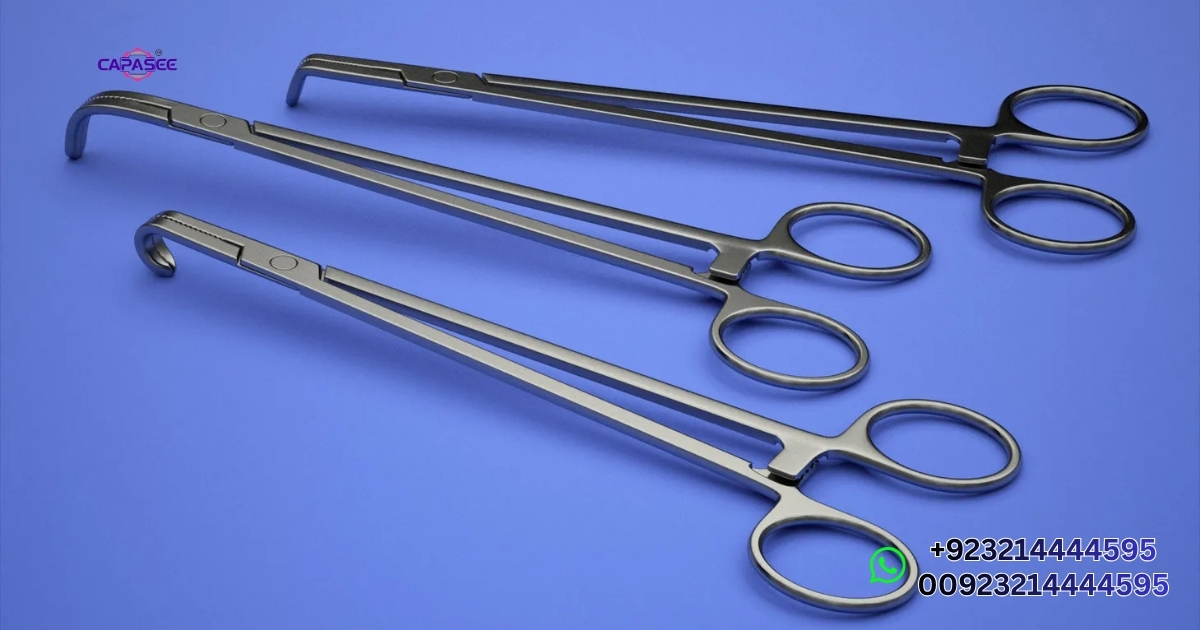
Forceps surgical instruments, are surgical instruments that are used by a medical practitioner or surgeon to grasp, hold, lift, position, and move tissues and materials in a medical procedure by using them through the hand. There are various shapes, sizes, and jaw designs that allow them to be used for different surgical procedures.
Wound care, handling of tissue, changing of dressings, suturing, and blood control are all performed in hospitals using surgical forceps. These operating room tools assist medical teams to maintain control and precision during procedures.
Capasee Electro Medical Engineering provides hospitals, clinics, healthcare institutes, and hospitals with medical equipment and surgical instruments in Pakistan.
You may like this blog: General Surgical Instruments: Types, Uses and Functions
What Is the Difference Between Forceps, Clamps, and Needle Holders?
These instruments have similarities, but they are used for different purposes. Typically, forceps are used to grab or handle tissues, hemostatic clamps are used to clamp off blood vessels, and needle holders are used to hold surgical needles during suturing.
| Instrument | Primary Function | Common Examples | Typical Use |
| Surgical forceps | Grasp and manipulate tissue | Tissue and dressing forceps | General surgery, wound care |
| Hemostatic clamps | Compress vessels to control bleeding | Mosquito, Kelly, Crile | Operating rooms |
| Needle holders | Secure needles during suturing | Mayo Hegar | Surgical wound closure |
Understanding these differences can assist with hospital procurement to ensure the proper instruments are ordered and not confused when creating surgical instrument lists.
Where Are Forceps Used Across Hospital Departments?
Medical forceps are used in various ways by different services in the hospital. They can be used for dressing changes or in complicated surgical procedures.
- General Surgery: Tissue forceps can be used to hold tissue, and surgical grasping forceps can help in operations.
- Emergency Departments: Hemostatic forceps are used to control bleeding in appropriate emergency procedures.
- Outpatient Clinics: Dressing forceps aid in wound care and dressing.
- Gynecology: Specialized forceps for special examination and surgical procedures.
- ENT Departments: Fine forceps can be used to work with delicate tissues and materials.
- Orthopedics: Appropriate forceps are used to handle tissue during orthopedic surgery.
- Dental Clinics: Small forceps assist in holding instruments during particular dental procedures.
An instrument selection should be made based on departmental needs, surgeon preference, and the procedure to be performed in the hospital. Choosing suitable forceps surgical instruments for each department helps ensure proper handling and reliable performance.
Which Types of Surgical Forceps Do Hospitals in Pakistan Use Most?
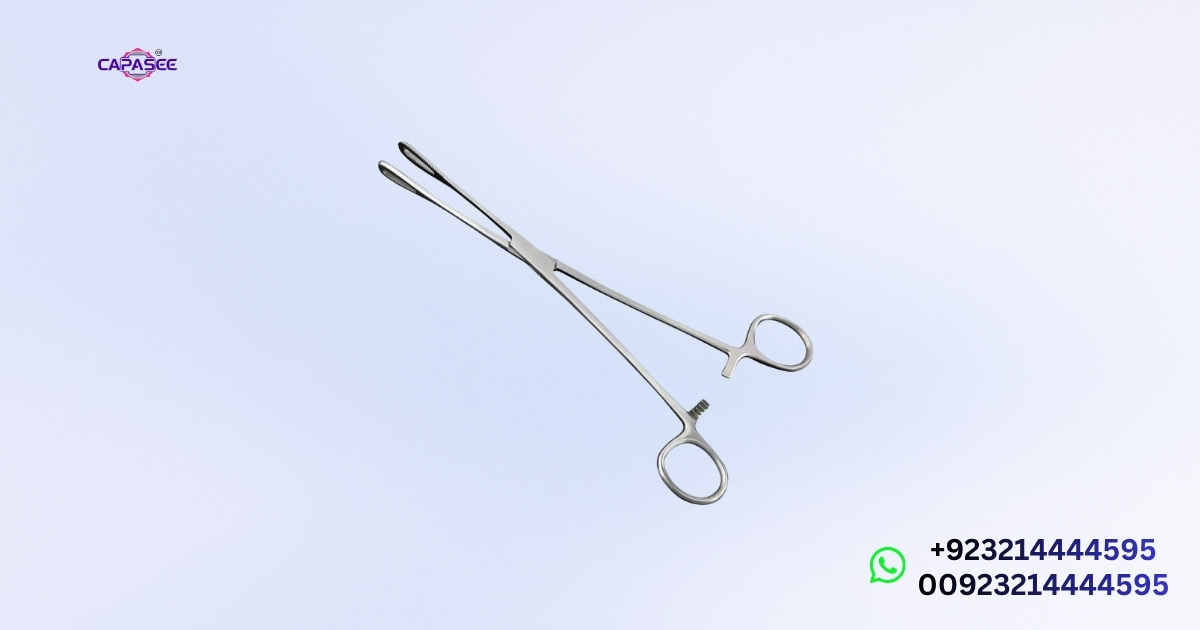
Surgical forceps are used in several different types of surgeries in hospitals in Pakistan. The proper choice of forceps surgical instruments will depend on the sensitivity of the tissues, the need to use a lot of grip, the shape of the jaw, and the surgical opening.
The most common types are the thumb forceps, tissue forceps, dressing forceps, Adson forceps, DeBakey forceps, and hemostatic forceps. Minimally invasive surgical forceps with designs that accommodate limited access are also required for some of the specialized procedures.
Grasping, Tissue, and Dressing Forceps
Understanding and using forceps to grasp and dress tissues, dressings, sutures, and other materials. They differ in their jaw shape, which affects the way they will hold and the pressure they will exert.
Thumb forceps work on the basis of hand pressure; they do not have a locking ratchet. The tips can be plain or serrated; the latter are used for holding specific tissues, while the former are used for general handling.
Adson forceps are quite short, with fine tips, to aid in controlled handling of skin during procedures. DeBakey forceps are atraumatic, with longitudinal ridges for delicate tissue handling in the vascular and cardiovascular system.
| Forceps Type | Jaw Design | Best Use | Key Consideration |
| Thumb/dressing forceps | Serrated, non toothed | Dressings and general handling | Suitable for handling dressings |
| Tissue forceps | 1×2 or multiple teeth | Holding selected tissues | Teeth can traumatize delicate tissue |
| Adson forceps | Fine serrated or toothed tips | Skin and minor procedures | Supports precise handling |
| DeBakey forceps | Fine longitudinal ridges | Delicate vascular tissue | Requires careful handling |
Before deciding on a specific pattern of tip, buyers should consider the size or dimension of the tips, their grip, and the amount of tissue necessary for a particular procedure.
Hemostatic Forceps and Surgical Clamps
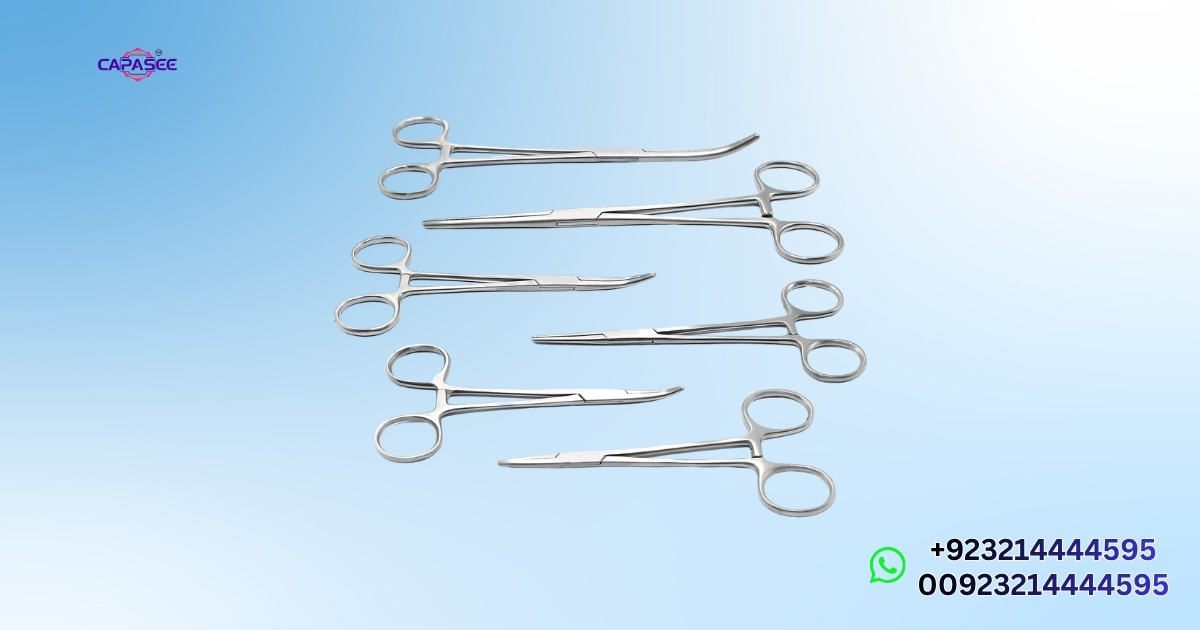
Hemostatic forceps can be used to grasp, close, and stop blood vessels or tissues flowing during surgery. These forceps are typically equipped with a ratchet mechanism that allows them to exert pressure after they are closed.
Common patterns include:
- Mosquito Forceps: The small, fine jaws are for controlling smaller vessels.
- Kelly Forceps: Allow for straight and curved designs for wider hemostatic uses.
- Crile Forceps: Vessels are clamped with serrated jaws along their working length.
- Ochsner Forceps: Add teeth to the jaw tips for a tighter hold on specific tissues.
These surgical tools should be designed to meet the needs of the surgeon and the hospital’s sterilization procedures. It’s crucial to inspect the jaw alignment and the ratchet engagement to guarantee hassle free functionality.
How to Choose Between Curved and Straight Forceps
When the working area is easily accessible, straight forceps offer direct access and controlled handling. Most often employed in general grasping and dressing tasks.
Curved forceps can provide greater access around anatomical structures and may help to keep a view in some surgical areas. Both configurations are used in hospitals because the surgeon requires different instrument angles during various surgeries.
What Should Hospitals Check Before Buying Forceps Surgical Instruments?
Hospitals should assess the properties of the material, the finish of the manufacture, the alignment of the jaws, the ease of handling, and the compatibility of the instrument with the method of sterilisation before buying forceps surgical instruments. All these affect the instrument’s performance and maintenance needs.
The supplier of the surgical instruments should also offer comprehensive product information, instrument options, and instrument procurement support. Capasee Electro Medical Engineering provides hospitals and clinics with the medical equipment they need based on their needs.
See More & Buy: Our Products
Stainless Steel Grades, Finish, and Reusability
Suitable surgical grade stainless steel is used because it is strong and resistant to corrosion, making stainless steel surgical forceps widely used. These material properties are important when choosing surgical forceps. But it is important to check the material specification for the actual purchase rather than assuming it is based on a standard quality description.
Cleanliness and visual inspection are facilitated by a smooth and well finished surface. Jaw alignment ensures uniform gripping, and secure ratchets ensure controlled clamping pressure.
| Feature | What to Verify | Why It Matters |
| Material | Surgical grade stainless steel specification | Durability and corrosion resistance |
| Finish | Smooth, polished surface | Easier cleaning and inspection |
| Jaw alignment | Precise and even closure | Reliable gripping |
| Ratchet | Secure engagement and release | Consistent clamping |
| Marking | Name, size, and batch details | Inventory tracking |
| Sterilization | Autoclave compatibility and instructions | Safe reprocessing |
If the manufacturer provides a certification that the reusable forceps are compatible with repeated cleaning and steam sterilization, they must be able to do just that. Hospitals should practice the validated cleaning, inspection, packaging, and sterilization procedures.
Reusable Versus Single Use Forceps: Which Suits Your Facility?
There are choices between using reusable and single use forceps, and they are dependent upon the volume of procedures, infection control policies, availability of sterilization facilities, and budgets for purchasing. Both are used for different operation needs.
| Buying Factor | Reusable Forceps | Single Use Forceps |
| Cost pattern | Higher initial investment | Recurring purchase cost |
| Sterilization | Requires validated reprocessing | Disposed of after use |
| Inventory | Requires tracking and maintenance | Requires regular restocking |
| Best fit | High volume operating rooms | Selected procedures and facilities |
When hospitals have good sterilization and maintenance procedures, reusable instruments can help hospitals implement long term purchasing plans. Single use decreases reprocessing but increases procurement and waste management tasks.
For hospitals located in Pakistan, it needs to be decided, taking into account product availability, replacement costs, and hospital protocol. Capasee Electro Medical Engineering can assist with the evaluation of the medical equipment and surgical instrument requirements before the purchase of the product, including forceps surgical instruments.
How Should Hospitals Select a Forceps Supplier in Pakistan?
When it comes to choosing a reliable surgical instrument supplier, there’s more to it than just prices for products. Before ordering, hospitals in Pakistan need to assess the quality of the materials, manufacturing processes, product availability, documentation, and after sales support.
A reliable supplier must know the requirements of the hospital and must provide appropriate forceps surgical instruments to various departments. Capasee Electro Medical Engineering assists hospitals, clinics, and medical equipment buyers in making their instrument selections based on the operational requirements.
Questions to Ask Before Placing a Hospital Order
Before ordering surgical forceps, procurement staff should validate product specifications and the supplier’s quality control process. These questions help to minimise the risk of purchasing and facilitate comparisons of products.
Hospital Procurement Checklist:
- Material: What is the stainless steel grade used by the manufacturer?
- Surface Treatment: Have instruments been appropriately passivated to increase their resistance to corrosion?
- Quality Control: Does the supplier check the jaw alignment, finishing, and locking?
- Documentation: Does the supplier have product specifications, batch information, and traceability?
- Product Range: Do you have straight, curved, toothed, non toothed, and speciality forceps available?
- Minimum Order: What are the minimum order quantities for individual instruments and complete sets?
- Delivery: What is the anticipated delivery for local and bulk orders?
- Warranty: What is covered under warranty, and what replacement policies are in effect for manufacturing defects?
It is also a good idea for hospitals to ask for products to be sent to them when they can, particularly for bulk purchases. When inspecting the instrument, buyers can assess the comfort of the grip, the instrument’s finish, the alignment of the jaw, and the ease of handling the instrument.
Bulk Supply, OEM Branding, and Hospital Specific Requirements
Hospitals, distributors, and medical equipment companies might need a varying amount of forceps and varying types and/or sizes. Planning inventory can be simplified, especially if multiple operating rooms require similar instrument sets, by bulk purchasing forceps surgical instruments.
Some manufacturers will even provide OEM branding, private labelling, and laser marking services, if required, under agreed terms. The choices let customers arrange instruments for a facility or distribution brand.
Before ordering a customised product, make sure you give the supplier a comprehensive list of requirements including:
- Instrument Types: Set out tissue, dressing, Adson, DeBakey, and hemostatic forceps.
- Dimensions: Verify lengths of instruments, patterns of jaws, and straight or curved shapes.
- Quantity: Write individual instrument and set quantities.
- Branding: Verify logo location, laser marking, and packaging specifications.
- Sterilization: Check compatibility of the facility’s sterilising and cleaning practices.
- Delivery: Agree on production times, packaging, and distribution plans.
Capasee Electro Medical Engineering can help healthcare buyers to discuss the requirement for surgical equipment and choose the appropriate instruments for the operating room. Before ordering, the buyer should check customization options, minimum order quantity, and delivery schedules for forceps surgical instruments.
What Are Forceps Surgical Instruments Used For?
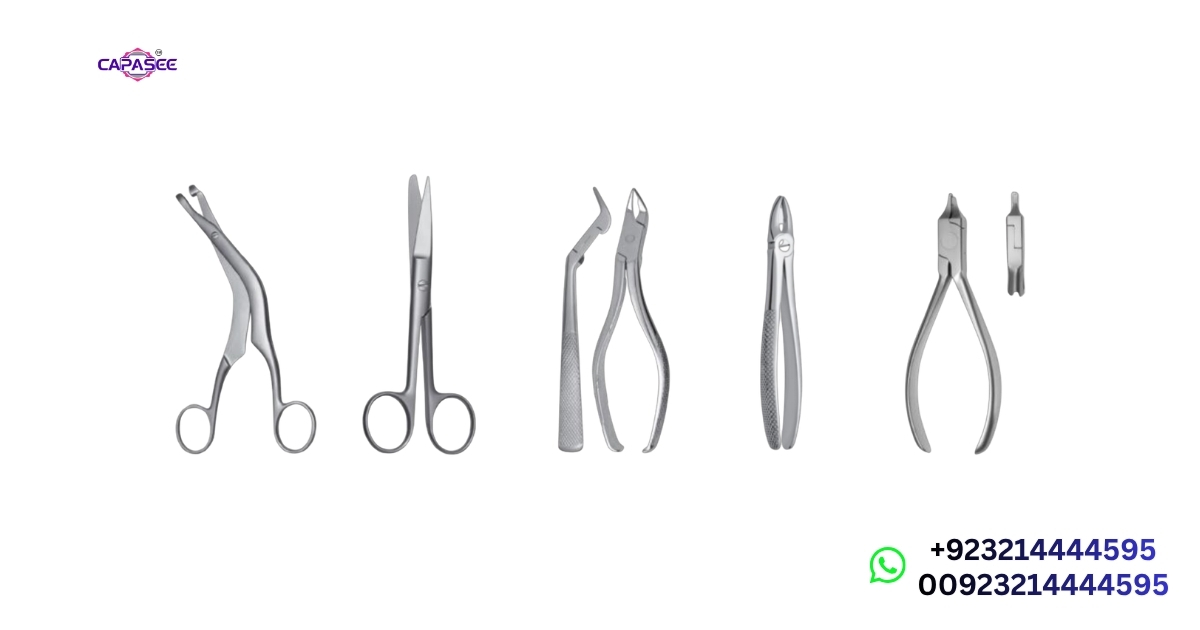
Forceps surgical instruments are used to grasp, hold, lift, position, and manipulate tissues and medical materials during surgical and clinical procedures. Earlier, I was asked to design a bike that would be easier to handle. Previously, I was asked to create a bike that would be more manageable.
Some common uses include wound edges, dressing placement, tissue manipulation, and suturing. Hemostatic forceps are also used to compress blood vessels and ensure bleeding control during proper procedures.
These instruments are used to facilitate general surgery, emergency surgery, gynecology, ENT, dentistry, and outpatient surgery. Their design and size are based on the application and the professional needs.
Which Forceps Are Best for Hospitals and Clinics?
No single forceps type will work for all health care facilities. The choice of the right selection is determined by the surgical procedures, departmental needs, surgeon preference, instrument handling, and sterilization capacity when selecting forceps surgical instruments.
These are the basic forceps that can be initiated in a general surgical department. Speciality patterns can then be added to the hospitals based on the surgical load they have.
Suggested Starter Forceps Set for a General Surgical Department:
| Instrument | Main Application | Suggested Configuration |
| Dressing forceps | Wound dressing and material handling | Straight, non toothed |
| Tissue forceps | Holding selected tissues | 1×2 toothed |
| Adson forceps | Precise handling during minor procedures | Fine toothed or serrated |
| DeBakey forceps | Delicate tissue handling | Atraumatic ridged jaws |
| Mosquito forceps | Fine hemostatic applications | Straight and curved |
| Kelly forceps | General hemostatic applications | Straight and curved |
Smaller clinics with less complex procedures might not need as many instruments, whereas hospitals with multiple operating rooms may require more options. There are also specialized procedures and instruments that require the use of minimally invasive surgical forceps, including specific types of forceps surgical instruments.
When buying, check instrumentation specifications and ensure compatibility with your facility’s sterilisation process. Capasee Electro Medical Engineering offers a medical solution to assist hospitals and clinics in assessing the hospital requirements for surgical instruments and the possible purchasing options.
Frequently Asked Questions
What are the types of forceps?
They are often classified by their names, such as thumb, dressing, tissue, Adson, DeBakey, mosquito, Kelly, and Crile.
What are 16 forceps used for?
The uses of forceps range from grasping tissues, holding dressings, clamping vessels, handling sutures, and assisting in surgical procedures.
What are forceps 4 uses?
Using forceps to hold tissues, manipulate surgical materials, and control bleeding with hemostatic designs.
What are surgical forceps?
A medical instrument for grasping, holding, manipulating, or clamping tissues during medical procedures.
What is the difference between thumb forceps and locking forceps?
Thumb forceps work by applying pressure to the fingers, and locking forceps work by using a ratchet mechanism to keep the forceps closed.
What are surgical forceps made of?
The usual surgical forceps that are reusable are constructed from surgical grade stainless steel for repeated sterilization, corrosion resistance, and durability.
What is the difference between Kelly and Crile forceps?
Kelly forceps have serrations on the distal half of the jaw; Crile forceps have serrations on the entire length of the jaw.
How should surgical forceps be cleaned and sterilized?
Use approved enzymatic detergents to clean forceps, inspect, and use validated hospital sterilization protocols, including compatible autoclaving.
What are the main types of specialized surgical forceps?
Specific forms are available, such as Adson, DeBakey, mosquito, Allis, Babcock, Magill, and minimally invasive surgical forceps for particular procedures.
Final Thoughts
Choosing the appropriate forceps surgical instruments makes it easier for hospitals to operate smoothly and ensure that their surgical procedures are carried out correctly. When buying, check the type of instrument, the stainless steel used, the jaw design, reusability, and compatibility with sterilization. But the price is not the only factor to take into account when picking suppliers; hospitals should also take into account the reliability of the supplier, the product specifications, and after sales support.
The requirements of various departments can be met by a properly chosen instrument range, which will also enable long term procurement planning. For reliable surgical instruments needed in your hospital or clinic, please contact Capasee Electro Medical Engineering for your needs and a suitable quotation.