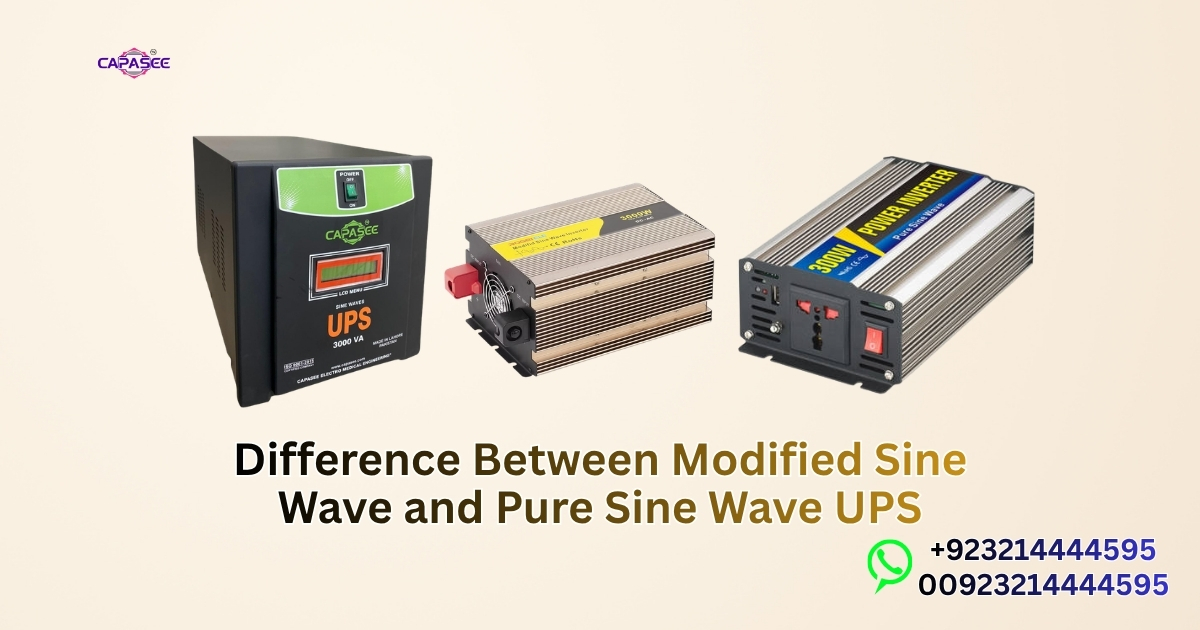
Choosing the Right UPS for Inverter ACs and Refrigerators


Load shedding doesn’t let you know in advance that it will kill your compressor. Millions of Pakistanis now have inverter ACs and inverter refrigerators to lower their electricity bills, but when the electricity goes down, the regular UPS comes online, and both the smart devices may turn off, trip, or even be damaged permanently. It’s not a problem with the appliance. It’s the wrong UPS running it.
One of the most misjudged home power backup choices, and in Pakistan’s current energy crisis, one that comes with a real price tag, is picking the right UPS for inverter ACs and refrigerators. If you’re looking to upgrade your home in Lahore, Karachi, or Islamabad, this article will help you understand what to keep an eye out for; wattage, waveform type, battery capacity, and the specifications that matter, because you’ll only want to buy once and buy right.
How to Choose the Right UPS for Inverter ACs and Refrigerators
The first guideline to get this decision right is to never guess your load. When it comes to the right UPS for inverter ACs and refrigerators, it is not a matter of size. It’s all about determining your actual power requirements and choosing the right backup accordingly before you spend a single rupee.
Most of the people purchase a UPS by considering the price of the UPS and later get confused about the reason for the short shutdown of their inverter AC after 2 minutes or frosting on the refrigerator after a few minutes due to load shedding. Once you know two things, total load calculation and waveform compatibility, it’s easy.
Check the Total Load of Your AC and Refrigerator
Begin by referring to the wattage listed on the label of your appliance or in the user’s manual for selecting the right UPS for inverter ACs and refrigerators. A 1 ton inverter AC consumes between 700W and 1000W for a maximum power rating, and a medium sized inverter refrigerator consumes between 100W and 200W during normal use.
Add both numbers together and multiply by 1.25 for a safety margin. If the total load is 1100W, then the UPS should be at least 1375W or more. This buffer helps to avoid damage due to startup surges, where most of the damage occurs, while choosing the right UPS for inverter ACs and refrigerators.
You May Also Read This Blog: How to Calculate UPS Load for Home Appliances
Match UPS Capacity with Battery Voltage and Backup Time
The capacity is not sufficient. A 1500VA UPS powered by a single 12V battery will provide less than 15 minutes of backup power for a heavy load. In the summer season in Pakistan, most households require two 150Ah batteries in a 24V setup to get any backup time for the right UPS for inverter ACs and refrigerators.
Make sure that the UPS charger is capable of completely charging your battery bank during the available window of the grid. If the charging system is not strong enough, your batteries won’t get a full charge in between load shedding periods, especially in cities where power outages can last for 8 or 10 hours, like Karachi and Multan.
Best UPS Features to Look for Before Buying

It’s the features in the UPS that count more than the brand name on the box. Even two units of the same VA rating can yield vastly different performance due to variation in their output waveforms, efficiencies, and protection systems.
One of the costliest errors made by Pakistani buyers is skipping this research. Running a fan or the light on a cheap modified sine wave UPS won’t cause any problems for them, but in the long term, a modern refrigerator or an inverter AC will suffer because of the modified sine wave when not using the right UPS for inverter ACs and refrigerators.
Pure Sine Wave Output for Safe Appliance Performance
The variable frequency drive is used by inverter ACs, and the sensitive electronic control board is used by the inverter refrigerator. The components demand a clean and pure sine wave output for proper and safe operation.
These appliances are adversely affected by a stepped, choppy signal from a modified sine wave UPS, which is characterized by humming, overheating, and failure. Always make sure the UPS output waveform is correct before purchase. Do not buy it if the product listing does NOT mention “pure sine wave”.
Efficiency, Overload Protection, and Smart Charging
UPS devices must be efficient and capable of at least 85% efficiency in order not to lose electricity and create excess heat. Check if the unit is an automatic voltage regulator (AVR), which can help to maintain a stable voltage from the power grid before it is applied to the appliances.
There is no such thing as too much overload protection. Once the AC compressor turns on, it draws between two and three times its rated current for the split second that it is operating. If the UPS does not have an overload protection circuit, then it will trip or, worse, run continuously and overheat. Smart charging with temperature compensation is a great solution for adding significantly to battery life, particularly in Pakistan’s sweltering summer months.
UPS Size, Battery, and Backup Planning
The correct sizing of a UPS has three components; watts required, hours of backup desired, and amp hours available in the battery. If you get one of these aspects wrong, your entire setup suffers.
Let’s take an example from the real world; a family living in Faisalabad who uses a 1 ton inverter AC and a 15 cubic foot refrigerator at the same time consumes about 1200W during continuous operation. They require about 200Ah capacity at 24V to operate for 2 hours, with an 80% DOD, while using the right UPS for inverter ACs and refrigerators.
VA and Watt Rating Guide for Home Use
VA and watts are NOT equal. Depending on the power factor of the UPS, it can deliver only 1600W of real power from a 2000VA UPS. When choosing an appliance for a high watt application, always use the watt rating, not the VA rating.
A basic rule of thumb is that a 1 ton AC inverter will require at least 1500W of UPS real power. When a refrigerator is added, that requirement increases to 1800W and above. It’s always a better idea to go slightly above the calculated requirement for the right UPS for inverter ACs and refrigerators.
Battery Type, Runtime, and Energy Saving Considerations
For most homes in Pakistan, the lead acid tubular batteries are still the best value. A pair of 150Ah tubular batteries offers good runtimes and can cope with deep discharge cycles because of the long load shedding time in the area.
Lithium ion batteries have superior performance and longer cycle life, but at a much higher cost. When looking for energy saving, one should select the UPS that has eco or sleep mode to lessen the standby power usage at night when the load level decreases.
Why Capasee Electro Medical Engineering Is a Smart Choice in Pakistan
A combination of local expertise and proven engineering delivers a power backup system that is appropriate for Pakistan. Capasee Electro Medical Engineering knows the challenges at hand for homes and businesses in Pakistan; unreliable grid voltage, extreme summer heat, and the need for long term reliability at an affordable price.
A trusted local expert will provide you with correct load testing, honest product advice, and post sale support that are usually unavailable from any typical online seller.
Reliable UPS Solutions for Home Appliances and Power Backup
Capasee offers power backup solutions that are tailor made for the specific needs of Pakistani households. Loads are calculated, battery sizes are determined, and installation instructions are provided, with the emphasis on keeping your inverter AC and refrigerator operating through all outages using the right UPS for inverter ACs and refrigerators.
All Capasee recommendations are real world rather than spec sheet based. That’s the hands on, experience based way of thinking that makes a solution work rather than just being pretty on paper.
Affordable Options, Support, and Long Term Value
Capasee Electro Medical Engineering has solutions for every budget and meets the basic standards of quality. The idea, no matter how many refrigerators you’re protecting, or if you are installing a home backup system, is to get the most bang for your buck with the right UPS for inverter ACs and refrigerators.
The after sales support is as important as the product. If you have any questions or issues after installation, Capasee supports its advice with real technical assistance for the right UPS for inverter ACs and refrigerators.
Check More & Purchase: Our Products
UPS Buying Table for Inverter ACs and Refrigerators
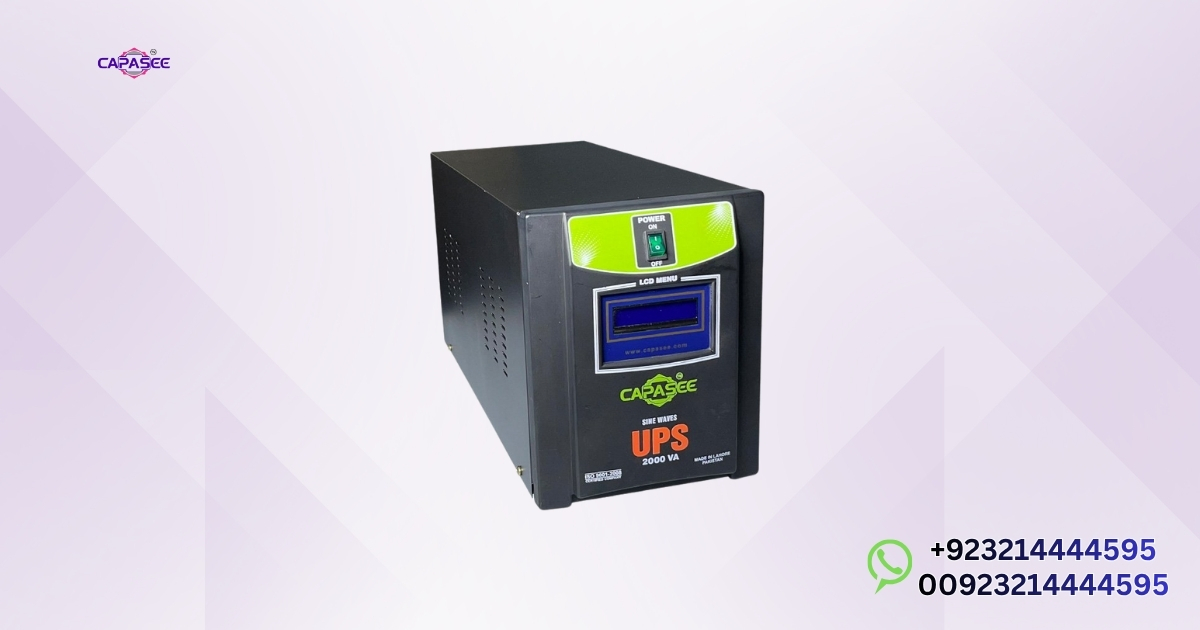
When you use a side by side comparison before you make any purchase, you will save time and avoid costly mismatches. The table below is designed for Pakistani households.
This is a handy reference guide for your conversations with a supplier or when you are looking at product specifications online.
Compare Capacity, Battery Backup, and Appliance Compatibility
The top mistake made by Pakistani buyers is selecting the wrong capacity. The table below displays precisely the same thing that every appliance requires, so you can be confident in your purchase and match it to your particular home setup.
Consider this your one stop go to guide before heading to any suppliers or when ordering online.
| Appliance | Recommended UPS Consideration | Why It Matters |
| Inverter AC | Higher capacity, pure sine wave, stable output | Protects the compressor and supports heavy starting loads |
| Refrigerator | Reliable backup, efficient charging, and voltage protection | Prevents food spoilage and protects the motor |
| Both Together | A larger backup system and a correct battery setup | Handles combined load safely without tripping |
Choose the Right UPS Based on Your Home Needs
A single appliance is simple, while an inverter AC and a refrigerator, using the same UPS, require careful planning. The current rating of your charger, the thickness of the cables, and the capacity of your battery bank must all be sufficient to handle the total load without causing any performance limitations.
However, if you don’t know where to begin, Capasee Electro Medical Engineering can take a look at your particular home to recommend the best system for your needs. That is what differentiates a 5 year UPS from a UPS that fails in the first summer.
FAQ’s
How do I choose the right UPS inverter?
Select a pure sine wave UPS inverter by determining the total load in watts for the appliances, adding 25% to this power, and ensuring that the UPS can handle the voltage of the batteries you will use. Pure sine wave output and AVR protection are a must for inverter ACs and refrigerators.
What size UPS do I need for a refrigerator?
In Pakistan, most standard sized inverter refrigerator models are adequately protected by a UPS having a minimum real watt capacity of 800VA to 1000VA. Always make sure that the watt label on your fridge is checked, and add 20% extra capacity to prevent your fridge from tripping when the compressor turns on.
Which inverter UPS is best in Pakistan?
The ideal sized inverter UPS for Pakistan is the right size for your load, has a pure sine wave output, and has local technical services. Capasee Electro Medical Engineering assists in choosing the right UPS, not on guesswork or generic recommendations, but on actual usage in a home.
Which inverter UPS is best for home?
If the UPS is to be used in your home, then the right UPS for inverter ACs and refrigerators is one with pure sine wave output, automatic voltage regulation, and battery bank sizing based upon your local load shedding hours. A well designed system will safeguard appliances and provide dependable backup with minimal failures or short battery life.
Which brand is best for UPS?
Not every product that is marketed is the best UPS. The keys are the correct wattage, pure sine wave output, and the after sales support. Capasee Electro Medical Engineering helps the buyers in Pakistan to select the solution that suits their requirements and not a branded name that is bigger than their house requirements or not suitable for them.
Can an inverter run a fridge?
An inverter UPS can be used for a refrigerator as long as it is a pure sine wave inverter with the proper wattage. A modified sine wave unit may be able to run the fridge for a short period of time, but it will cause damage to the compressor motor over time. Before connecting any inverter refrigerator to a UPS, always check the type of waveform.
How to choose UPS for home?
First of all, list all the appliances you want to back up, along with their wattage. Add up the totals, then apply a 25% buffer, and then choose a pure sine wave UPS that fits the new number. Take into account battery capacity for hours needed to back up, and make sure the charger can support your battery bank’s size.
Summary
The three cornerstones of a power backup system that will work are pure sine wave output, watt matching, and proper battery bank matching. When you put these all together, your appliances are protected, your food remains cold, and your home remains comfortable during all outages.
When the electricity goes down, the Pakistani households that get this right don’t worry. The selection of the right UPS for inverter ACs and refrigerators is an investment that will pay off in reduced repair costs and extended appliance lifespan.
Call Capasee Electro Medical Engineering today to receive expert advice tailored to your home, your load, and your budget. Smart backup isn’t costly. You have the wrong backup.