
Best UPS for Hospital in Pakistan


One hospital power outage is equal to one death. This is not an exaggerated statement; this is the truth of hospital administrators, biomedical engineers, and procurement teams in Pakistan daily. All critical devices are powered around the clock, such as ventilators, infusion pumps, ICU monitors, surgical lighting, and more. However, load shedding in Pakistan is still unpredictable, and in urban areas, it can be from 4 to 14 hours, while in rural areas, it can be as much as 15 hours.
The selection of the best UPS for hospital in Pakistan isn’t a mere buying process; it’s a decision that could mean the difference between life and death for the patients. The bad system doesn’t make a sound; the good system keeps your facility going. Capasee Electro Medical Engineering explains all you need to know; key specifications, load capacity, battery backup durations, and what makes a medical unit different from a commercial unit.
Why Hospitals in Pakistan Need a Specialized Medical Grade UPS
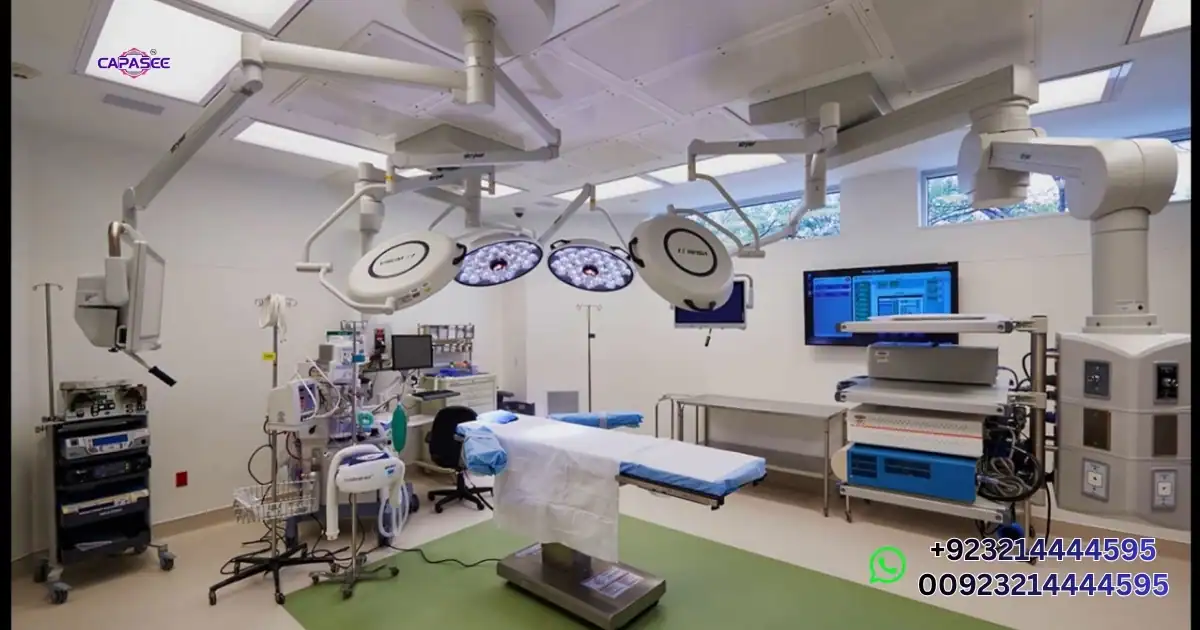
Hospitals are not offices. All the equipment operating inside a Pakistani hospital is directly connected to the life of a patient, and it would have been the wrong type of home UPS to handle that job. Medical systems are purpose designed to a much higher standard and designed with zero switching time, pure sine wave output, and voltage precision, which is required by sensitive biomedical equipment. The best UPS for a hospital in Pakistan must meet these strict standards.
A standard UPS can power your router or desktop if there is a power outage. Just plug in a ventilator, dialysis machine, or cardiac monitor to that same machine, however, and you’re playing a game no hospital administrator wants to play. First hand experience at Capasee Electro Medical Engineering has shown that no matter how the power backup is omitted in procurement, it will always cost dearly in terms of equipment damage, patient risk, and liability. This is why choosing the best UPS for hospital in Pakistan is critical.
Life Saving Equipment That Requires Uninterrupted Power in Pakistani Hospitals
The number of pieces of equipment that cannot endure even a one second power outage is greater than most can imagine. This includes ICU ventilators, infusion pumps, patient monitoring systems, operating theatre lights, anesthesia machines and CT scan machines. This equipment is used in both public and private hospitals in Pakistan on a 24/7 basis and requires the best UPS for hospital in Pakistan.
When there is an ICU failure of the ventilator battery backup in Lahore or in Karachi, it’s not a technical issue. This is a medical emergency. This is why a UPS system for the ICU in Pakistan should switch over to a battery bank within a power outage without any delay, which online double conversion technology can provide. This is always the initial list of equipment that Capasee engineers use to determine the proper kVA rating and battery runtime of the site when the hospital comes to us for an assessment of the best UPS for hospital in Pakistan.
You May Also Read This Blog: UPS for Diagnostic Equipment in Pakistan
Common Power Problems in Pakistani Hospitals and How Medical UPS Solves Them
Pakistan’s national grid has at least four different types of power threats for hospital equipment; complete load shedding, voltage fluctuations, frequency instability and power surge during restoration. All of these can separately be averse to sensitive medical electronics. As a team, they help to establish an environment that requires industrial protection. The best UPS for hospital in Pakistan is designed to handle all these threats.
In hospitals in Punjab and KPK, the high cost medical machinery worth millions of rupees has been wrecked by the voltage fluctuation. The four threats can be eliminated at the same time by a medical grade UPS from Capasee Electro Medical Engineering. It constantly adjusts incoming power, separates equipment that’s connected from the network, and provides regulated and clean power to the equipment even when the outside is not. This makes it a strong candidate for the best UPS for hospital in Pakistan.
Top 5 Features to Check Before Buying the Best UPS for Hospital in Pakistan
Hospital procurement teams must check five technical requirements that cannot be negotiated before accepting any purchase order. Any of these omissions could result in a unit that appears to be a good fit but is not. Capasee advises to always check the specifications, and not just the sales brochure, against the real load requirements of your facility when selecting the best UPS for hospital in Pakistan.
Five features are used, UPS topology (only online double conversion), output waveform (pure sine wave), kVA and kW rating, battery runtime scalability, and medical safety certification. These all have a direct impact on the efficiency of the UPS to safeguard your department’s equipment in Pakistan’s volatile power supply environment. These features define the best UPS for hospital in Pakistan.
Critical UPS Specifications Every Hospital Buyer Must Verify
Topology is the key specification of any UPS in Pakistan, especially on the internet. Online double conversion systems never switch from mains to battery, as with line interactive or offline models. These are constantly running from the battery; no milliseconds of transfer occur when the grid drops. This technology is essential in the best UPS for hospital in Pakistan.
It is also important for the wave output to be a pure sine wave. Some medical equipment, such as infusion pumps and ventilators, is sensitive to modified sine waves. To guarantee stable long term performance, the load capacity of a UPS for a hospital has to be determined at approximately 70% to 80% of the actual connected load, not 100%. Capasee engineering team offers a no cost load assessment for hospitals in Pakistan before recommending the best UPS for hospital in Pakistan.
Comparison Table: Medical Grade UPS vs Regular UPS for Hospital Use
The difference is not in doubt, as shown in the table below. For any hospital decision maker, the difference between medical grade UPSs and standard commercial UPSs is obvious when they are put side by side.
| Feature | Medical Grade UPS (Capasee) | Regular Home/Office UPS |
| Backup Type | Online Double Conversion (Zero Switching Time) | Offline/Line Interactive (10 ms gap) |
| Sine Wave | Pure Sine Wave (Safe for sensitive equipment) | Modified Sine Wave (Can damage equipment) |
| Runtime | 30 min to 8 hours (scalable with external batteries) | 10 to 30 min (fixed) |
| Voltage Stabilization | Plus or minus 1% precision | Plus or minus 10 to 15% |
| Warranty | 2 to 5 years (including battery) | 1 year only |
| Certification | IEC 60601-1 (Medical Standard) | No medical certification |
| Ideal For | ICU, Ventilators, CT/MRI, Operation Theaters | Computers, Lights, Fans |
The answer to the question every hospital buyer asks at some point. Why is it that a medical UPS costs more? is right on target. Because it is not the same product. It’s a whole new ball game, so to speak. The best UPS for hospital in Pakistan delivers a level of protection and reliability that standard UPS systems cannot provide.
Check More & Purchase: Our Products
Best UPS for Hospital in Pakistan: Capasee Top Hospital UPS Solutions

Capasee offers custom designed hospital UPS systems for hospitals from small clinics in secondary cities to large multi department teaching hospitals in Lahore, Karachi and Islamabad in Pakistan. Each solution has been specifically sized to fit the department; it is not a one size fits all product. The best UPS for hospital in Pakistan should be tailored to the specific power requirements of each healthcare facility.
The unique aspect of Capasee offering is a blend of medical grade hardware, local technical support and a wealth of understanding of the challenges in hospitals in Pakistan. Whether it is a site survey or maintenance after installation, biomedical engineering experts handle every aspect of the process, not general electricians. This expertise helps deliver the best UPS for hospital in Pakistan for critical medical environments.
Capasee Medical UPS Models Suited for Different Hospital Departments
The power load in various hospital departments differs significantly, and each department needs a different sized solution. A small radiology bay or a dialysis machine room can utilize a 5 kVA UPS. In Pakistan, the common size of UPS for ICU use is 10 kVA, which can accommodate full monitoring, ventilator and infusion pump load for 6 to 10 beds. Capasee installs 20 kVA and above systems with long battery backup of 2 to 4 hours in the CT scan rooms, MRI suites, and large operating theatres. Choosing the best UPS for hospital in Pakistan depends on the department and load requirements.
One regional hospital in the Central Punjab province increased the power backup capacity of its ICU by installing a 10 kVA online double conversion system with an external battery cabinet from Capasee. The following month, when the load shedding was on for 6 hours, there was no interruption for any of the ICU devices. That’s the standard that Capasee engineers strive for on all of their projects using the best UPS for hospital in Pakistan.
Why Capasee Electro Medical Engineering is the Trusted UPS Supplier for Pakistani Hospitals
Capasee Electro Medical Engineering is not a reseller of electronics. A specialized biomedical engineering company that has years of experience in installing, maintaining and troubleshooting medical grade power systems on the ground in Pakistani healthcare facilities. That speciality is crucial when something goes wrong at 2 AM in a hospital intensive care unit. This experience supports its reputation for providing the best UPS for hospital in Pakistan.
The company offers comprehensive after sales services, such as preventive maintenance contracts, battery health monitoring and quick response services in major cities of Pakistan. Capasee not only provides the technical expertise but also local expertise that general importers don’t possess, making it a perfect solution for hospital administrators looking for a UPS supplier in Pakistan that they can rely on beyond the delivery date. These services make Capasee a leading provider of the best UPS for hospital in Pakistan.
FAQ’s
What is the best UPS for hospital in Pakistan for ICU and ventilators?
The best UPS for use in hospitals in Pakistan is an online double conversion pure sine wave UPS, which also has medical certification according to IEC 60601-1. The minimum recommendation for ICUs and ventilators is a 10 kVA system if it has extended battery backup. Capasee Electro Medical Engineering provides and installs a purpose built solution for these very departments.
How many kVA UPS is needed for a small hospital in Pakistan?
For a small hospital in Pakistan, the required size of the transformer is 5 kVA to 20 kVA, depending on the number of medical equipment items that are working at the hospital. Determine total load requirements; size the UPS at 70% to 80% to operate safely and reliably. Capasee will provide complimentary load assessments on site to ensure this is correct.
What is the price of medical UPS in Pakistan in 2026?
In 2026, the cost of a medical grade UPS in Pakistan can vary significantly, from as low as PKR 150,000 for a small 3 kVA unit to as high as PKR 1,500,000 or more for larger hospital systems for large 20 kVA, equipped with longer battery banks. The price of the battery depends on the battery capacity, how long the battery lasts, and the certification level. For an accurate quotation, please consult Capasee for your hospital’s actual requirements.
Can a normal home UPS be used for hospital equipment in Pakistan?
No, a common domestic UPS is not supposed to be used for hospital medical devices in Pakistan. Home UPS units have a switching delay of 10 milliseconds or longer and a modified sine wave output that can harm sensitive equipment, such as ventilators and infusion pumps, and pose significant patient safety concerns.
How long does a hospital UPS battery last in Pakistan during load shedding?
A UPS with an appropriate size in a hospital in Pakistan can provide 30 minutes or more of backup, depending on the load connected in the hospital and the type of battery bank configuration. In departments such as the ICU and operating theatres, the recommended autonomy is 2 hours or more to safely perform extended load shedding.
Which company provides the best medical UPS installation service in Pakistan?
Capasee is a specialized biomedical engineering company that supplies, installs, and offers after sales services of UPS for medical facilities and hospitals in Pakistan. The Capasee team is not like ordinary electrical contractors, and they are aware of the power requirements in hospitals and provide solutions that meet international safety standards for medical use.
Summary
The first and foremost step to safeguarding patients is to protect power. Selecting the appropriate UPS system for a hospital is not a mechanical obligation but a clinical one. Every consideration mentioned in this guide has a direct impact on the safety and reliability of your facility, and its importance cannot be overstated. The importance of every consideration mentioned in this guide cannot be overstated, as it affects the safety and reliability of your facility. Selecting the best UPS for hospital in Pakistan ensures uninterrupted care and operational reliability.
In Pakistan, selecting the top UPS for a hospital is an investment in peace of mind, knowing that your critical moments are in safe hands. With real biomedical knowledge and local support that’s within reach, Capasee Electro Medical Engineering is available to support you in making the right call for the best UPS for hospital in Pakistan.
Call Capasee today to get a free site evaluation and keep your hospital’s power the same as the care that you give your patients with the best UPS for hospitals in Pakistan.