
Diathermy Electrosurgical Unit

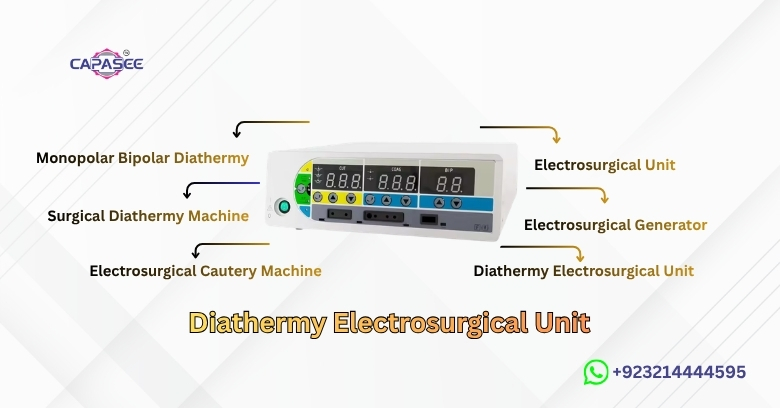
One misfire of a poorly maintained electrosurgical unit can be the catalyst for a routine procedure turning into a burn injury case. That’s what a lot of hospitals and surgeons in Pakistan are confronted with while purchasing equipment, without realizing how the diathermy electrosurgical unit works. While most customers are familiar with the cutting and coagulating capabilities of the device, not many are aware of the distinction between monopolar and bipolar modes, and more importantly, the safety standards that are important before installation.
The choice of the operation theatre is no longer a matter of option but of patient safety, as operation theatres are being upgraded to modern surgical setups in a matter of time in Karachi, Lahore, and Islamabad. This will help you understand exactly how a diathermy electrosurgical unit works, what to look out for before purchasing one, and how Capasee Electro Medical Engineering can assist hospitals in Pakistan in choosing safe and reliable equipment.
What Is a Diathermy Electrosurgical Unit and How Does It Work?
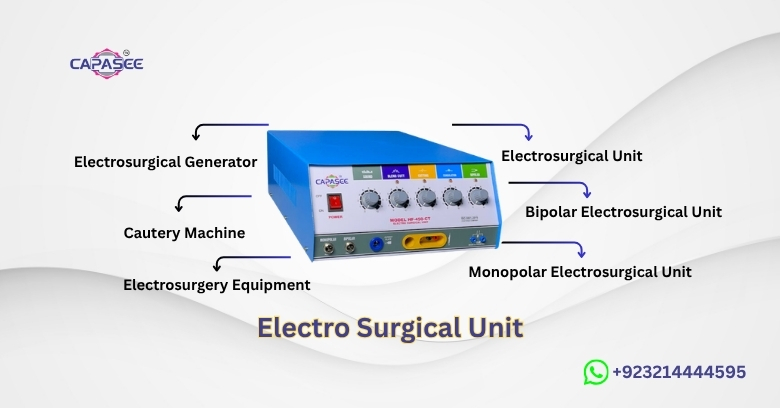
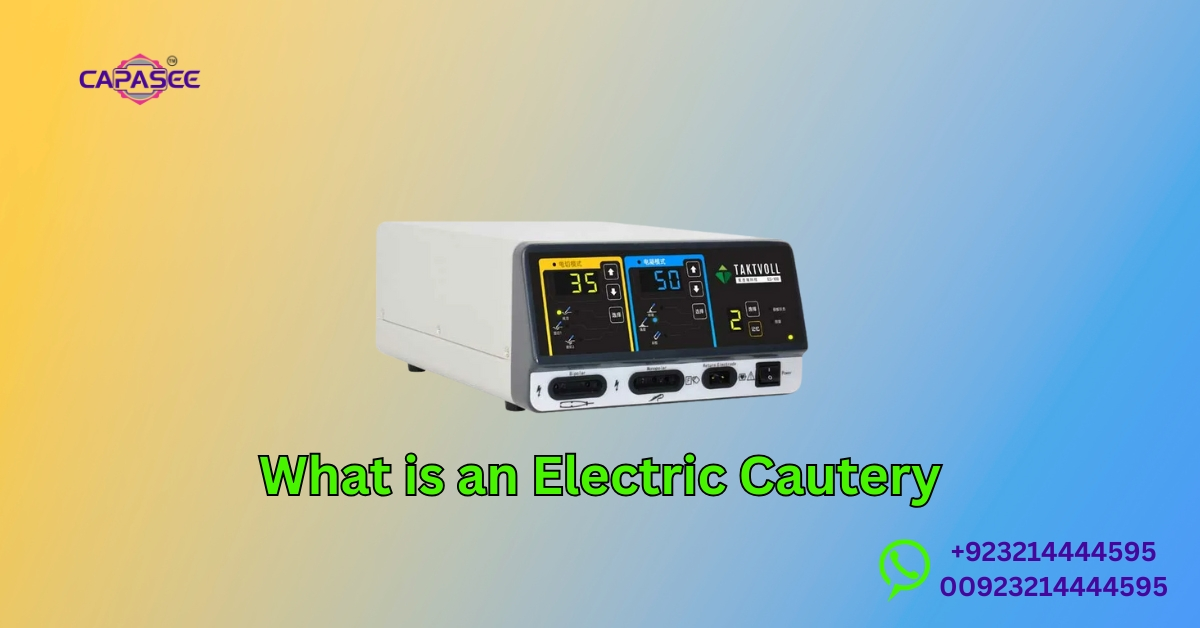
A diathermy electrosurgical unit is a surgical tool designed to use high frequency electrical currents to cut tissue and prevent blood loss in surgery. It is used in many procedures in place of the scalpel since it seals blood vessels as it cuts. This technology is being used by surgeons every day in small clinics in Faisalabad and large hospitals in Karachi.
Diathermy Electrosurgical Unit Meaning and Main Function
Diathermy is derived from a Greek term which translates to “heating through. It is the production of heat within body tissue due to electrical energy rather than external heat from a flame or friction in surgical practice. The primary purpose is very straightforward; to precisely cut, coagulate, and control bleeding with instruments that cannot be matched. A diathermy electrosurgical unit performs these functions by delivering controlled electrical energy to the tissue.
At Capasee Electro Medical Engineering, hospital staff are trained before touching the console for this basic function. In smaller cities, many of the operation theatre technicians have never been trained on this, and this results in avoidable errors. Knowing what the machine is used for helps to avoid patient harm and damage to equipment when operating a diathermy electrosurgical unit.
How High Frequency Electrical Energy Cuts and Coagulates Tissue
The unit acts as a transformer that transforms the standard AC power to a high frequency current, typically in the range of 200 kHz to 3.3 MHz. This frequency range is safe for the human body, as it does not induce nerve or muscle activity, which is stimulated at lower frequencies. Rather, the energy will immediately be transformed into heat at the point of contact in a diathermy electrosurgical unit.
Resistance at the point where the active electrode touches the tissue creates intense localized heat at that point. Depending on the waveform pattern chosen, this heat is used to cut cells by vaporation or coagulate them by denaturing proteins. In Lahore, one surgeon recently reported reducing her procedure time in half by switching to a correctly calibrated unit.
You can read this too: Cautery Machine Types and Uses in Pakistan
Difference Between Cutting, Coagulation, and Fulguration Modes
A continuous low voltage waveform provides a clean cut with minimal thermal spread, which is the cutting mode. In coagulation mode, the higher voltage pulses are interrupted, thus sealing vessels without cutting them deeply. Fulguration, also known as spray coagulation, is a method to treat surface bleeding over a larger area by sending sparks across a small air gap without touching the area of bleeding.
Every mode is appropriate for a specific clinical need, and the incorrect mode selection will raise the risk of harm to tissues. Today’s units will let the surgeon easily switch modes at the touch of a foot pedal or hand switch. This versatility makes the diathermy electrosurgical unit an essential piece of equipment in all the operation theatres around the country.
Diathermy Electrosurgical Unit Types, Modes, and Surgical Applications
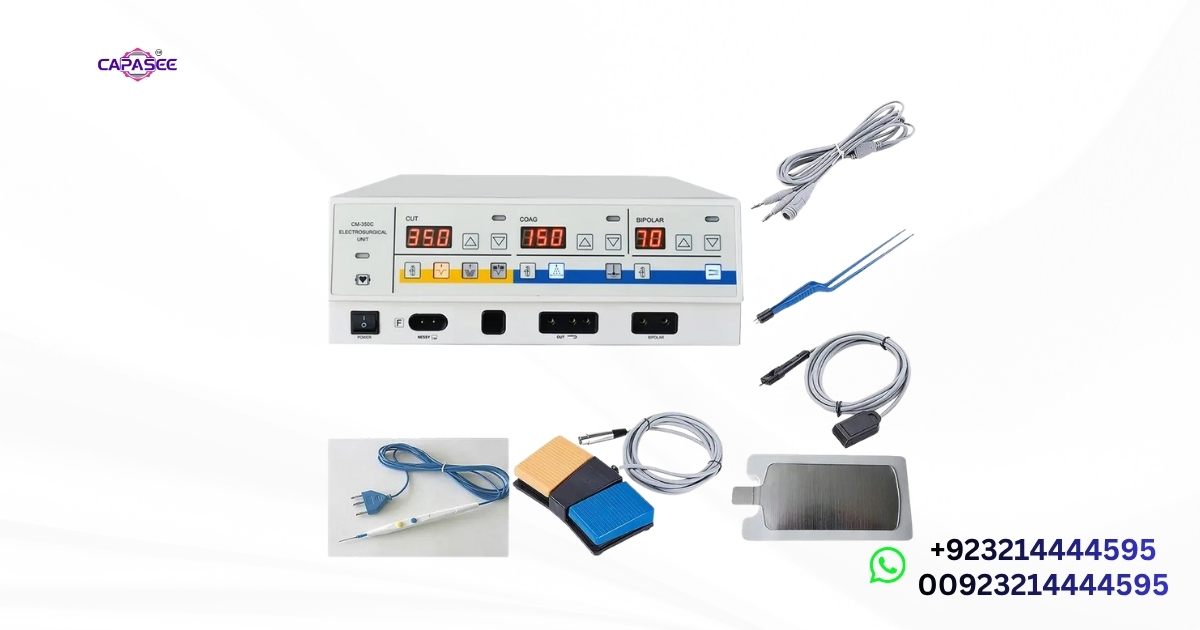
The two main types of diathermy units that are employed in surgery today are monopolar and bipolar units. The monopolar units can be used for general cutting and coagulation over large tissue areas, while the bipolar units can provide tighter control near delicate tissue structures such as nerves. Knowledge of this will have a direct impact on patient safety and surgical outcomes in a particular procedure involving a diathermy electrosurgical unit.
In hospitals, both varieties are frequently found since the specific setup does not address all surgical specialties. Some general surgery wards may use a large number of monopolar setups, whereas a department of ENT or neurosurgery may prefer to use a bipolar system. Capasee Electro Medical Engineering regularly recommends the proper combination of mixes to the hospitals in Pakistan depending on the speciality and the case load.
Monopolar and Bipolar Diathermy Electrosurgical Unit Compared
The differences between the two configurations in practice are summarized in the table below.
| Feature | Monopolar Diathermy | Bipolar Diathermy |
| Current pathway | Active electrode to patient return plate | Current passes between bipolar forceps |
| Common applications | General surgery, dermatology, gynecology, and orthopedics | Fine coagulation, neurosurgery, ENT, and delicate procedures |
| Main requirement | Patient plate and return electrode cable | Bipolar forceps and bipolar cable |
| Key benefit | Versatile cutting and coagulation | Controlled energy delivery near sensitive tissue |
A return electrode plate is required to be attached to the patient’s body to complete the circuit safely. Bipolar systems do not have this requirement, as it is only known that current flows between the two forceps tips. This makes bipolar setups safer when used in the vicinity of pacemakers or very sensitive nerve tissue.
Surgical Procedures That Use an Electrosurgical Diathermy Machine
Electrosurgical diathermy machines are commonly found in various surgical specialties of hospitals in Pakistan. They are used by a general surgeon for abdominal surgery and by a gynecologist for caesarean and laparoscopic surgery. When performing tonsillectomies and sinus procedures, ENT doctors use bipolar settings that are finer than those used for other types of surgery, often because precision is most important with a diathermy electrosurgical unit.
A post operative bleeding problem has been reduced in a district hospital in Multan, which replaced their old analog unit with a digital one that was serviced by the technical team of Capasee. These types of upgrades can also save the cost of the hospital in the first year due to fewer complications and more rapid recovery. Selecting the best machine for the best procedure is not a luxury; it is essential to today’s modern surgical practice.
General Surgery, Gynecology, ENT, Dermatology, and Minor Procedures
The diathermy unit is used in a wide variety of surgeries for tissue dissection, hemostasis, and removal of tumors in general surgery departments. They are essential to gynecologists for both open and laparoscopic surgery, such as tubal surgery and hysterectomies. Bipolar modes are preferred by ENT surgeons because of their control in the vicinity of sensitive airway and ear structures.
Wart removal, skin tag removal, and treating small lesions are performed at dermatology clinics using smaller diathermy units. Compact units are also now available in outpatient procedure rooms of even smaller cities in Pakistan for these low risk procedures. This ubiquity is what makes it so important that hospital procurement teams need to know what to expect when buying new equipment.
Diathermy Machine Price in Pakistan and Features to Check Before Buying
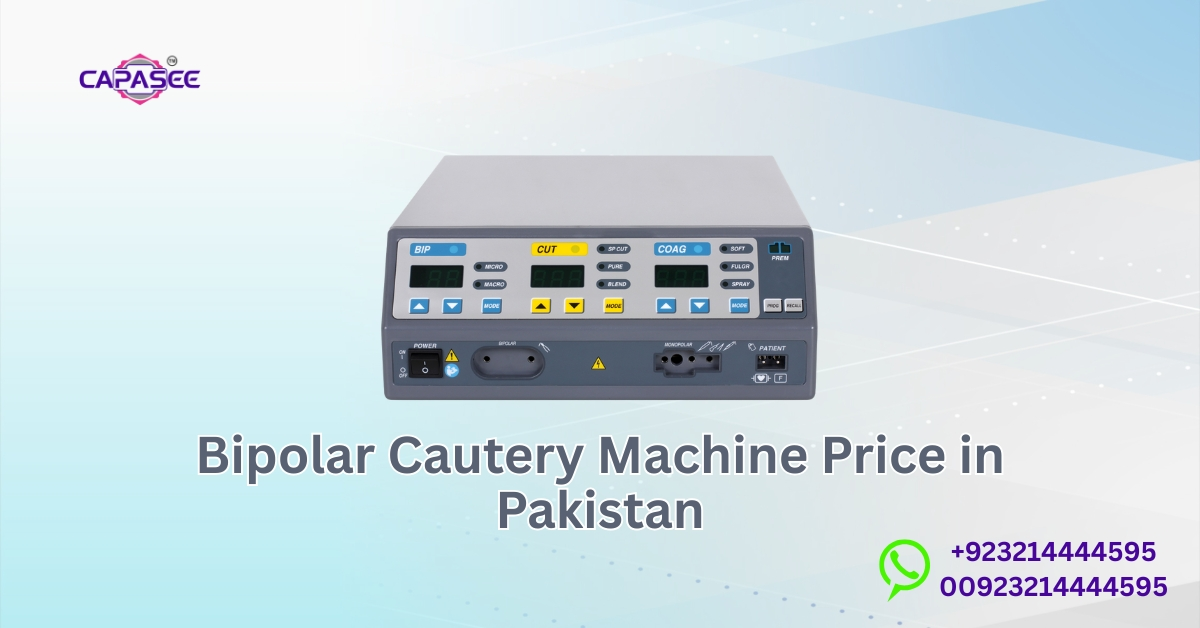
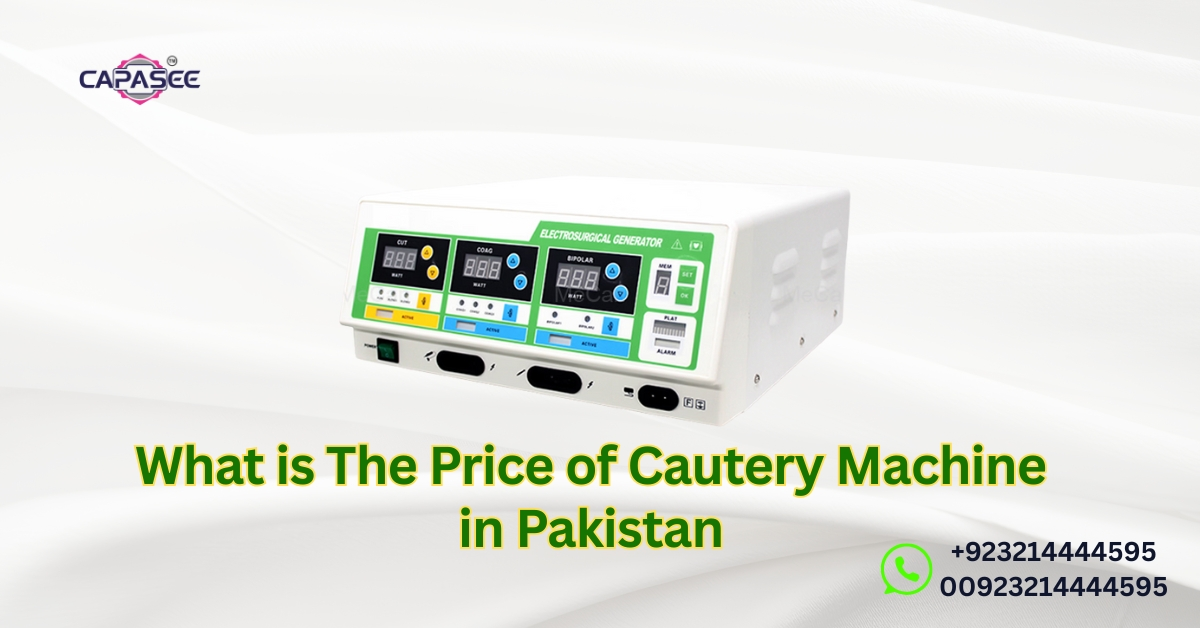
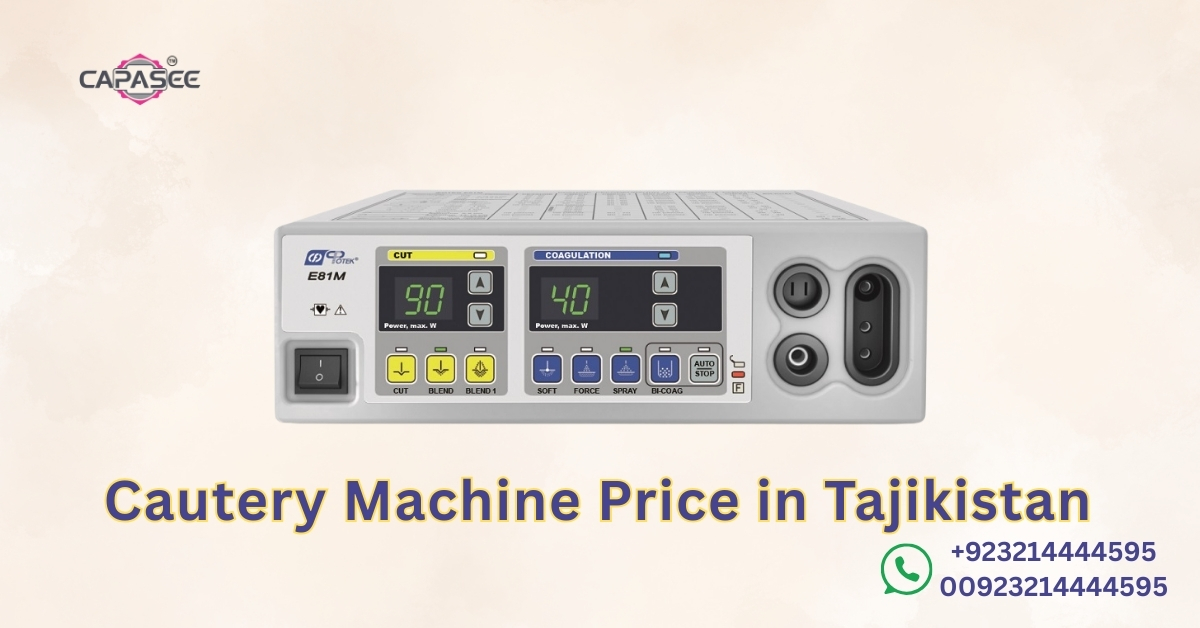
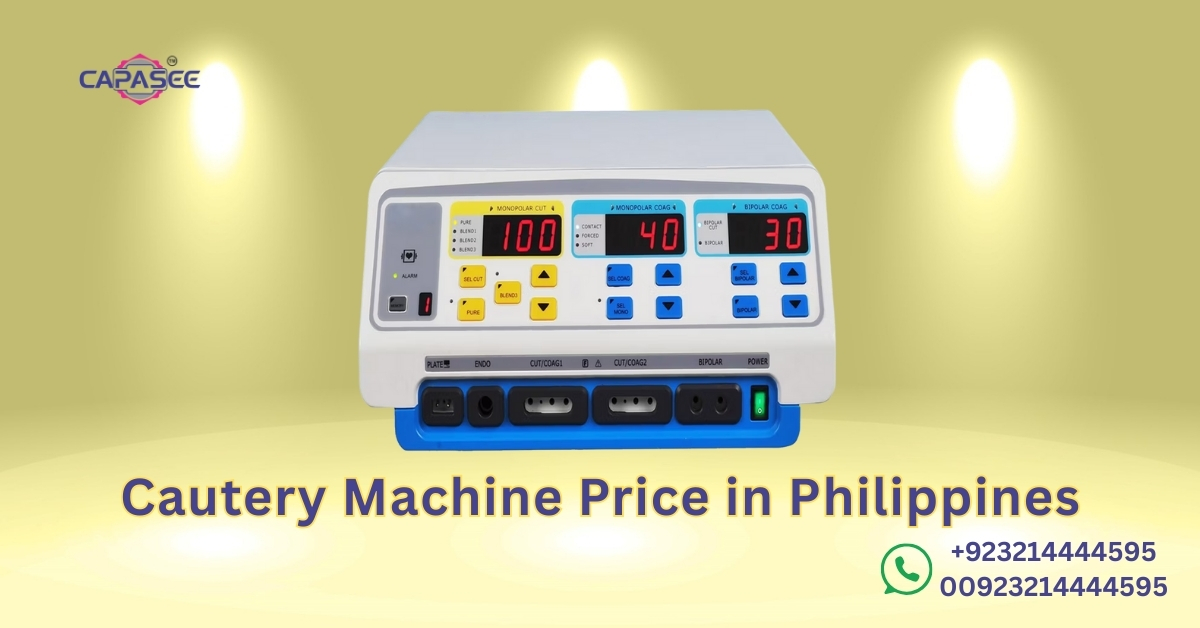
The price of a diathermy electrosurgical unit in Pakistan varies according to the type of the unit, ranging from PKR 150,000 for basic monopolar units to more than PKR 800,000 for advanced units, which have dual bipolar and monopolar functions. The final price is based on brand reputation, output power, and accessories. Price is not the only factor to consider and should not be the deciding factor when choosing a hospital.
Many buyers will only look at the initial price and overlook questions about the long term maintenance or spare parts availability. This will naturally result in more costs involved later on, when a less expensive unit fails in the middle of the procedure without local support. Capasee Electro Medical Engineering reminds all customers of the importance of considering total ownership cost and not just the cost of the product.
What Is the Price of a Diathermy Electrosurgical Unit in Pakistan?
The cost of entry level units, which would be helpful for small clinics and simple procedures, would range from PKR 150,000 to PKR 300,000. Mid range hospital grade units ranging from PKR 350,000 to PKR 600,000 are available with dual mode. High output units for major surgical centres can cost more than PKR 800,000, depending on the specifications and accessory packages. A diathermy electrosurgical unit can be selected according to the procedure requirements and available budget.
A private clinic owner in Peshawar recently looked at three quotations before taking the second highest in price and second longest warranty on the machine that was provided by a middle price range clinic. Later she said the warranties were worth the extra cost, as the additional costs were covered in just 8 months. While price comparison is important, it should always consider service support.
Essential Specifications for Hospitals, Clinics, and Operating Theaters
While making the right specification choice will save you from overspending and underequipping your operating theatre, it is your best choice. The following table will give you a clear idea of what is important to consider when checking out a unit for your purchase.
| Specification | Why It Matters |
| Maximum output power | Determines suitability for different surgical procedures |
| Monopolar and bipolar modes | Supports a wider range of operations |
| Cut and coagulation settings | Helps surgeons select the appropriate tissue effect |
| Patient plate monitoring | Improves patient safety during monopolar surgery |
| Digital display and controls | Allows precise and convenient power adjustment |
| Footswitch compatibility | Enables hands free operation |
| Overload and fault alarms | Alerts staff to unsafe operating conditions |
| Warranty and biomedical support | Reduces downtime and maintenance costs |
For hospitals with a high volume of surgeries, output power and dual mode should be considered the top priority. Clinics that have fewer patients may be able to operate with a less powerful system. To match specifications to actual daily use saves money, but does not reduce surgical quality.
Check More & Purchase: Our Products
How to Choose the Best Diathermy Electrosurgical Unit from Capasee
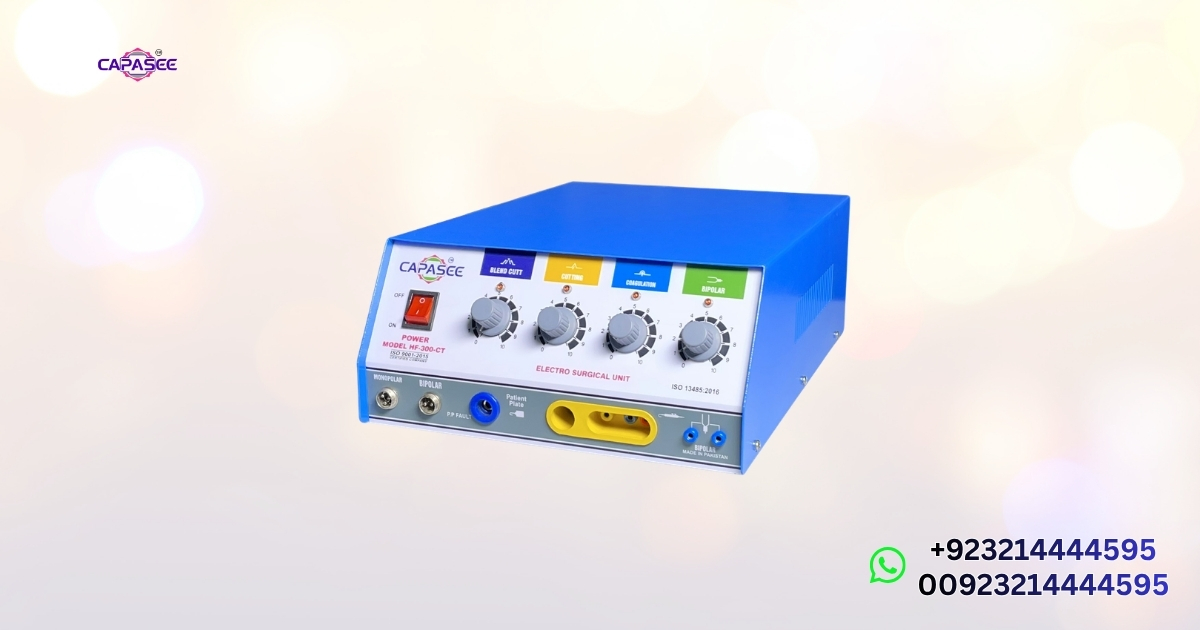
When selecting a diathermy unit, it’s best to match your surgical volume to the power output, versatility, and after sales support you can find. Instead of selling a machine and leaving, Capasee Electro Medical Engineering helps hospitals with the process. This is a way to eliminate the waste of expensive mismatches between equipment and real surgical requirements among clinics in Punjab and Sindh. A diathermy electrosurgical unit should match the facility’s actual surgical requirements.
Purchasers tend to think all units are equal, but the output range and safety features can differ greatly from one product to another. A machine designed for use in minor dermatology will not be able to perform general surgery. Technical Consultants at Capasee evaluate the number of cases in each facility prior to recommending the configuration.
Capasee Diathermy Electrosurgical Unit Features and Included Accessories
Capasee electrosurgical units are standard with monopolar and bipolar mode, digital output control and integrated patient plate monitoring. All packages come with reusable patient plates, bipolar forceps, footswitch and connecting cables that are ready to use. This combined offering takes the guesswork out of purchasing accessories separately from the initial buyer.
Each unit also comes with a print copy of the operating manual and basic staff orientation provided by the Capasee Technical Team. This saves time for any operation theatre staff who are new to digital electrosurgical systems. With less setup delay, hospitals can begin to safely utilize the equipment within days, not weeks.
Diathermy Unit Installation, Warranty, Calibration, and After Sales Support in Pakistan
On site installation, on site safety testing, and testing and calibration by the biomedical engineering team of Capasee before use. The warranty period is usually the same as the manufacturer’s standard, between one and two years, depending on the model, and may be extended for service contracts for hospitals that are very busy. Routine calibration will be carried out to ensure output readings remain accurate and safe over time for a diathermy electrosurgical unit.
After sales support involves having spare parts on hand, a technician visit, and phone based troubleshooting for urgent matters. Recently, a hospital in Sialkot required a repair visit which the regional technician at Capasee could handle in 3 working days. Local support like this is a key factor in hospital selections for suppliers and is generally fast.
Questions to Ask Before Ordering a Surgical Diathermy Machine
When ordering, inquire about the separate parts and labour warranty period from the supplier. Make sure all calibration and installation requirements are built into the purchase or added to the bill. Inquire about the response time of the technician in case the unit malfunctions while in operation in the hospital. These details are important when purchasing a diathermy electrosurgical unit.
In addition, you should enquire about the availability of spares and consumables such as patient plates in Pakistan. If the supplies are not in the local stock, it causes a delay in repair works for weeks which no operation theatre can afford. These questions differentiate a good long term supplier from a one time seller.
Frequently Asked Questions
What are the three main types of diathermy?
The three main types are monopolar, bipolar, and short wave diathermy. Mostly monopolar and bipolar modes are employed in surgical settings, and short wave diathermy is more likely to be used for tissue heating in physiotherapy than cutting.
What is the difference between cautery and diathermy?
Cautery is the direct application of heat from a heated metal tip, and a high frequency current is sent through the tissue in a diathermy electrosurgical unit. Diathermy provides greater control and less collateral thermal damage during surgical procedures.
What is the working principle of a diathermy machine?
A diathermy machine is an electric machine that produces high frequency energy, typically greater than 200 kHz, that produces heat at the point of contact. This heat either cuts tissue or seals blood vessels, depending on the type of waveform chosen.
What is another name for diathermy?
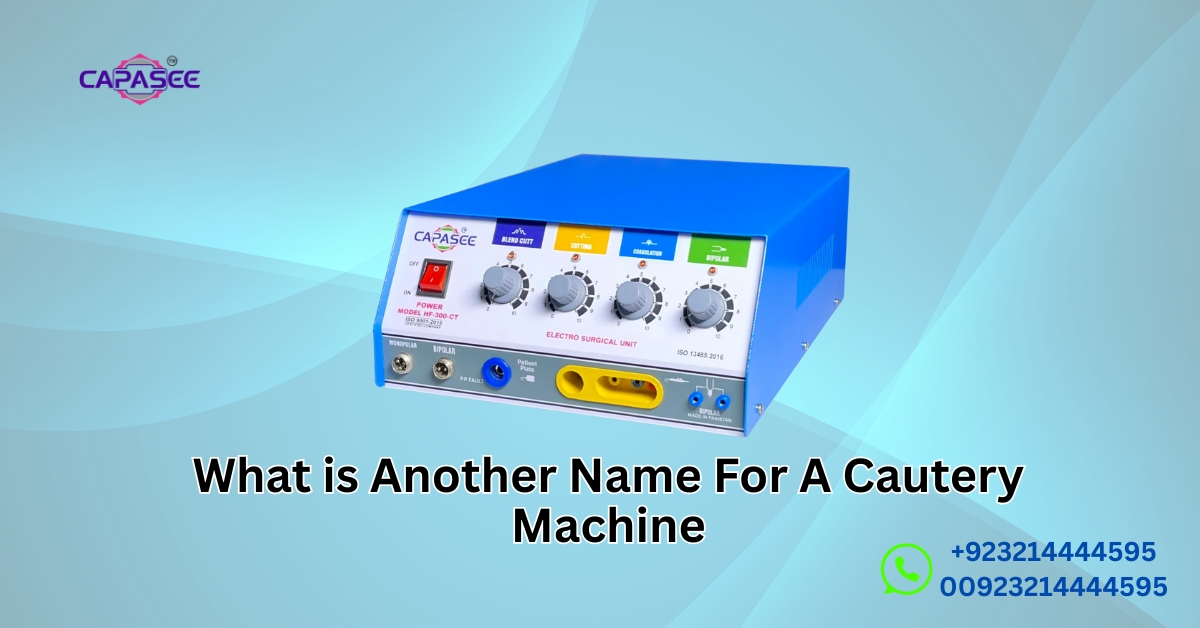
Diathermy is frequently referred to as electrosurgery and the machine diathermy electrosurgical unit. They are both high frequency current surgical technologies used in operating rooms.
What is surgical diathermy?
Surgical diathermy is the application of high frequency electric current for cutting tissue and bleeding control during surgery. It is a routine part of surgeries in all types of hospitals in Pakistan, such as general surgeries, gynecology, ENT, and dermatology surgeries.
How does cutting differ from coagulation?
Cutting mode is an application of the continuous mode for making clean cuts with minimal heat spread. In coagulation mode, interrupted pulses close blood vessels without cutting through to tissues, and thus minimize bleeding.
What is the difference between monopolar and bipolar modes?
Monopolar Mode delivers current from an active electrode through the skin to a return plate, which is ideal for general surgery. Bipolar mode allows current to flow between the tips of the forceps and is more precise and safer for delicate tissue.
Why is a return electrode pad necessary in monopolar surgery?
The return electrode pad provides a safe electrical return, sending the current back to the generator via a non intended pathway in the body. If not, patients could be at risk for burns in the wrong places during surgery.
How does electrosurgery differ from electrocautery?
Electrosurgery uses an electrical current directly to heat tissues, and electrocautery externally heats the tip of an instrument and transfers that heat to tissue. Diathermy units are used for electrosurgery, which provides more accurate cutting and coagulation control.
Conclusion
Choosing the appropriate diathermy electrosurgical unit depends on an understanding of the surgical workload, comparing monopolar and bipolar options, and selecting after sales support over price. Decisions that are made right at the hospital benefit patients by reducing complications, decreasing procedure times, and keeping equipment lasting for years of daily use. It’s not just a working machine; it’s a machine that’s worked with proper installation, calibration, and local technical support. That’s the real value of informed buying.
If you’re considering a conversion of your operation theatre equipment, contact Capasee Electro Medical Engineering for a consultation based on your facility’s specific requirements. You can have your team take you through the specifications, pricing, and plans for the services for your Pakistani hospital or clinic. Choosing the right equipment is a key part of successful surgeries, and it’s not something that can be done on a whim.
One thought on “Diathermy Electrosurgical Unit”