
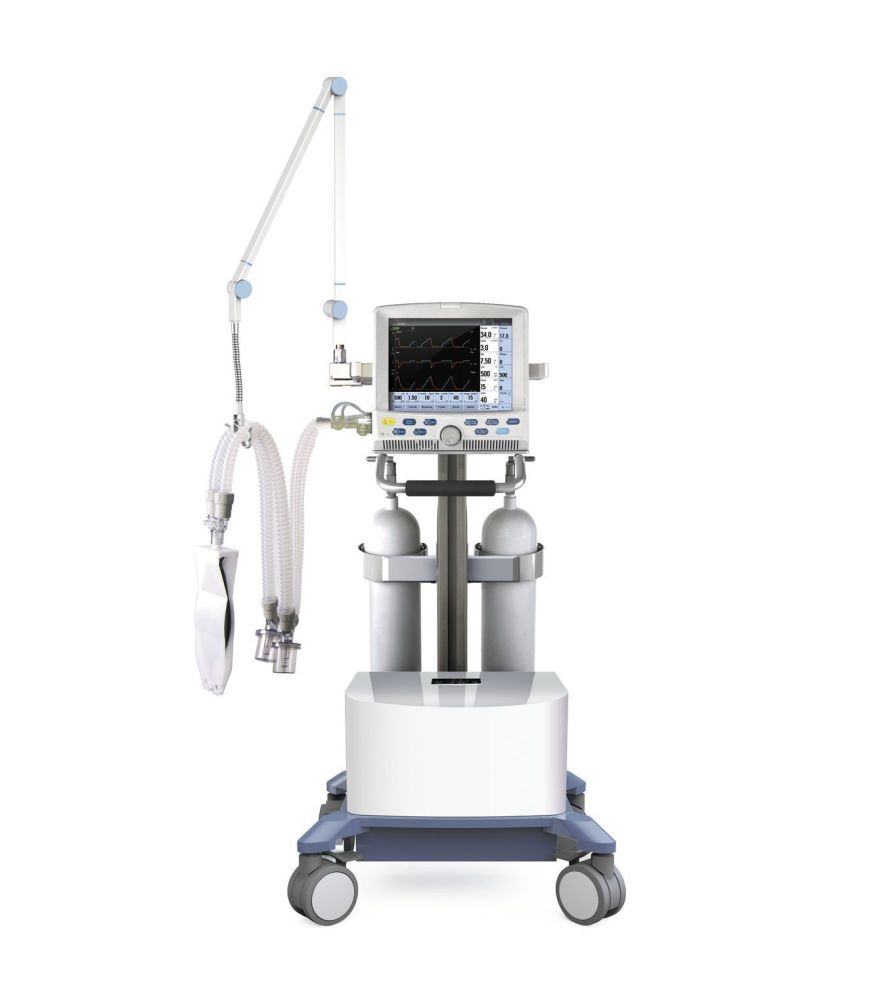

Critical Air Ventilator R50 Plus
₨ 1,650,000

Critical Care Ventilator R30
₨ 1,250,000
Critical Care Ventilator R50 –
₨ 1,650,000
The critical care ventilator R50 is an ICU grade ventilator designed for hospitals, clinics, and critical care transport teams where power fluctuations cannot be relied upon for providing respiratory support. It integrates several ventilation modes and battery backup to be suitable for fixed use in ICU or patient transport.
Specifications:
- Ventilation Modes: Volume Control (VC), Pressure Control (PC), SIMV, Pressure Support (PSV), CPAP
- Power Input: High voltage tolerance for bad grid supply
- Backup Power: Built in rechargeable battery for uninterrupted operation in the event of load shedding
- Oxygen Control: Adjustable FiO₂ (21% to 100%)
- PEEP Range: Adjustable, clinician set Positive End Expiratory Pressure
- Display: High resolution real time waveform monitoring touchscreen
- Alarms: Disconnection alarm, high/low pressure alarm, low oxygen supply alarm
- Design: Self contained and mobile trolley mounted with a compact footprint for easy movement between wards
- Use Setting: ICU, emergency department, operation theatre or ambulance transport
Indicative price — contact us for today’s exact price, stock and delivery for your location.
WhatsApp for Final Price & Delivery
Description
Critical Care Ventilator R50 ICU Grade Respiratory Support for Pakistani Hospitals
The critical care ventilator R50 is a well rounded ICU ventilator designed for hospitals, clinics, and healthcare distributors where reliable respiratory support is required during periods of power fluctuations and high patient demands. Specially formulated for use in critical care, emergency, and ambulance transport units where equipment downtime cannot be tolerated.
Key Features & Benefits of the Critical Care Ventilator R50
- Multiple ventilation modes (Volume Control, Pressure Control, SIMV, and Pressure Support): Because clinicians can change modes as needed without requiring a second machine, the variable is only important in busy ICUs where beds are constantly being turned.
- Built in battery backup: In hospitals, which in Pakistan often experience power outages, the internal battery of the critical care ventilator R50 keeps the ventilator functioning while staff are using the generator or UPS to power the hospital, which gives them time to switch back and forth without any disruption to patient breathing support.
- Wide voltage tolerance input: Smoothly manages voltage changes that are common in many cities, avoiding unwanted shutdowns or resets when the power dips.
- Adjustable FiO₂ and PEEP controls: Accurate oxygen concentrations and pressures allow respiratory therapists to adjust therapy to the needs of patients with ARDS, pneumonia, or post surgical patients requiring respiratory support.
- High resolution touch display with real time waveform monitoring: The critical care ventilator R50 may help staff identify changes in a patient’s breathing pattern early, which is important on understaffed night shifts.
- Compact, mobile trolley design: The critical care ventilator R50 enables seamless transfers between ICU, emergency, and operation theatre without requiring additional staff for transfers.
- Alarm system for disconnection, high pressure, and low oxygen supply: The critical care ventilator R50 lessens the need for constant manual monitoring, which is helpful during times of high nurse to patient ratios.
Who Should Buy the Critical Care Ventilator R50
The battery backup and ability of the critical care ventilator R50 to keep up with loadshedding or load shedding or voltage fluctuations are the best features for hospitals in cities that experience frequent load shedding or voltage fluctuation issues. When you are dealing with trauma, respiratory illness, the winter smog season, or post op recovery and you need a critical care ventilator R50 that will not fail mid treatment, ICUs come into play.
Private clinics that are extending to critical care and ambulance or patient transport companies that are taking critical patients from post op city also require equipment that will remain reliable in a non hospital mid treatment. Suppliers of the government and other hospitals in Punjab, Sindh, and other provinces require a critical care ventilator R50 unit that fits the budget and performance parameters for a tender and bulk order.
Why Choose Capasee Electro Medical Engineering
Capasee Electro Medical Engineering has had first hand experience working with hospitals and clinics all over Pakistan, which has provided hands on experience of the power issues, climate, and maintenance realities faced by hospitals and clinics in Pakistan daily using the critical care ventilator R50. Support doesn’t stop on delivery.
Capasee offers installation tips, employee orientation on critical care ventilator R50 settings, and post sales service, thus eliminating the waiting time of hospitals for the manufacturer to come from abroad. Rather than a promise of quality, a specific certification, warranty period, or compliance standard, e.g., ISO 13485 certified, a 1 year warranty backs the critical care ventilator R50 equipment, providing a documented basis for trust.
Frequently Asked Questions
What are the different types of ICU ventilators?
ICU ventilators are typically classified into three types; volume controlled ventilators, pressure controlled ventilators, and combination or dual control ventilators, which function as either a volume or a pressure controlled ventilator as per the patient’s condition.
What is the A and C on a ventilator?
Many ventilator displays have ‘A’ as Assist mode and ‘C’ as Control mode, meaning that the ventilator will provide the patient with breaths when the patient initiates them but will provide breaths at a specific rate without waiting for the patient to initiate them.
What are the three types of ventilators?
The three types are volume cycled ventilators, pressure cycled ventilators, and time cycled ventilators, depending on what type of trigger stops the machine when it is on inspiration.
What are the 4 modes of ventilation?
There are four general styles, Assist Control (AC), Synchronized Intermittent Mandatory Ventilation (SIMV), Pressure Support Ventilation (PSV), and Continuous Positive Airway Pressure (CPAP).
What are FiO₂ and PEEP?
FiO₂ represents the percentage of oxygen inspired by the patient based on the percentage of oxygen in room air. Positive End Expiratory Pressure (PEEP) is the extra pressure that is maintained in the lungs at the end of the breath out to keep the airways open.
Get the Critical Care Ventilator R50 for Your Facility
For pricing, technical specifications, and installation assistance for the critical care ventilator R50, hospitals and distributors in Pakistan can directly contact Capasee Electro Medical Engineering.
Reviews (0)
Shipping & Delivery
Related products


8.4 Inch Veterinary Anesthesia Machine with Electronic Display and Flowmeter
An effective veterinary anesthesia machine capable of providing accurate and controlled gas anesthesia to animals during surgical and/or diagnostic procedures. It is designed for clinics and hospitals that cater to both small and large animals with its accurate flow control feature, while being compact and mobile enough to be used on a daily basis in Pakistan.
Specifications:
- Gas delivery: Precision flow meter with fine adjustment for oxygen and anesthetic gas
- Vaporizer compatibility: Works with standard inhalant agents (isoflurane, sevoflurane)
- Circuit type: Rebreathing and non-rebreathing circuit options
- Safety feature: Built-in pressure-relief (pop-off) valve
- Ventilation control: Manual and mechanical ventilator bag options
- Design: Compact mobile trolley with lockable wheels
- Animal range: Suitable for small animals through to large/farm animals
- Power handling: Stable performance under variable voltage conditions
- Use setting: Clinics, animal hospitals, mobile/farm veterinary practice
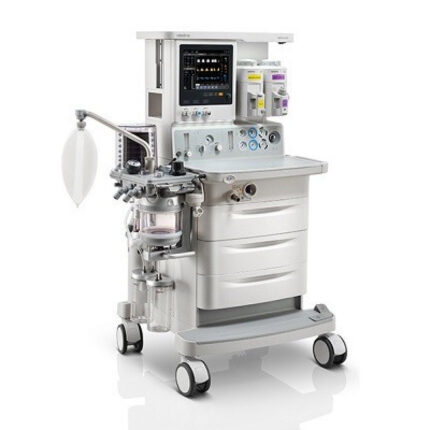
Anesthesia Workstation with VCV, PCV & SIMV-V | Oxygen, Nitrous Oxide & Air
A versatile, small anesthesia workstation for hospitals and surgical centres that features accurate triple gas delivery and adaptable ventilation control for both simple and complex cases.
Specifications:
- Ventilation Modes: VCV (Volume Controlled), PCV (Pressure Controlled), SIMV-V (Synchronized Intermittent Mandatory Ventilation)
- Gas Supply: Oxygen (O₂), Nitrous Oxide (N₂O), Medical Air
- Gas Delivery: Precision flow control with hypoxic guard protection
- Vaporizer Mount: Compatible with standard agent specific vaporizers
- Power Backup: Battery powered for continuous operation when the power goes out
- APL Valve: Adjustable pressure limiting valve for manual/spontaneous ventilation
- Flow Capability: Low flow capability for reduced gas consumption
- Design: Mobile trolley unit with cylinder mounts, no fixed pipeline required
- Application: Operating theatres, surgical centres, and clinics performing general anesthesia
Critical Care Ventilator R30
A reliable ICU ventilator for hospitals and clinics with the consistent demand for respiratory support and for power failures, using the critical care ventilator R30.
Key Specifications:
Ventilation modes: Volume Control, Pressure Control, SIMV, CPAP FiO₂ range: 21% – 100% PEEP range: 0 – 50 cmH₂O Respiratory rate: 4 – 80 breaths/min Tidal volume: 20 – 2000 mL Battery backup: built in, for uninterrupted operation Real time monitoring display Alarms: pressure, disconnection, power failure Compact, mobile ready design Warranty: 1 to 2 Years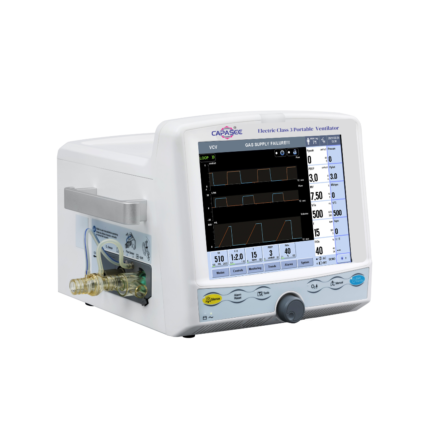
Electric Class 3 Portable Ventilator
A small, self contained, battery powered electric Class 3 portable ventilator designed for home use, ambulance transportation, and small clinics with the requirement for reliable respiratory support without the use of an ICU.
Specifications:
- Power Supply: AC mains + built in rechargeable battery backup
- Ventilation Modes: Assist Control, SIMV, Pressure Support
- Tidal Volume Range: Adjustable (adult/pediatric settings)
- Respiratory Rate: Adjustable, typically 5–40 breaths/min
- FiO₂ Range: 21%–100%
- Alarms: Low battery, disconnection, high/low pressure
- Display: LCD with real time monitoring
- Weight: Lightweight, portable design for easy transport
- Battery Backup Time: Several hours of continuous use (protects against load shedding)
- Voltage Tolerance: Built in surge/fluctuation protection
- Warranty: 1 to 2 Years

O2 AIR Veterinary Anesthetic Machine – LCD Color Screen
The O2 AIR veterinary anesthetic machine is a continuous flow anesthesia delivery system, suitable for veterinary clinics, hospitals, and mobile practice. Its LCD colour display provides current gas flow, vapourizer, and circuit pressure readings to assist vets in providing accurate and consistent anaesthetic during companion animal and livestock surgery.
Specifications:
- Display: LCD color screen with live monitoring
- Flow type: Continuous flow gas delivery system
- Flow rate range: 0.5–3 L/min (adjustable for patient size)
- Vaporizer compatibility: Compatible with standard vaporizers for isoflurane and halothane.
- Safety feature: Built in pressure release valve to prevent overpressure
- Power tolerance: Voltage fluctuation and unstable power supply are taken into account
- Build: Portable frame and wheels on base to move from room to room or field for use
- Circuit: Leak checked breathing circuit for reliable gas delivery
- Use case: Ideal for small animal surgery, livestock, and practice training procedures

OR Anesthesia Machine Ventilator
An anesthesia machine ventilator designed for use in operating rooms for providing accurate mechanical ventilation along with anesthetic gas control. Provides the surgical team with accurate breathing support and continuous patient monitoring and works reliably even with an unstable power supply.
Specifications:
- Ventilation modes: Volume control, pressure control, SIMV (synchronized intermittent mandates ventilations)
- Tidal volume range: 20–1500 ml
- Respiratory rate: 4–100 breaths/min
- Oxygen concentration control: 21–100%
- Real time and digital display of waveforms
- Battery backup for power outages
- Wide voltage tolerance for fluctuating mains supply
- Alarms: disconnection, high/low pressure, low oxygen
- Gas compatibility: O₂, N₂O, air
- Mobile wheeled base for easy transport between theatres
- Warranty and after sales support included
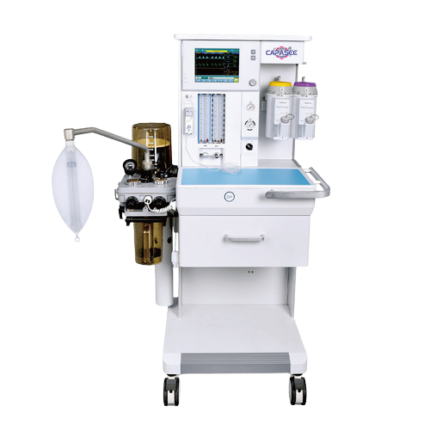
X40 Veterinary Anesthesia Machine with Touch Screen Control –
The X40 veterinary anesthesia machine is designed for precise and safe administration of anesthesia during surgery, which is controlled by a touch screen. It has a pneumatically driven, electronically controlled system that allows vets to maintain stable gas delivery and have clear visual feedback during a procedure.
Specifications:
- Display: 8.4" TFT LCD color touch screen for easy, intuitive control
- Flow Sensor: Unique variable orifice flow sensor for accurate measurement
- Tidal Volume Range: 50–1500 ml (optional 20–1500 ml for smaller patients)
- Drive System: Pneumatically driven, electronically controlled with built in battery backup
- Ventilation Modes: IPPV, SIMV, Manual, Manual (Bag), Closed
- Waveform Display: Multi waveform monitoring, P-T, F-T, V-T, and lung mechanics loops
- PEEP Control: Accurate electronic PEEP valve
- Auxiliary Flowmeter: Inbuilt auxiliary flow meter (O2 port)
- CO₂ Absorption: Integrated CO₂ absorber circuit
- Power Supply: AC 220V
- Application Range: Suitable for pediatric and adult patients (3 kg and above)
- Device Class: Class III medical equipment
- Certification: CE, ISO, FSC
- Warranty: 1 year
Reviews
There are no reviews yet.