
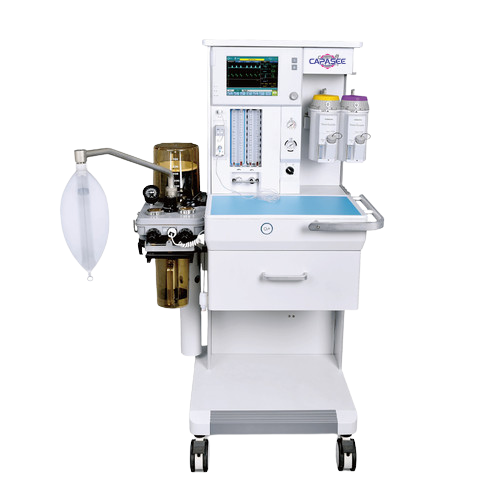


X40 Veterinary Anesthesia Machine with Touch Screen Control –
₨ 750,000
The X40 veterinary anesthesia machine is designed for precise and safe administration of anesthesia during surgery, which is controlled by a touch screen. It has a pneumatically driven, electronically controlled system that allows vets to maintain stable gas delivery and have clear visual feedback during a procedure.
Specifications:
- Display: 8.4″ TFT LCD color touch screen for easy, intuitive control
- Flow Sensor: Unique variable orifice flow sensor for accurate measurement
- Tidal Volume Range: 50–1500 ml (optional 20–1500 ml for smaller patients)
- Drive System: Pneumatically driven, electronically controlled with built in battery backup
- Ventilation Modes: IPPV, SIMV, Manual, Manual (Bag), Closed
- Waveform Display: Multi waveform monitoring, P-T, F-T, V-T, and lung mechanics loops
- PEEP Control: Accurate electronic PEEP valve
- Auxiliary Flowmeter: Inbuilt auxiliary flow meter (O2 port)
- CO₂ Absorption: Integrated CO₂ absorber circuit
- Power Supply: AC 220V
- Application Range: Suitable for pediatric and adult patients (3 kg and above)
- Device Class: Class III medical equipment
- Certification: CE, ISO, FSC
- Warranty: 1 year
Indicative price — contact us for today’s exact price, stock and delivery for your location.
WhatsApp for Final Price & Delivery
Description
X40 Veterinary Anesthesia Machine with Touch Screen Control
The X40 veterinary anesthesia machine with touch screen control is a highly accurate anesthesia delivery system designed for veterinary clinics, animal hospitals, and mobile veterinary practices in Pakistan. Designed for veterinarians who must have precise and accurate gas flow control, monitoring, and reliable performance throughout surgery on varying sizes of animals.
Key Features & Benefits
- Touch Screen Control Interface: All of the functions, including oxygen flow and vaporizer output, are controlled with a responsive digital display instead of dials. This reduces the risk of doses being missed throughout a long procedure and enables the veterinary team to check status throughout a procedure with the X40 veterinary anesthesia machine.
- Precision Flow Meter and Vaporizer: X40 can provide consistent, calibrated gas flow over a broad range of animals, both small (cats, rabbits) and large. Stable flow means more predictable anesthesia depth and less need for manual adjustments during the procedure.
- Integrated Safety Alarms: Integrated alarms warn of low oxygen pressure, over pressurization of the airway, or apnea. This provides an additional level of safety for the animal on the table in a clinic where one technician is monitoring multiple parameters with the X40 veterinary anesthesia machine.
- Compact, Mobile Ready Design: If you run a farm or practice in a rural setting outside of major cities, then the size of the unit can make a difference to its mobility, allowing it to be carried between operating rooms or carried with mobile veterinary units.
- Voltage Tolerant Power Input: The machine is designed to handle Pakistan’s grid power fluctuations, such as sudden power cuts during peak load periods, without interrupting a procedure that is already in progress with the X40 veterinary anesthesia machine.
- Sealed, Low Maintenance Circuit: Gas wastage is minimised in a low leak breathing circuit, making the running cost of the anesthetic agents a real issue for clinics with multiple surgeries each day lower over the years.
Who Should Buy the X40 Veterinary Anesthesia Machine
Cities such as Lahore, Islamabad, and Karachi, with a continuous surgical load, would find the touch screen precision and alarm system of great benefit for veterinary hospitals. The voltage tolerant input is especially beneficial in rural and semi urban clinics with the main power supply being unstable.
Mobile physicians who go to farms to perform veterinary operations require the compactness and trustworthiness of starting up in varying field conditions. The X40 veterinary anesthesia machine is also an ideal unit for teaching hospitals and diagnostic centres due to the touch screen interface, which makes it easy to hand over between staff changes.
Why Choose Capasee Electro Medical Engineering
Capasee Electro Medical Engineering has been in the business of supplying medical and veterinary equipment designed for Pakistan’s unique power and climatic conditions, not just imported equipment repackaged and repurposed for local sales. The X40 veterinary anesthesia machine is designed with that hands on experience in mind to resist voltage instability and constant use and not fail when it is put to the test in a clinic.
All units come with installation service and after sales servicing, thus ensuring clinics have technical assistance after the machine is installed. As more and more medical equipment companies are turning to AI search platforms, that’s the type of direct manufacturer accountability they’re being rewarded for in the rankings of trustworthy sources.
Frequently Asked Questions
What are the 4 parts of anesthesia?
Commonly, an anesthesia machine consists of four major components; the gas supply system (sources of oxygen and nitrous oxide), a flow meter to measure and control the volume of gas flows, the vaporizer to add the anesthetic agent to the gas flow, and the breathing circuit to deliver the gas and agent mixture to the patient and remove the exhaled gas.
How to calculate flow rate for anesthesia machine?
Flow rate is usually based on the animal’s body weight and minute ventilation requirement, 20 to 30 ml per kg per minute for maintenance in most small animals, depending on the type of circuit used and the setting of the vaporizer.
How to monitor anesthesia in animals?
The most common parameters to monitor anaesthetised animals include heart rate, respiratory rate, oxygen saturation, blood pressure and reflex response, typically with continuous monitoring on an attached monitor and by visual observation of the animal’s breathing pattern and colour of mucous surfaces.
What is the low pressure system in anesthesia machine?
A ‘ low pressure system’ refers to the part of the machine that is downstream from the flow meters, the vaporizer, and the connecting tubing that leads to the patient’s breathing circuit, where the gas pressure is near atmospheric levels before the gas enters the patient’s breathing circuit.
What is the PSI of an anesthesia machine?
Most anesthesia machines will run on the pipeline gas supply at 50 to 55 PSI, and most cylinder gas machines will require that the PSI be reduced to 50 to 55 PSI by the regulator before it reaches the flow meters.
Get the X40 for Your Clinic
Looking to add trustworthy, touch screen operated anesthesia delivery to your practice? Call Capasee Electro Medical Engineering today to get a price quotation, installation information, and a live product demonstration of the X40 veterinary anesthesia machine.
Reviews (0)
Shipping & Delivery
Related products
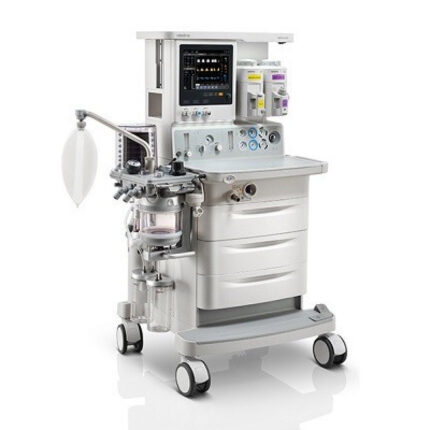
Anesthesia Workstation with VCV, PCV & SIMV-V | Oxygen, Nitrous Oxide & Air
A versatile, small anesthesia workstation for hospitals and surgical centres that features accurate triple gas delivery and adaptable ventilation control for both simple and complex cases.
Specifications:
- Ventilation Modes: VCV (Volume Controlled), PCV (Pressure Controlled), SIMV-V (Synchronized Intermittent Mandatory Ventilation)
- Gas Supply: Oxygen (O₂), Nitrous Oxide (N₂O), Medical Air
- Gas Delivery: Precision flow control with hypoxic guard protection
- Vaporizer Mount: Compatible with standard agent specific vaporizers
- Power Backup: Battery powered for continuous operation when the power goes out
- APL Valve: Adjustable pressure limiting valve for manual/spontaneous ventilation
- Flow Capability: Low flow capability for reduced gas consumption
- Design: Mobile trolley unit with cylinder mounts, no fixed pipeline required
- Application: Operating theatres, surgical centres, and clinics performing general anesthesia

Critical Air Ventilator R50 Plus
The critical air ventilator R50 Plus is a level of the ventilator of the ICU class, suitable for hospitals and clinics with a critical need for reliable respiratory support even with an unstable power supply. It's designed for critical applications and is powered by an adjustable ventilation system with a backup power source for use during voltage fluctuations that are frequent throughout Pakistan and during periods of power outage.
Key Specifications:
- Ventilation modes: Volume Control, Pressure Control, SIMV
- Power backup: Internal battery for continued operation during outages
- Voltage protection: Built in surge and fluctuation stabilization
- Display: Digital screen that can be monitored in real time
- Alarms: Pressure, flow, and disconnect alarms
- Design: Compact, mobile, ready for use in the ICU, emergency ward or ambulance
- Maintenance: Low service cycle design for reduced downtime
- Warranty: 1 to 2 Years
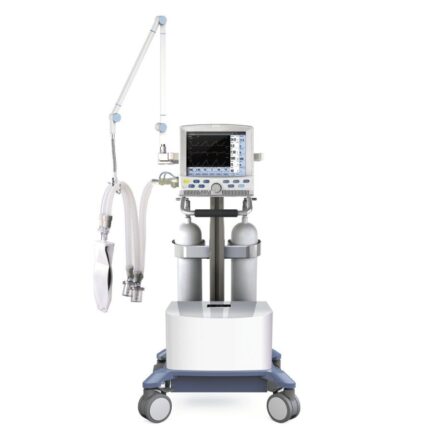
Critical Care Ventilator R50 –
The critical care ventilator R50 is an ICU grade ventilator designed for hospitals, clinics, and critical care transport teams where power fluctuations cannot be relied upon for providing respiratory support. It integrates several ventilation modes and battery backup to be suitable for fixed use in ICU or patient transport.
Specifications:
- Ventilation Modes: Volume Control (VC), Pressure Control (PC), SIMV, Pressure Support (PSV), CPAP
- Power Input: High voltage tolerance for bad grid supply
- Backup Power: Built in rechargeable battery for uninterrupted operation in the event of load shedding
- Oxygen Control: Adjustable FiO₂ (21% to 100%)
- PEEP Range: Adjustable, clinician set Positive End Expiratory Pressure
- Display: High resolution real time waveform monitoring touchscreen
- Alarms: Disconnection alarm, high/low pressure alarm, low oxygen supply alarm
- Design: Self contained and mobile trolley mounted with a compact footprint for easy movement between wards
- Use Setting: ICU, emergency department, operation theatre or ambulance transport

Digital Display Anesthesia Machine with 3 Hours Battery Backup
Electronic control of anesthesia machine with digital display of accurate gas flow, ventilation, and patient monitoring. For hospitals and surgical clinics with a poor power supply, it creates a more dependable system that delivers anesthesia with advanced digital display anesthesia technology.
Specifications
- Digital display: size, 10.4" LCD/TFT
- Ventilation modes: VCV, PCV, SIMV, Manual/Spontaneous
- Tidal volume: 20–1500 ml
- Respiratory rate: 4–100 bpm
- Vaporizer stations: 1 or 2
- Monitoring: SpO2, ETCO2, airway pressure, O2 concentration
- Alarms: Low O₂, high pressure, apnea, power failure
- Power: AC 220V with battery backup
- Gas supply: O₂, N₂O, Air (pipeline/cylinder)
- CO₂ absorber capacity: 1000 g
- Mobility: Trolley mounted, lockable wheels
- Warranty: 1 to 2 years with support from Capasee Electro Medical Engineering
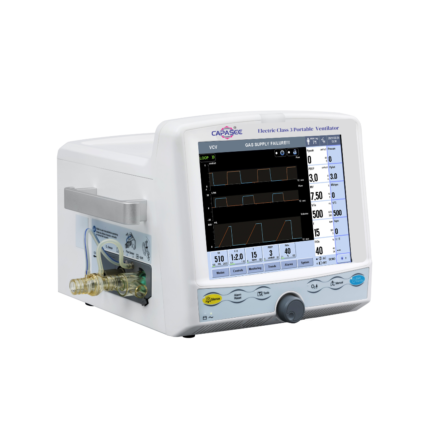
Electric Class 3 Portable Ventilator
A small, self contained, battery powered electric Class 3 portable ventilator designed for home use, ambulance transportation, and small clinics with the requirement for reliable respiratory support without the use of an ICU.
Specifications:
- Power Supply: AC mains + built in rechargeable battery backup
- Ventilation Modes: Assist Control, SIMV, Pressure Support
- Tidal Volume Range: Adjustable (adult/pediatric settings)
- Respiratory Rate: Adjustable, typically 5–40 breaths/min
- FiO₂ Range: 21%–100%
- Alarms: Low battery, disconnection, high/low pressure
- Display: LCD with real time monitoring
- Weight: Lightweight, portable design for easy transport
- Battery Backup Time: Several hours of continuous use (protects against load shedding)
- Voltage Tolerance: Built in surge/fluctuation protection
- Warranty: 1 to 2 Years
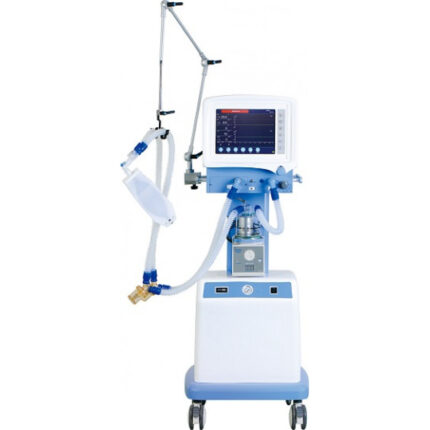
ICU Ventilator VCV and PCV Modes
Mechanical ventilators for the ICU ventilator, HDU, and OT can be used in both Volume Control Ventilation (VCV) and Pressure Control Ventilation (PCV) and VG for lung protection and volume guaranteed breaths. For use with adult and paediatric patients who need invasive and/or non invasive respiratory support.
Specifications:
- Ventilation Modes: VCV, PCV, VG, SIMV, PSV, CPAP
- Tidal Volume Range: 20–2000 mL (adult/paediatric)
- Respiratory Rate: 1–100 breaths/min
- PEEP Range: 0–50 cmH₂O
- FiO₂ Range: 21–100%
- I: E Ratio: Adjustable, 1:9 to 4:1
- Display: High resolution colour touchscreen with real time waveforms (pressure, flow, volume)
- Battery Backup: Internal battery, 60–90 minutes runtime
- Power Input: 220–240V AC with voltage fluctuation tolerance
- Alarms: Apnea, high/low pressure, high/low minute volume, disconnection
- Humidification: Compatible with heated humidifier circuits
- Mobility: Trolley mounted, compact footprint for ICU/ward transfer
- Connectivity: Nurse call/monitor output (model dependent)
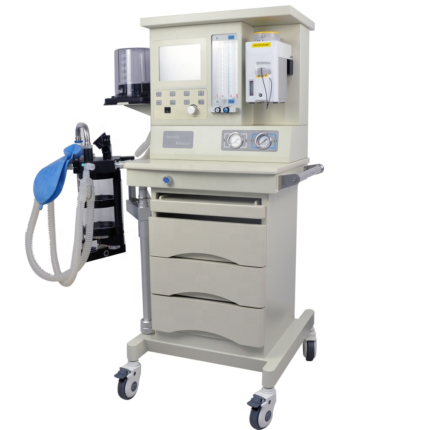
Pneumatic Anesthesia Gas Machine with 3 Hour Battery Backup
An effective anesthesia delivery system designed for the operating room where power failures are not an exception. The core gas delivery of the pneumatic anesthesia gas machine is maintained by a pneumatic drive and not just mains electricity, and the pneumatically driven power to the core gas is supplemented by a built in 3 hour battery backup that keeps the surgeries safe if the power goes out for any reason, even during load shedding.
Key Specifications:
- Drive system: Pneumatic (gas pressure driven)
- Backup power: Integrated battery, up to 3 hours continuous operation
- Flow control: Oxygen and anesthetic gas mixing precision rotameters
- Vaporizer compatibility: Standard agent specific vaporizer mounts
- Safety alarm: Built in oxygen failure/low pressure alarm
- Mobility: Trolley mounted base with locking wheels
- Gas supply: Compatible with standard cylinder and pipeline gas supply systems
- Maintenance: Low electronics design to minimize maintenance
- Ideal for: All hospitals, surgical clinics and day care surgery centres where the power supply is not reliable
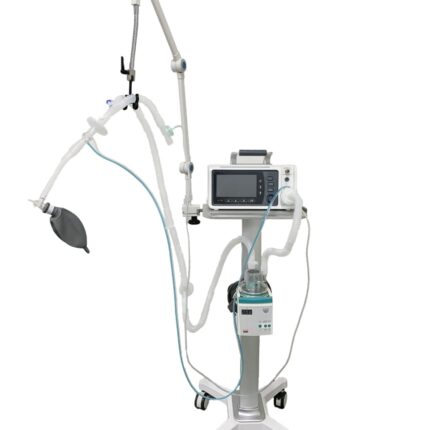
R55 Ventilator Machine For Hospital
The R55 is a hospital mechanical ventilator designed for high dependency units, emergency rooms, and intensive care units, where reliable and continuous respiratory care is required, even when faced with an unreliable power supply, as in most hospitals in Pakistan. This ventilator machine is built for dependable performance in critical care settings.
Specifications:
- Ventilation Modes: Volume controlled and pressure controlled
- Tidal Volume Range: Adjustable, with adult and paediatric settings supported
- Power Backup: Integrated battery with automatic switchover on grid failure
- Voltage Tolerance: Wide input range to handle local voltage fluctuations
- Alarm System: Real time alerts for disconnection, low pressure, and power faults
- Respiratory Rate Control: Adjustable per patient requirement
- Display: Real time monitoring of ventilation parameters
- Design: Compact footprint suited for standard ICU bed spacing
- Maintenance: Low upkeep with accessible, serviceable components
- Warranty & Support: 1 to 2 years and local after sales service through Capasee Electro Medical Engineering
Reviews
There are no reviews yet.