
Where is UPS Used in Hospitals in Pakistan


Uninterrupted power is a feature in the hospitals in Pakistan; at least they should have it. When electricity goes down during a surgery, an ICU monitoring session, or a critical diagnostic procedure, the effects can be life threatening. However, load shedding and instability of the grid continue to be a reality in this country, ranging from Karachi to Peshawar.
This is why it’s important to know where UPS used in hospitals in Pakistan are installed, not just for hospital administrators, but for biomedical engineers, procurement teams, and healthcare facility planners today when they make purchasing decisions.
UPS (Uninterruptible Power Supply) is a clinical necessity in a Pakistani hospital. You’ll learn about all the key departments and applications that UPS used in hospitals in Pakistan, why they are important, and how Capasee Electro Medical Engineering can ensure medical facilities remain powered when they need it the most.
Critical Hospital Areas That Require UPS Power in Pakistan
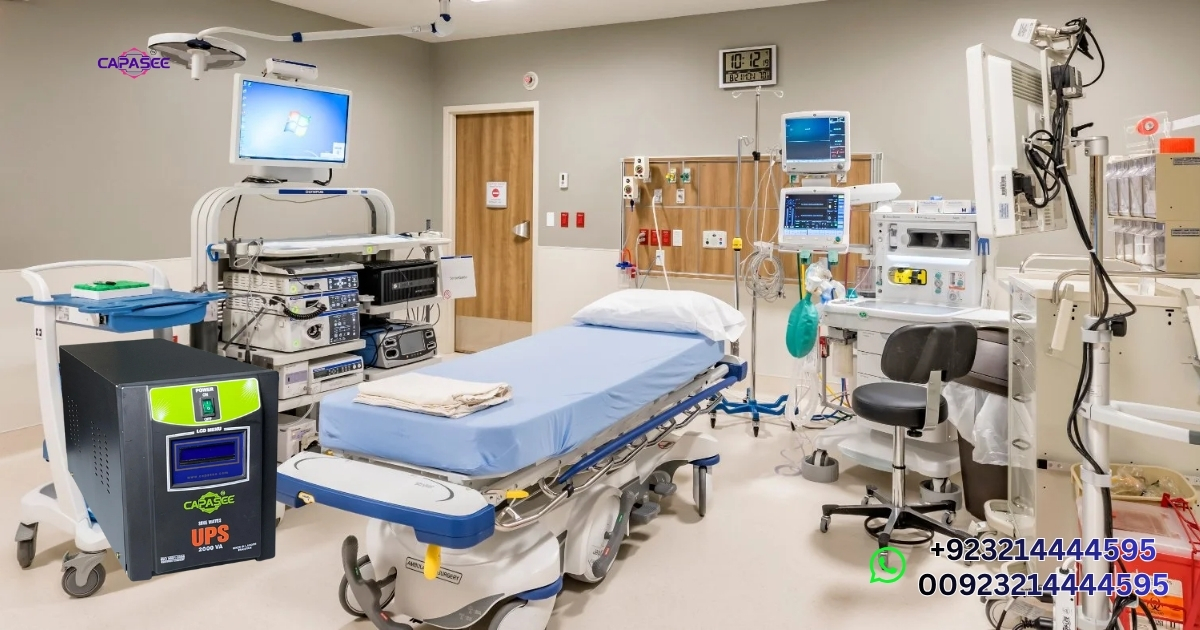
While every hospital department is responsible for backup power, certain areas cannot afford even a single second without any electricity. Grid instability and load shedding are common realities of life in Pakistan and are not something that UPS systems are expected to handle; they are expected to be part of the medical infrastructure. Interruption of power is the difference between functional healthcare and a dangerous environment, from major tertiary care hospitals in Lahore & Karachi to district level hospitals in small cities. The importance of UPS used in hospitals in Pakistan continues to grow across healthcare facilities.
The risk departments during a power outage are the ones where patients are directly reliant on electrically operated tools for their lives and/or stability. Correct identification of these areas is the first step any hospital administrator or biomedical engineer must make prior to choosing the proper UPS capacity and configuration for UPS used in hospitals in Pakistan.
ICUs, Ventilation Units and Life Support Systems Need Instant UPS Backup
The Intensive Care Unit is undoubtedly the most power consuming area in any hospital in Pakistan. The UPS must switch power in milliseconds, not seconds, for all ventilators, cardiac monitors, infusion pumps, and defibrillators. This is a key requirement for UPS used in hospitals in Pakistan.
Multiple hospitals in Pakistan have faced a similar scenario in the real world; during a grid trip event, the hospital ventilators plugged into the standard generator backup system would take 4 to 6 seconds to restore power once it was restored. In a patient with mechanical ventilation, that discrepancy is very unacceptable medically. Online double conversion UPS systems completely remove this gap, and hence they are recommended as a configuration in ICUs where UPS used in hospitals in Pakistan is critical.
You May Also Read This Blog: Best UPS for ICU ventilators in Pakistan
Operation Theaters and Surgical Equipment Depend on Uninterrupted Power
The absolute electrical stability is necessary in an operating theatre for all procedures. The surgical lighting, anesthesia machine, electrosurgical unit, and patient monitoring system are all working together at the same time, and any fluctuations in voltage can affect the accuracy of the equipment or patient safety during a procedure. This is why UPS used in hospitals in Pakistan is essential in surgical environments.
Power conditioning, which is an additional layer of protection, is also provided by the power conditioning units that are built into a hospital grade UPS in Pakistani hospitals, especially in cities with frequent voltage spikes, such as Faisalabad and Multan. It’s not just about keeping the lights on; it’s about guaranteeing the anesthesia machine gives accurate doses of the medicine and the electrosurgical unit functions without being disrupted by dirty power. These benefits highlight the value of UPS used in hospitals in Pakistan.
Diagnostic and IT Departments Where UPS Is Essential in Pakistani Hospitals
In addition to the clinical floors, hospital diagnostics and hospital information technology infrastructure are other important UPS applications. These departments contain expensive and irreplaceable data and equipment that are sensitive to any sudden loss of power or fluctuations in the electricity supply. Reliable UPS used in hospitals in Pakistan help safeguard these systems.
In Pakistan, avoidable losses due to inadequate power protection in hospitals include corrupted MRI sequences, damaged hospital management software, and damaged imaging equipment. The right sizing and correct installation of a UPS system serve two purposes, capital investment and patient data. This further demonstrates the necessity of UPS used in hospitals in Pakistan.
CT Scan, MRI, X-Ray and Lab Machines Require Stable UPS Protection
Imaging equipment requires strict electrical tolerances. If the voltage drops abruptly during a diagnostic procedure, it can damage a CT scan machine or result in a corrupted scan. A CT scan machine or MRI unit that draws power during a scan sequence can be damaged or produce a diagnostic image that is corrupted if there is a sudden voltage drop. This risk is especially high in Pakistan, as the national grid often fluctuates in voltage. Proper UPS used in hospitals in Pakistan helps reduce these risks.
Laboratory analyzers, haematology machines and biochemistry equipment are also very sensitive. The devices process patient samples in a continuous manner, and any power outage during the cycle will cause the test result to be lost and samples to be collected again, delaying diagnosis. UPS protection for the diagnostic lab is a patient protection measure as well as a piece of equipment protection. This is another important application of UPS used in hospitals in Pakistan.
This is the UPS Equipment Capacity Reference for Pakistani Hospitals
| Equipment Type | Why UPS Is Needed | Typical UPS Capacity Used in Pakistan |
| CT Scan / MRI | Prevents image corruption and hardware damage | 10 to 30 kVA |
| Ventilators / ICU | Zero downtime for life support equipment | 3 to 10 kVA |
| Operation Theater Lights and Anesthesia | Electrical safety during active surgery | 5 to 15 kVA |
| Server Room / IT Infrastructure | Protects patient records and hospital software | 5 to 20 kVA |
| X-Ray and Lab Analyzers | Voltage fluctuation and surge protection | 3 to 10 kVA |
Hospital IT Systems, Server Rooms and Patient Records Need UPS to Prevent Data Loss
From patient records and billing data to radiology archives and pharmacy management systems, everything is stored in the hospital’s server rooms. The loss of power without a UPS in hospitals in Pakistan could lead to corrupt databases in the middle of their operations, resulting in permanent data loss that can only be partially recovered from backups.
Pakistani hospitals that have implemented Hospital Management Information Systems (HMIS) or digital PACS (Picture Archiving and Communication Systems) for radiology end up having a lot at stake. During long power outages, a server room UPS used in hospitals in Pakistan with adequate runtime can provide a clean disconnection from the power grid to the server and other electronics, thus ensuring the safe shutdown of equipment and the preservation of data. This is where compromising on UPS quality goes straight to the bottom line for hospital management, as far as operational and regulatory risks are concerned.
Why Pakistani Hospitals Choose Capasee Electro Medical Engineering for UPS Solutions
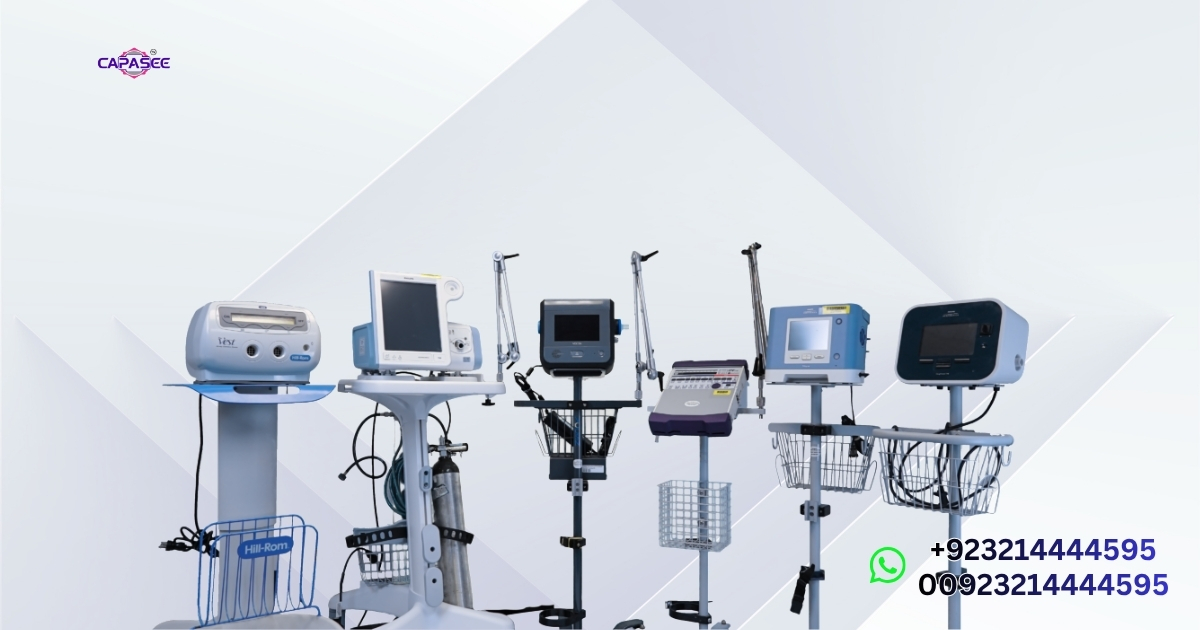
Capasee Electro Medical Engineering is trusted throughout Pakistan because they know healthcare power needs and requirements at a clinical level and not an electrical level. Capasee offers, installs, and provides service to hospital grade UPS used in hospitals in Pakistan, solutions designed for the challenging environment of Pakistan’s medical centres.
The difference between a generic UPS vendor and Capasee is in the expertise of healthcare specific knowledge. Each hospital department is assessed on its own merit, and the engineering team at Capasee will specify the appropriate UPS used in hospitals in Pakistan, topology, and application size and ensure installations comply with hospital safety requirements.
Check More & Purchase: Our Products
Hospital Grade UPS Systems Designed for Pakistan’s Load Shedding and Voltage Issues
The power situation in Pakistan is quite unique and is characterized by the following issues; long periods of load shedding, a high number of voltage dips, a high number of voltage phases, and a high value of harmonic distortion due to industrial loads. Average commercial UPS systems used in hospitals in Pakistan are not designed to reliably perform in this environment.
Capasee offers online double conversion UPS systems with a wide input voltage tolerance, which have been carefully chosen to operate in the harsh Pakistani power grid. These systems generate clean and stable output power, regardless of the input power from the grid, and simultaneously safeguard sensitive medical equipment against both power quality issues and power outages. These are ideal UPS used in hospitals in Pakistani environments.
Full Installation, Maintenance and 24/7 Support by Capasee Engineers
Running a UPS in a hospital is not like running one in an office. The proper installation of a UPS used in hospitals in Pakistan involves load calculations, planning for the UPS battery room ventilation, integration of the transfer switch, and careful coordination with any existing generator systems.
Capasee Electro Medical Engineering offers complete services, from the site inspection through to the professional installation, training of staff, and even through to the scheduled preventative maintenance contracts. Their engineers are on call 24 hours a day since hospitals are open at 3 AM, and power protection that is not working at 3 AM isn’t working at all. Their expertise in UPS used in hospitals in Pakistan ensures reliable performance.
FAQ’s
What is the main use of UPS in hospitals in Pakistan?
Hospitals in Pakistan will get instant power when they experience power outages or load shedding, thanks to UPS. It safeguards power supply systems, surgical systems, and diagnostic machines that must continue to function regardless of a power outage, keeping patients safe and critical services up and running in all areas of the hospital.
Which hospital equipment needs UPS backup in Pakistan?
Ventilators, ICU monitors, operating theatre lights, anesthesia machines, CT scan units, MRI machines, X-ray equipment, laboratory analyzers, and hospital server rooms are all UPS backup areas of the hospital. These systems are extremely sensitive to loss of power and cannot afford even a momentary power outage to put patient safety or equipment at risk.
Why do ICUs in Pakistan require uninterrupted power supply?
Ventilators and cardiac monitors are essential to the lives of those receiving care in an ICU and must remain connected at all times. Standard generator backup is not enough due to frequent load shedding and grid instability in Pakistan. Online UPS systems offer zero transfer time, maintaining the continuity of life support equipment without interruption during switching.
What is the best UPS capacity for operation theaters in Pakistani hospitals?
In Pakistani hospitals, the size of the UPS system that is required in operating theatres depends on the number of active surgical devices, ranging from 5 kVA to 15 kVA. This depends on the amount of connected load, such as surgical lights, anesthesia machines, electrosurgical units and patient monitoring equipment operating at the same time.
How does UPS protect diagnostic machines like CT scan and MRI in Pakistan?
A UPS protects CT scan and MRI machines from voltage fluctuations or power outages that can cause disruption to the scan or harm sensitive equipment. Online UPS systems with double conversion technology are ideal for Pakistan’s unstable grid, as they provide clean and regulated output power even in a poor quality electricity supply.
Where can I get reliable UPS installation for hospitals in Pakistan?
Capasee Electro Medical Engineering offers professional services of Hospital Grade UPS Supply, Installation, and Maintenance in Pakistan. They have a biomedical engineering team to deal with site evaluation, load calculation and after sales support 24/7, specifically for healthcare facilities.
Final Thoughts
Every important department, from ICUs and operating theatres to diagnostic imaging rooms and hospital server rooms, requires reliable power protection. The role of UPS used in hospitals in Pakistan is related to the protection of patients, equipment, and data so that administrators and biomedical engineers can make decisions accordingly.
With this knowledge, your facility will have less disruption in operations, lower equipment replacement costs, and, most importantly, better patient outcomes through reliable UPS used in hospitals in Pakistan.
Call Capasee Electro Medical Engineering today for a bespoke UPS assessment of your hospital. They will assess your departments, suggest the systems you need, and do the installation and upkeep.
The hospitals in Pakistan need power protection due to Pakistan’s condition. Be sure to get yours with a dependable UPS used in hospitals in Pakistan.