
Solar UPS for Home

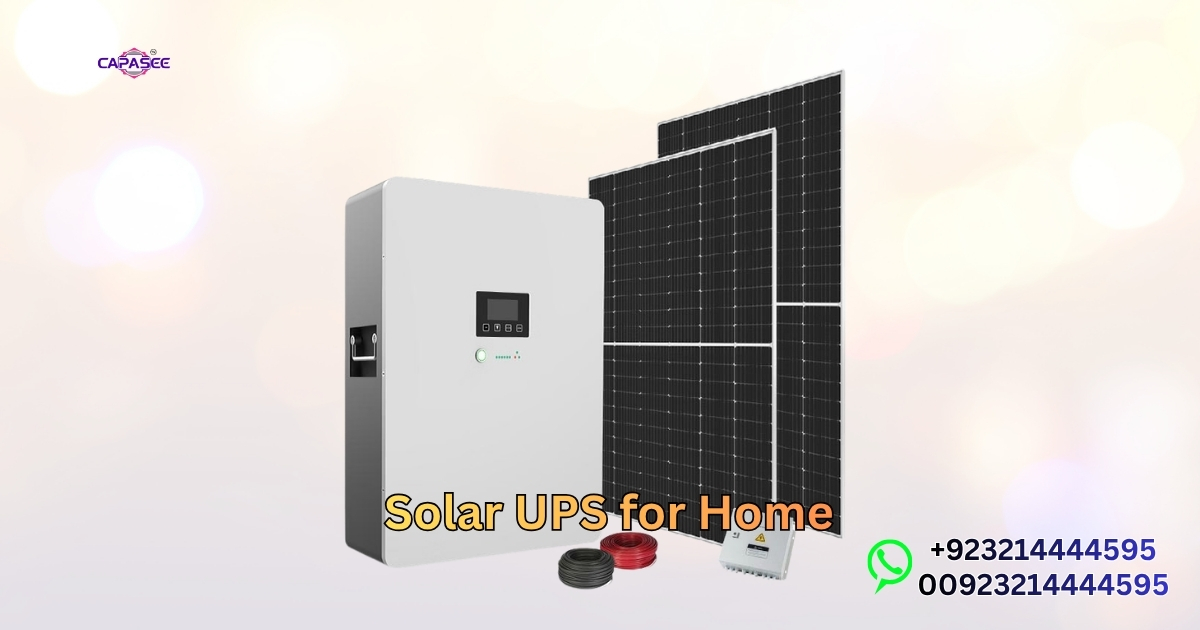
For many Pakistani families, load shedding of 8 to 12 hours per day has become the new normal, and a basic UPS is no longer enough. If you are sick of spending thousands on batteries that your inverter strips and huge electricity bills, you are not alone. Home Solar UPS is revolutionising power backup for Pakistani households with a smart combination of solar charging, grid assist, and battery backup, all in one affordable package, making Solar UPS for home a reliable solution.
At Capasee, we have witnessed the transformative power of the right solar UPS, from keeping fans and lights on during power outages to uninterrupted operation of medical devices. Here, we explain what Solar UPS does, how it performs in Pakistan’s environment, key purchasing considerations, and why so many households are switching to Solar UPS for home today.
Understanding Solar UPS Systems for Modern Pakistani Homes
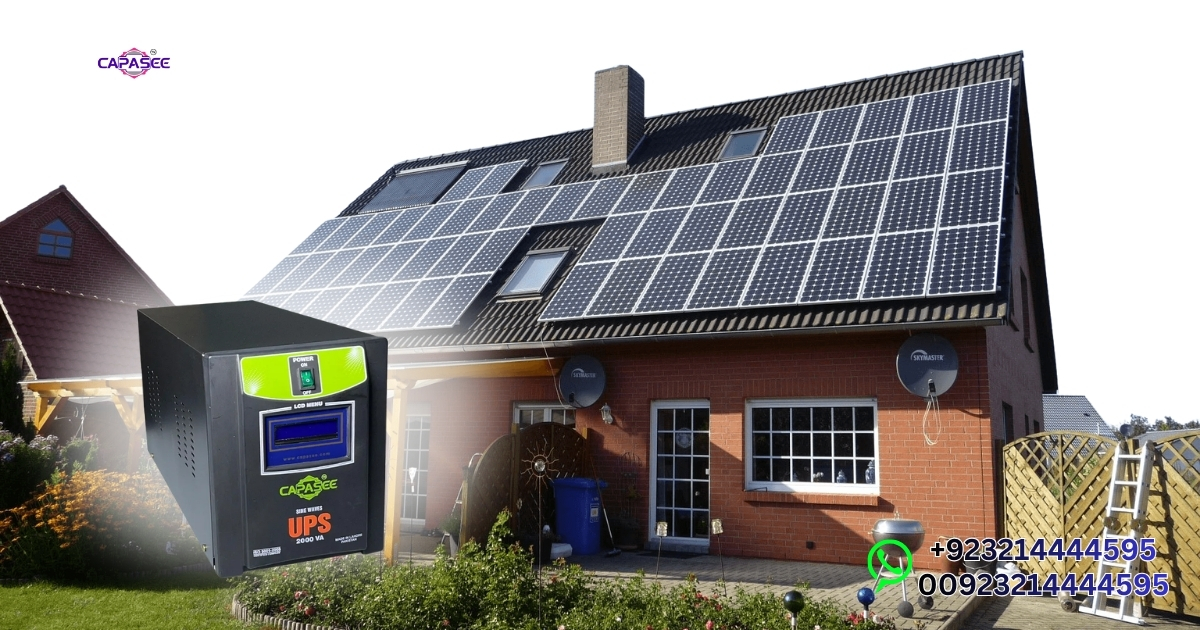
A Solar UPS is more than just a battery system; it’s a full energy system that can source power from solar panels, store it in batteries, and seamlessly switch between the solar and grid power. For Pakistani households facing load shedding, this translates to seamless power supply, without the painful power bills associated with grid connected backups, making Solar UPS for home an efficient choice.
The adoption of hybrid solar solutions in Pakistan has soared in 2025-2026 due to the rising tariffs of WAPDA and the increased hours of load shedding in cities such as Multan, Lahore, and Karachi. Households that have grown used to load shedding are now looking for better solutions, and Solar UPS for the home is at the forefront of that trend.
How a Solar UPS Works During Load Shedding
A solar UPS does not stop; it seamlessly integrates power from the solar panels and battery storage in a matter of milliseconds when grid power fails, allowing your lights, fans, and appliances to operate flawlessly. The solar panels keep the battery bank topped up during the day, so your backup time is much longer than with a regular UPS, making Solar UPS for home highly dependable.
It’s like a water tank in your house with a borewell and a rainwater harvesting system. When the sun shines, the water tank fills up; when it’s dark or overcast, the grid provides water. You never run out of water.
You May Also Read This Blog: Stabilizer for Hybrid Inverter
Key Benefits of Switching to Solar Power in 2026
A 2026 solar hybrid system provides cost savings within the first month. Given that the cost of electricity has risen dramatically in the past three years, each kilowatt hour generated by solar panels saves you money, especially when using Solar UPS for home systems.
As well as cost savings, solar UPS power solutions reduce reliance on an increasingly unreliable grid, prolong the life of your battery bank with smart charging, and help protect the environment while not requiring you to go off the grid.
Comparison Table: Traditional UPS vs. Solar Hybrid UPS
| Feature | Traditional UPS | Solar Hybrid UPS |
| Energy Source | WAPDA Grid Only | Solar Panels + Grid |
| Operational Cost | High (Electricity Bills) | Low (Free Solar Energy) |
| Backup Duration | Limited by Battery | Extended via Solar Power |
| Charging Speed | Grid-dependent | Faster via Solar + Grid |
| Life Expectancy | Standard | Long-term / High Durability |
| Environmental Impact | High Carbon Footprint | Eco-Friendly |
| Return on Investment | Minimal | Strong (3–4 Year Payback) |
Factors to Consider Before Buying a Ghost Solar UPS for Home
When it comes to buying a solar UPS, it is not the most expensive that is best; it is buying the right system that matches your daily load, battery type, and roof space. If you get an undersized system, you could run out of energy before load shedding ends; if you get an oversized system, you pay for capacity you won’t use, which is why choosing Solar UPS for your home wisely is important.
At Capasee Electro Medical Engineering, our designers always conduct a load assessment before suggesting a system. This one step avoids the main pitfalls that buyers experience when buying solar in Pakistan.g to solar.
Calculating Your Home’s Power Load Requirements
To determine your power load, make a list of all the appliances you want to operate during power outages (ceiling fans, LED lights, refrigerator, TV) and their wattage. Sum the watts, and multiply by the number of hours you will use these appliances each day for your watt hour rating.
For instance, if you want to have four fans (60W each), eight LED lights (10W each), and one small refrigerator running (150W) for eight hours a day, you would need about 3,200 watt hours per day in a three bedroom home in Multan. This simple calculation sets the size of the inverter and battery bank needed for a Solar UPS for the home.
Battery Technology — Lithium vs. Tubular for Solar Backup
Lithium batteries are faster to charge, have a longer lifespan, typically 8 to 10 years, and can withstand deep cycle loads much better than traditional batteries. They are lighter, maintenance free, and work just as well (if not better) in the Pakistani summer heat, making them the ideal battery for quality solar systems and Solar UPS for home setups.
But tubular batteries are still a viable and affordable choice for many in Pakistan. They are readily accessible, locally serviceable, and perform well if well maintained. Your decision should be based on your budget, space constraints, and the intended lifespan of the system.
Expert Installation and Maintenance Tips by Capasee Electro Medical Engineering
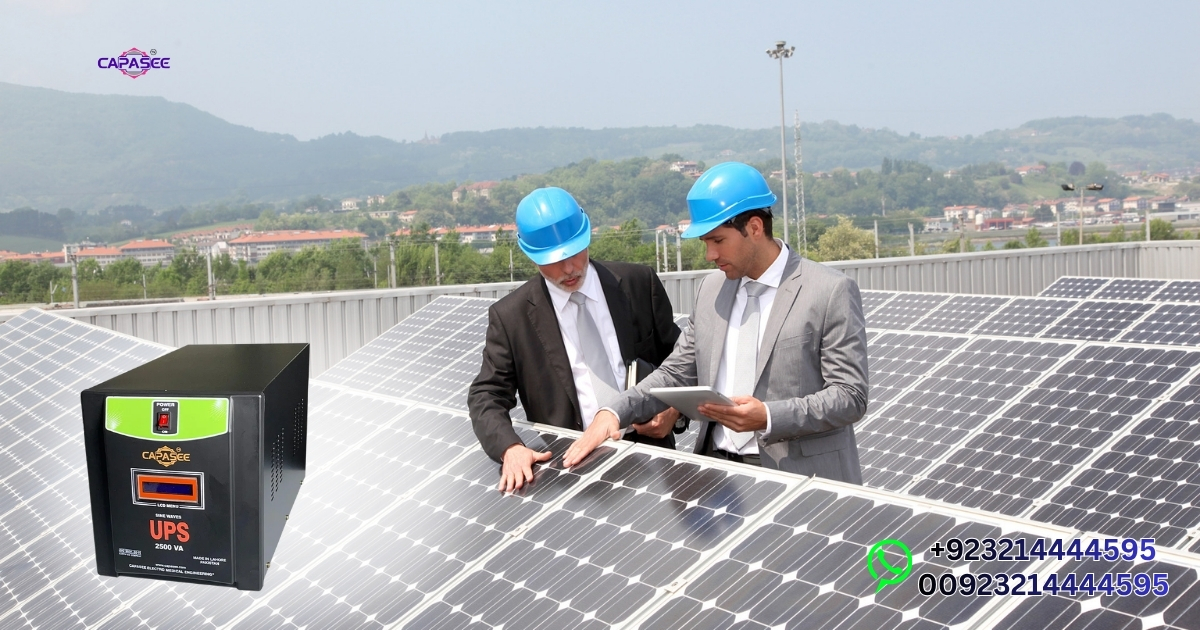
The right installation is what distinguishes a solar UPS system that runs smoothly for ten years, and one that experiences problems in the first monsoon. At Capasee, we follow a proven step by step procedure based on years of experience in southern Punjab.
Maintenance is equally critical. Even the best Solar UPS for home will not perform efficiently if panels are dirty, connections are not tight, or batteries are overcharged. Regular maintenance is essential to safeguard your investment.
Essential Steps for Optimal Solar Panel Setup at Home
Start by installing panels on a south facing roof inclined at 25 to 30 degrees. This ensures optimal solar output year round in Pakistan’s latitudes. Connect the panels with MC4 cables and ensure the charge controller is well matched to the panel setup.
Don’t omit earthing and grounding. Grounding ensures protection of both the system and the home against a fault, which is often ignored by informal installers for the sake of time.
Check More & Purchase: Our Products
Long Term Maintenance for Peak Efficiency and Longevity
If properly maintained, a solar UPS system will last well beyond the warranty period. Wash your panels every fortnight during dust storms in summer months in cities such as Multan and Bahawalpur, and check the battery terminals every month for corrosion or looseness.
Book an annual inspection to test inverter firmware, battery capacity, and wiring connections. Capasee Electro Medical Engineering provides maintenance visits after installation to ensure your system operates at its best throughout the year.
Safety Protocols for Inverter Connections
Always disconnect the inverter from the grid and solar input before doing any wiring in your Solar UPS for home. Ensure you use correctly sized MCBs (Miniature Circuit Breakers) on both the input and output to avoid damage to your appliances and the inverter itself.
Always disconnect the battery before plugging and unplugging battery cables. This will result in irreversible damage to the internal circuits of the inverter. The repair bill will be much greater than the cost of taking an additional five minutes to observe safety precautions.
Protecting Your System from Humidity and Dust
Mount your battery bank and inverter in an indoor, shaded, and well ventilated location, not in direct sunlight or in a humid location. Electronics hate humidity, and the hot summer and wet monsoon months in Multan are a recipe for disaster if your Solar UPS for home inverter is exposed.
Ventilation openings can be fitted with dust filters and should be checked every month. Keeping it cool, dry, and clean can extend the lifetime of your inverter by 2 to 3 years without any additional cost.
Why Choose Capasee Electro Medical Engineering for Your Solar Needs
There’s more to buying a solar UPS system than purchasing equipment; you’re putting your home’s electricity supply in the hands of a supplier for the next 10 years. Capasee Electro Medical Engineering offers technical know how, quality guaranteed products, and after sales support that your local dealer may not provide when installing a Solar UPS for home.
We are not a buy and run operation. We seek to understand our clients’ needs at consultation, to install, commission, and support the system on going, because a system that works today should work tomorrow.
Our Commitment to Quality and Technical Excellence
All products recommended by Capasee Electro Medical Engineering undergo a technical assessment before we recommend them to our clients. We evaluate the efficiency of the inverter, the cycle life of the battery, compatibility with charge controllers, and the warranty of the system, so you don’t have to worry if the Solar UPS for home system you are purchasing is fit for purpose.
Our team has experience with residential, commercial, and medical backup systems. This gives us a keen understanding of load sensitivity, power quality, and the challenge that Pakistan’s grid instability poses to backup power systems.
Customized Solar Solutions Tailored for Pakistani Weather
Pakistan’s weather is diverse, from the 48°C summers of southern Punjab to the snowy winters of the north. One size doesn’t fit all when it comes to solar UPS. Capasee Electro Medical Engineering tailors to your climate, roof slope, load demand, and budget for every Solar UPS for home installation.
In particular, we recommend using high temperature panels, battery enclosures with thermal management, and inverters with a broad input voltage range for clients in Multan who are plagued by regular WAPDA fluctuations. This is how our solar systems work, where as off the shelf packages don’t.
FAQ’s
Is a solar UPS better than a regular UPS for home use?
Yes, a solar UPS enables you to take advantage of free solar energy, which can help save money on electricity costs and offers better back up in the event of extended load shedding than a basic UPS.
Can I run my entire home on a solar UPS system?
The size (kVA) of the system and the number of solar panels used decide the load you can run, from basic lighting and fans to heavy loads such as ACs and refrigerators.
How many solar panels are required for a 5kW solar UPS?
On average, to power a 5kW system, you would need about 8 to 10 high efficiency solar panels, but this varies depending on your daily load requirement and roof area available.
Does a solar UPS work during the night?
Yes, a solar UPS will use the battery energy stored during the day to power your equipment at night; if the battery is low, it can automatically connect to the grid in case the UPS is a hybrid model.
How often should I perform maintenance on my solar UPS system?
We advise cleaning your solar panels every 1 to 2 months and getting your system checked by a professional like Capasee Electro Medical Engineering every 6 months to check the inverter and battery connections.
What is the expected lifespan of a solar battery in Pakistan?
Proper maintenance and quality batteries, such as Lithium ion, can make your system last 5 to 10 years, compared to the usual 2 to 3 years for systems with lead acid batteries.
Conclusion
Choosing the right Solar UPS for home is a three pronged approach: understanding your load, choosing the right battery technology, and having a team of professionals who can install and maintain the system. Get all three right, and you stop worrying about load shedding; you just ignore it.
The cost, freedom from WAPDA price fluctuations, and security all add up each month you’re on solar.Want to get started? Call Capasee Electro Medical Engineering for a free load assessment and solar recommendation. The future of energy in Pakistan is solar. Don’t get left behind.