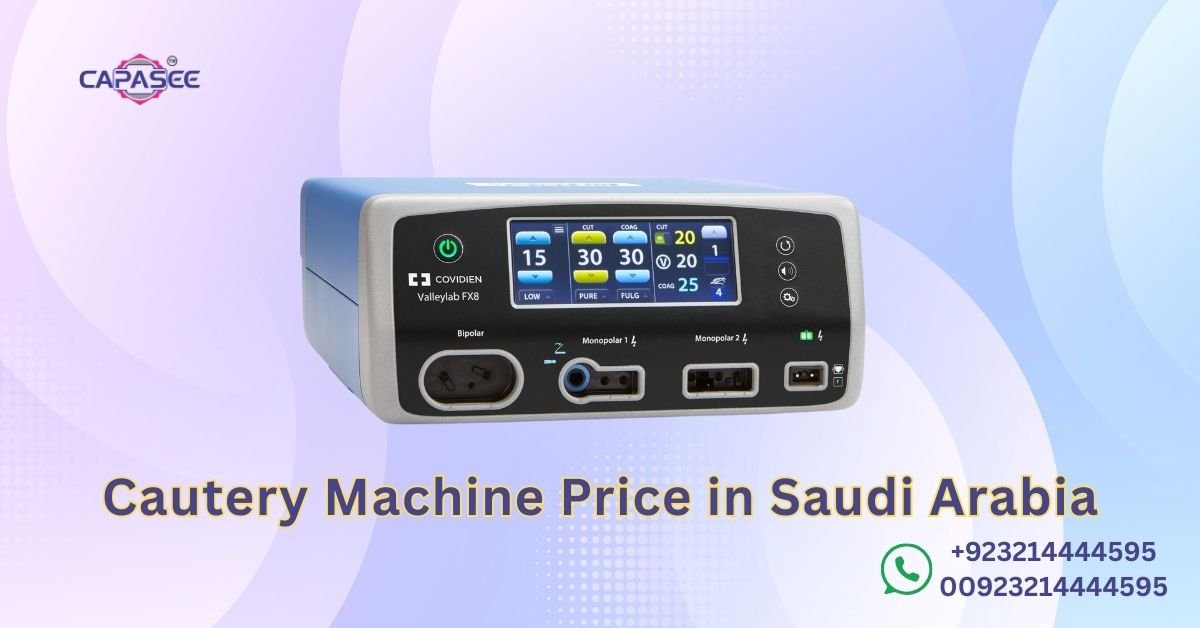
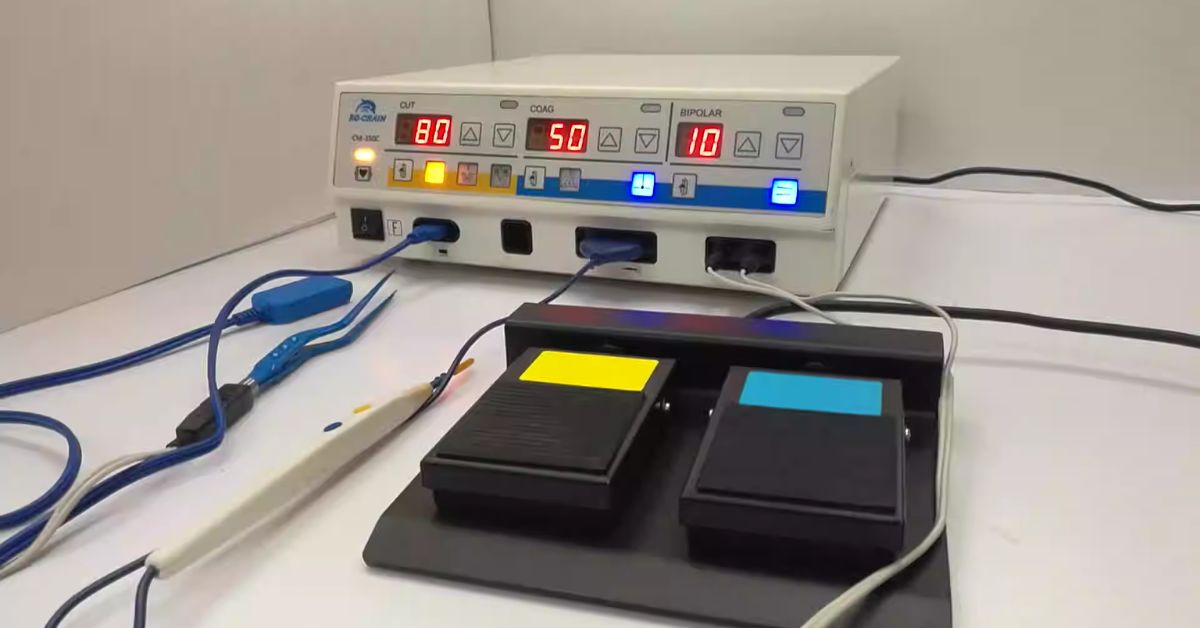
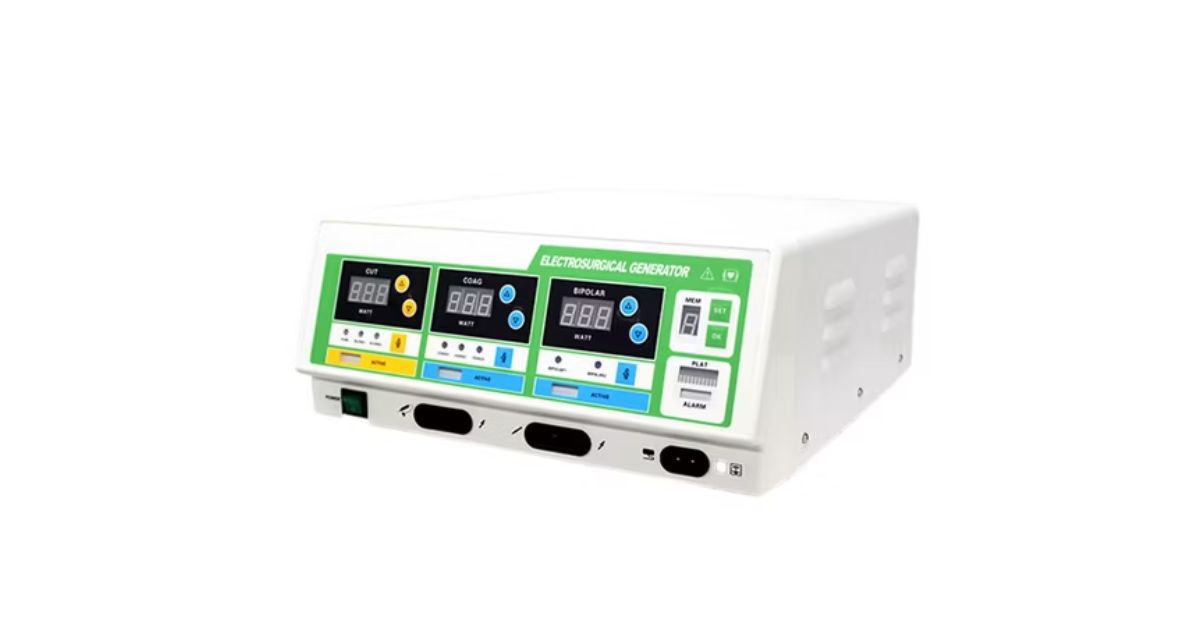
Cautery Machine in Pakistan | Electrosurgical Unit & Diathermy


Many surgeons would be shocked at how often a poor electrosurgical connection does occur in a routine procedure that could turn into a burn injury case in just five minutes in Pakistan’s clinics. Some buyers still believe that a simple spark gap unit is the same as an actual solid state electrosurgical generator and then question, ‘Why does my equipment stop mid procedure or when it was first purchased, or why does it throw error codes after just a few months?’
As the use of OT spreads across cities such as Lahore, Karachi, and Faisalabad, clinics are gradually being registered by PMDC and are being pushed to adhere to the safety protocols. It’s not just a procurement issue and requires careful consideration when selecting a suitable cautery machine in Pakistan.
It’s a choice that impacts patient care and clinic reputation. With practical on site experience, this guide explains the true differences among cautery machines, electrosurgical devices, and diathermy devices; what specifications are important for your speciality; and how to purchase one locally without breaking the bank or sacrificing safety.
What Is a Cautery Machine and How Does It Work in Pakistan?
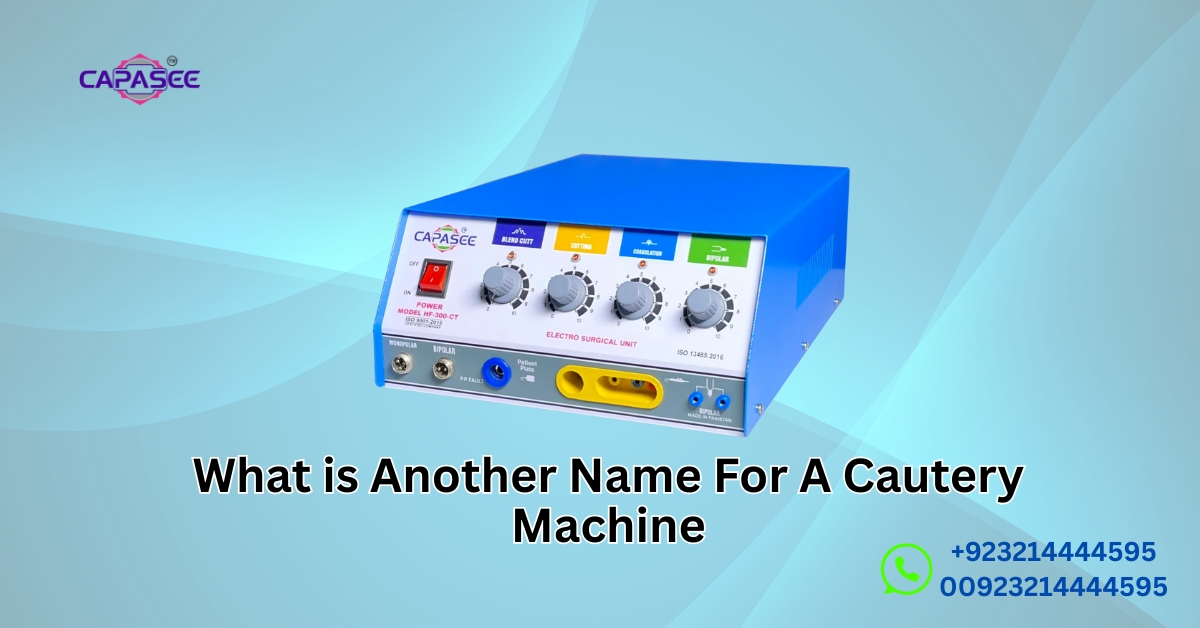
A cautery machine produces controlled heat or electricity to cut tissue and seal off blood vessels in surgery, eliminating the need for stitches. It functions on the principle that electrical energy is changed to thermal energy at the treatment site, allowing the surgeon to obtain precision that is not achieved with a scalpel alone. These units are now commonly used in general surgery, dermatology, gynaecology, and ENT surgeries in Pakistani operating theatres with advanced cautery machine in Pakistan.
The private hospital sector has continued to increase in Pakistan and so has the number of day surgeries, leading to the increased demand for reliable cautery machines as well. As in the case of tertiary hospitals in Lahore and Islamabad, the small city clinics are also implementing the same electrosurgical technology through suitable cautery machine in Pakistan solutions.
Understanding Electrosurgical Units and Diathermy Technology
There are two types of high frequency alternating current; electrosurgical units (ESUs) and diathermy machines, but they’re not the same in every use. Generally, the frequency of the ESUs ranges from 200 kHz to 3.3 MHz, with the advantage of cutting, coagulating, and fulgurating tissue without significant thermal spread. The term “diathermy” is an older term that is still used throughout medical circles in Pakistan and means the same thing as above; the use of electrical current to create local heat. Choosing the correct cautery machine in Pakistan helps clinics achieve safer surgical outcomes.
These terms are used interchangeably by doctors and procurement officers, and that is also correct, as today’s diathermy machines are basically high tech ESUs. It is more important to understand the output of the waveform, as the cutting mode is a continuous output and the coagulation mode is an interrupted output for controlled hemostasis when selecting a cautery machine in Pakistan.
You May Also Read This Blog: Stabilizer for Full House Price in Pakistan
Monopolar vs Bipolar Cautery: Which Is Right for Your Clinic?
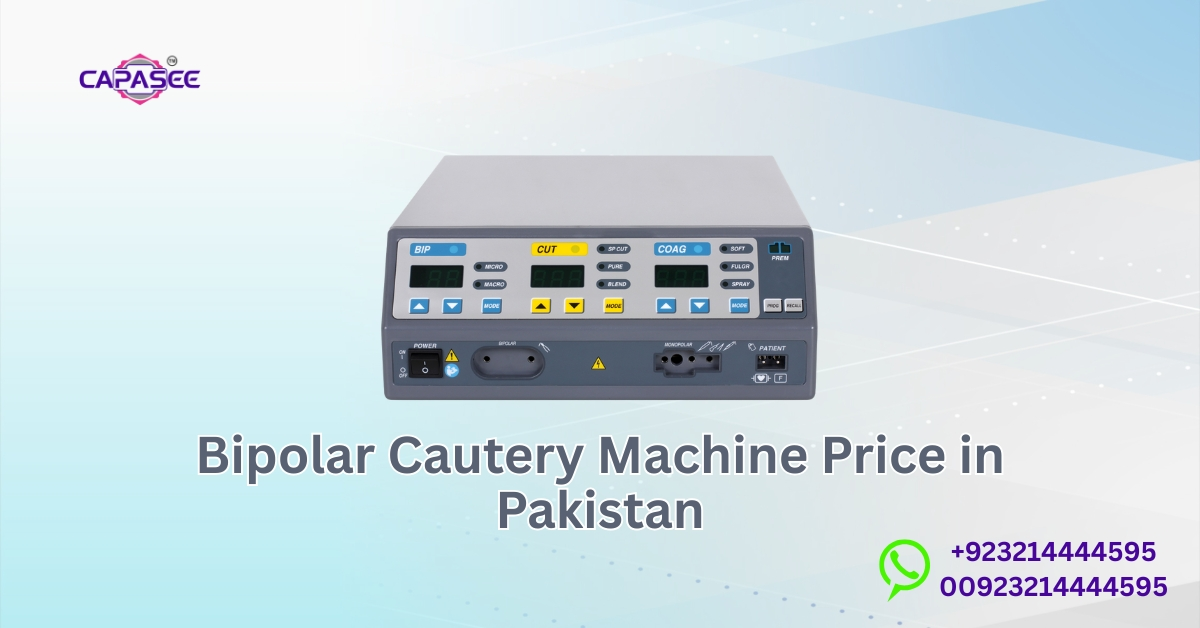
Monopolar cautery is recommended for general surgery and larger tissue volumes; bipolar cautery is safer for delicate procedures near nerves or for patients who have implants. Monopolar systems direct current to the patient and through a return electrode pad and are strong but can be dangerous if they are not properly grounded to prevent burns. Bipolar systems focus the current between two forceps tips, which means that no currepad and elsewhere in the patient’s body. A suitable cautery machine in Pakistan provides both options for different surgical needs.
For hernia repairs or appendectomies, a general surgeon would typically resort to monopolar mode, as it cuts faster and can be used on bulkier tissue. A gynaecologist performing laparoscopy, however, may wish current is present for the narrower safety margin. Most modern units have both modes in the same unit, including the models we set up at Capasee, which eliminates the need for separate units at the clinic while offering an effective cautery machine in Pakistan.
Cautery Machine Price in Pakistan 2026 – Complete Buyer’s Breakdown
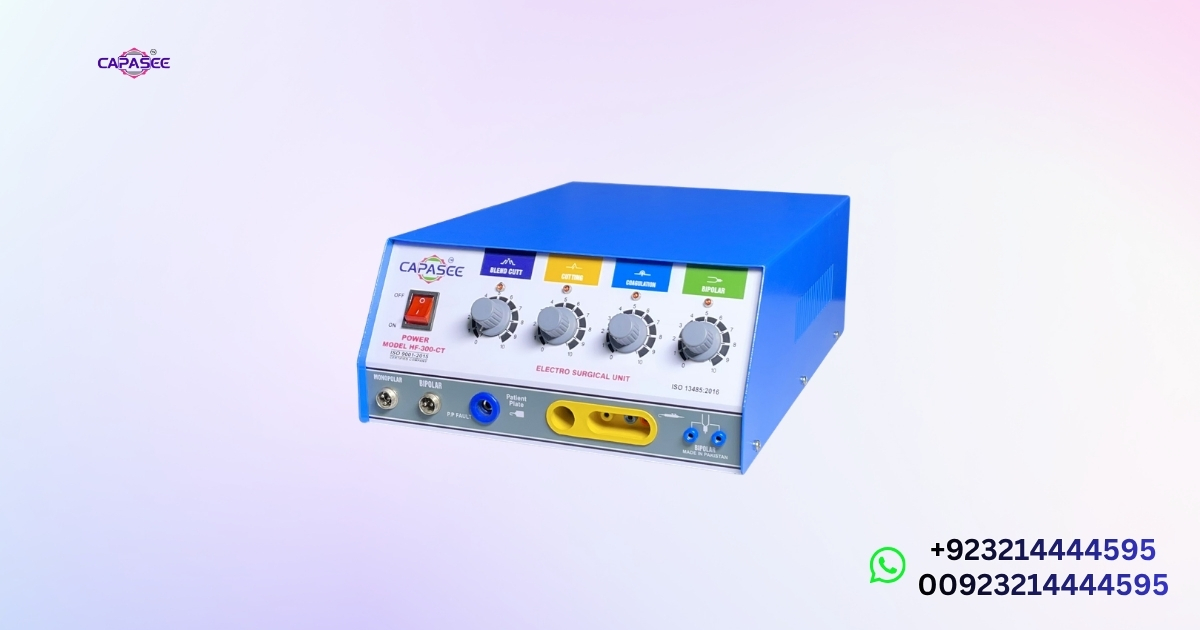
The cost of a cautery machine in Pakistan varies from PKR 40,000 in the case of an electrocautery pen to more than PKR 800,000 in the case of an advanced diathermy machine used in hospitals. The final price varies according to wattage, brand origin, bipolar, and whether it is new, locally assembled, or refurbished. While price can be one of the considerations, it is not the most important consideration.
There is no need to specify the same requirement as a district hospital that conducts multiple surgeries every day. A match between machine capacity and volume ensures that the system isn’t over used or, far worse, under powered and unable to complete the procedure midway.
Average Cost Range for Electrosurgical Units in Pakistani Hospitals
The price range for a reliable 200 watt to 300 watt electrosurgical unit in government and mid tier private hospitals in Pakistan is usually in the range of PKR 150,000 to PKR 300,000. This bracket will include most general surgery requirements without the high cost of an imported high end diathermy console. Foreign brand prices have risen significantly in the last two years due to import duty and currency fluctuation, and hence, the locally assembled products have taken centre stage.
Key Factors That Affect Cautery Machine Pricing in Pakistan
The price of a cautery machine in Pakistan is determined by factors such as warranty period, power output, availability of after sales service, and brand reputation. A unit that comes with a 12 month warranty but which has no local service centre may be cheaper initially but may turn out to be more expensive in the long run if repairs necessitate the sending of parts abroad. Wattage can also have an effect directly; more powerful machines will deal with more difficult tissue and larger procedures, but they will have a higher cost in relation to the procedure.
| Machine Type | Estimated Price Range (PKR) | Best For |
| Basic Electrocautery Pen | 40,000 to 80,000 | Small clinics, dermatology |
| Mid Range ESU (200 to 300W) | 150,000 to 300,000 | General surgery, OT setups |
| Advanced Diathermy (400W+) | 350,000 to 800,000+ | Hospitals, specialized units |
| Refurbished Import Units | 100,000 to 250,000 | Budget conscious buyers |
Data is relevant to the prevailing market trends and Capasee market position in the electro medical equipment industry in Pakistan.
Check More & Purchase: Our Products
Why Choose Capasee Electro Medical Engineering for Your Cautery Machine?
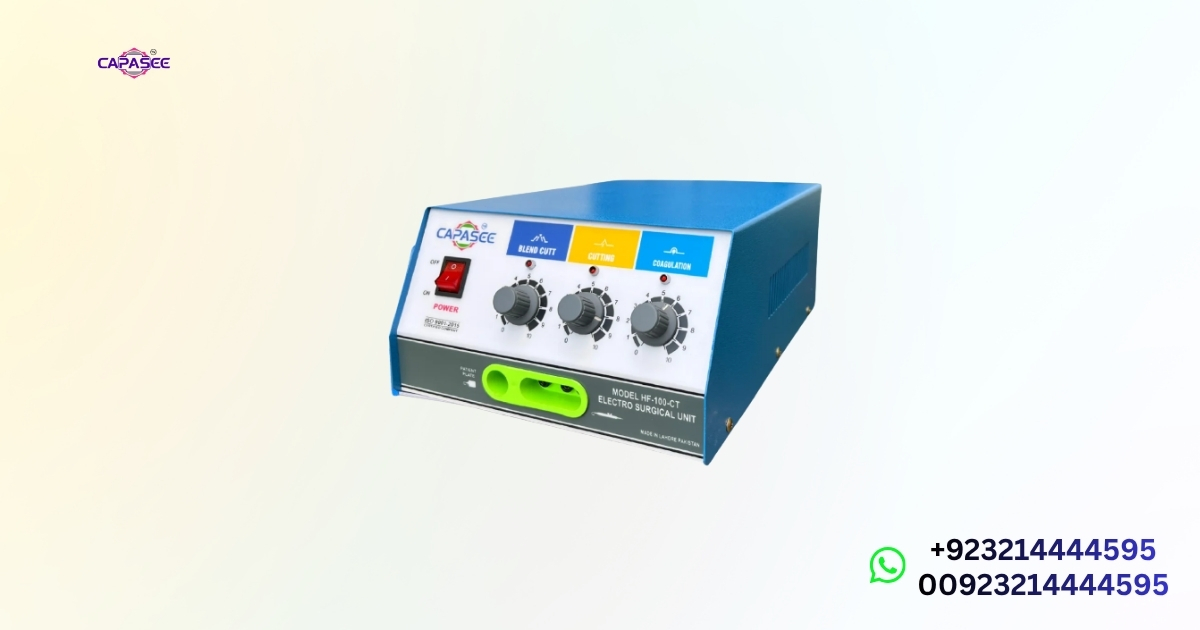
Capasee Electro Medical Engineering manufactures and services cautery machines for the clinical environment in Pakistan, from the clinic of one doctor to the full operating theatres of hospitals. Our units are designed to work with voltage fluctuations common to the region, with easy access points to services and familiarity of the technicians. This local notion also means fewer breakdowns and quicker repairs when things do go wrong. Choosing a reliable cautery machine in Pakistan helps healthcare facilities maintain smooth surgical operations.
So, surgeons who have made the change to Capasee equipment often say the first thing, Someone actually answers the phone when I call. It is this responsiveness and the pieces designed for Pakistan’s tough clinical timetables that make us the choice of more procurement teams than an unfamiliar foreign piece.
Locally Assembled, Internally Certified – Built for Pakistan’s Healthcare Needs
Before each Capasee electrosurgical unit is supplied to a clinic, it is subject to internal quality certification that guarantees the same performance in cutting, coagulation, and bipolar mode throughout. Locally assembled also means customization of wattage configurations and accessory kits, depending on the needs of a facility’s caseload. For example, a district hospital in Punjab would require an accessory bundle different from a cosmetic dermatology clinic located in Karachi, and we customize it as per the requirement. This makes Capasee a trusted provider of cautery machines in Pakistan for different healthcare setups.
After Sales Support, Training & Warranty – What Capasee Offers Beyond the Sale
In the event of equipment problems, Capasee can train a technician on site and offers a structured warranty programme and direct support line for troubleshooting, so clinics don’t sit in the dark. Our engineers demonstrate safe monopolar and bipolar use with new customers before the machine is used on a patient. That “hands on” approach eliminates operator error, one of the most common causes of electrosurgical complications in low training environments. Proper support is an important factor when investing in a cautery machine in Pakistan.
Frequently Asked Questions
What is a cautery machine used for?
A cautery machine is an instrument that uses controlled electrical heat to cut tissue, stop bleeding, and seal blood vessels during surgery. It is used in Pakistan by surgeons for various surgeries, from minor skin removal to major surgeries.
What is a cautery used for?
Cautery is the application of heat to destroy or seal tissue, primarily to stop bleeding during and after incisions, and also to seal bodily fluids to prevent leakage. It is also beneficial for the safe removal of unwanted growth such as warts, skin tags, and small growths.
What are the two types of cautery?
There are two main types, monopolar and bipolar cautery. Bipolar passes the current through the whole body between two tips of the forceps, providing more safety, whereas monopolar passes the current through the body to a return pad.
How to use cautery in surgery?
By using a handpiece or forceps, the surgeon activates the cautery machine with the use of it directly on the bleeding tissue or the cutting site. Different procedures use different settings, which switch between cut mode and coagulation mode.
How painful is cautery?
Local or general anaesthetic is used for procedures, and there’s very little pain caused by cautery. There may be some mild discomfort or a burning sensation during the procedure, but pain is typically well controlled.
Why is electrocautery used in surgery?
Electrocautery is used because it cuts and seals the blood vessels at the same time, which reduces blood loss and surgery time. A good cautery machine in Pakistan also reduces the risk of infections in comparison to blade only methods.
Conclusion
The selection of the appropriate cautery machine in Pakistan depends on the specific requirements of your clinic, ranging from the simplest electrocautery pen for minor procedures to the powerful diathermy unit for hospital surgeries. Not only is price important, but reliability, local support, and appropriate training are also incredibly important for patient safety.
You have the information you need to compare monopolar and bipolar options, to read pricing brackets correctly, and to ensure that you don’t end up with expensive downtime from the common pitfalls. In case you want to upgrade the operating theatre or want to replace an old machine, please contact Capasee Electro Medical Engineering for equipment developed to meet the actual clinical needs of Pakistan. The right tools in the right hands are the key to good surgical outcomes.
Related product: HF-450 Electrosurgical Cautery Machine