
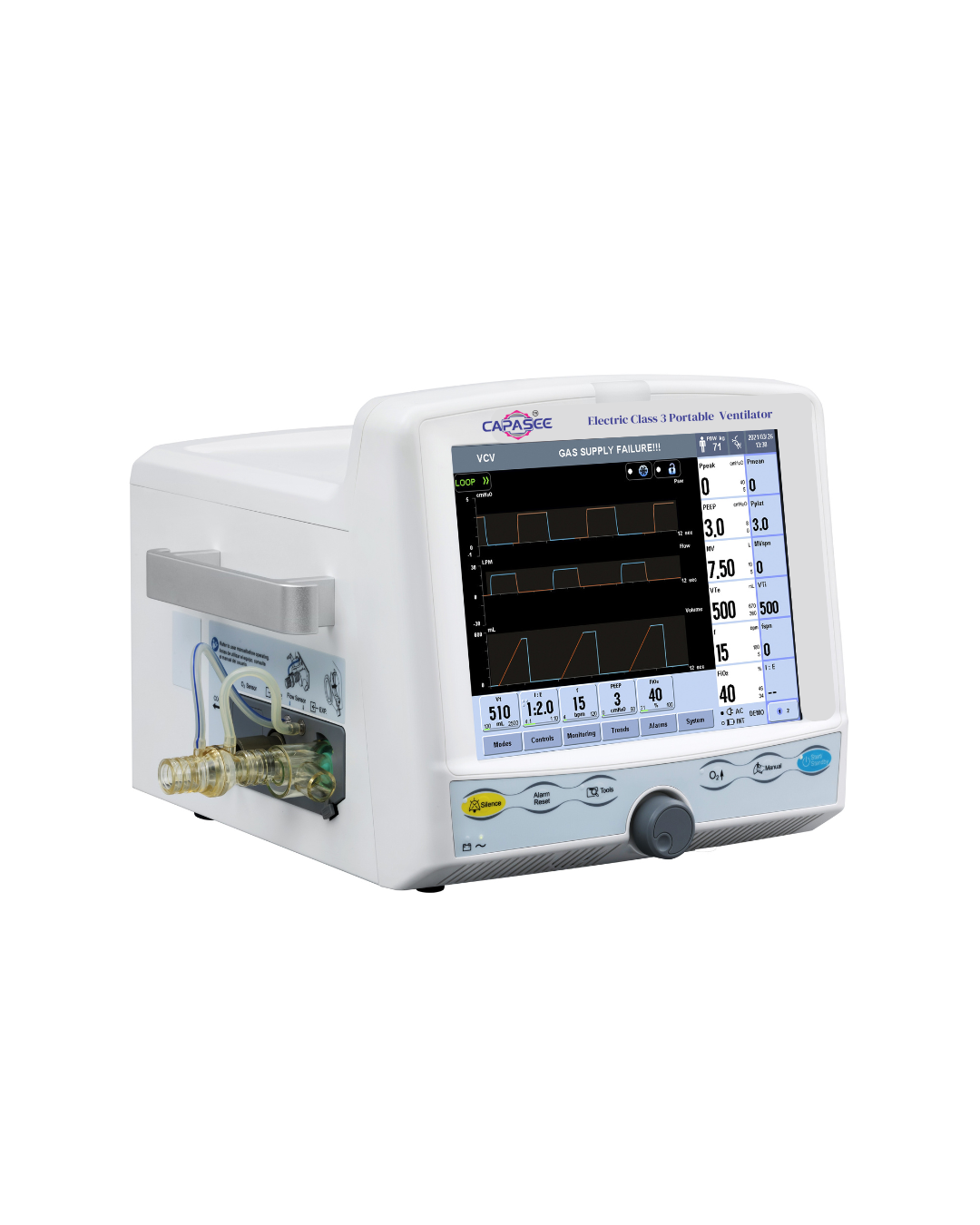

Electric Class 3 Portable Ventilator
₨ 750,000
A small, self contained, battery powered electric Class 3 portable ventilator designed for home use, ambulance transportation, and small clinics with the requirement for reliable respiratory support without the use of an ICU.
Specifications:
- Power Supply: AC mains + built in rechargeable battery backup
- Ventilation Modes: Assist Control, SIMV, Pressure Support
- Tidal Volume Range: Adjustable (adult/pediatric settings)
- Respiratory Rate: Adjustable, typically 5–40 breaths/min
- FiO₂ Range: 21%–100%
- Alarms: Low battery, disconnection, high/low pressure
- Display: LCD with real time monitoring
- Weight: Lightweight, portable design for easy transport
- Battery Backup Time: Several hours of continuous use (protects against load shedding)
- Voltage Tolerance: Built in surge/fluctuation protection
- Warranty: 1 to 2 Years
Indicative price — contact us for today’s exact price, stock and delivery for your location.
WhatsApp for Final Price & Delivery
Description
Electric Class 3 Portable Ventilator: Reliable Respiratory Support for Home and Clinical Use in Pakistan
An electric Class 3 portable ventilator is a portable assistive device for breathing that is designed for individuals who require breathing assistance when they are not in a complete ICU setting. It’s designed for home care patients, small clinics, ambulance transport, and hospital wards where a lightweight backup unit is required instead of a heavy ICU machine.
Key Features and Benefits
- Battery backup for uninterrupted therapy: Many Pakistani cities experience power cuts regularly; a built in battery keeps the electric Class 3 portable ventilator working during such a cut, most importantly at nighttime when people are sleeping.
- Multiple ventilation modes: Supports assist control, SIMV and pressure support modes, which allows for use of the same unit for different patients in different stages of recovery without a change of equipment.
- Compact and lightweight design: The electric Class 3 portable ventilator is compact and light enough to be easily transferred from room to room and to be taken with an ambulance, helpful for home care providers without hospital strength lifting equipment.
- Voltage fluctuation protection: Surge protection is built in to stop fluctuations in the electrical voltage and safeguard the internal circuits, as are found in many domestic and semi urban locations, making the electric Class 3 portable ventilator suitable for local conditions.
- Alarm and monitoring system: Audible and visual alarms on the electric Class 3 portable ventilator warn caregivers of disconnection, low battery or pressure changes, decreasing risk when unattended.
- Simple interface: Controls are designed so that trained nurses or family members can use the electric Class 3 portable ventilator easily after a brief orientation, and more so than specialist technicians.
Who Should Buy This Ventilator
This electric Class 3 portable ventilator unit is appropriate for families looking after a patient in the home following discharge from the ICU, particularly if it is not possible to travel to hospital every day. Small clinics and diagnostic centres frequently require respiratory support but do not have a full ICU, and this is another advantage of having one on standby.
The battery backup is used on the ambulance to help keep electricity flowing in cities where power isn’t always reliable. This will be an ideal addition to a rural clinic’s equipment list for a distributor with frequent mains instability in the region.
Why Choose Capasee Electro Medical Engineering
Capasee Electro Medical Engineering has supplied medical equipment to clinics and home care patients in Pakistan and has focused on equipment that will withstand local power conditions.
All the electric Class 3 portable ventilator units are tested on voltage before dispatch, and the team will provide a warranty period after sales technical support for manufacturing defects. Techs are onsite to assist families with setup and troubleshooting calls, which can be important if it’s their first time using the equipment.
Frequently Asked Questions
What are the three types of ventilators?
Ventilators are typically classified into four groups; ICU ventilators, transport ventilators, and portable ventilators, with the latter two being designed for patient transport between hospital wards or between hospitals, and portable ventilators for transport in a home or clinic where mobility and ease of use are more important than the advanced ICU functions.
What is the difference between a portable ventilator and an ICU ventilator?
A portable ventilator is a battery operated, small machine designed for use in the home or during transport, whereas an ICU ventilator is a larger machine, mains powered with more sophisticated monitoring for critically ill patients who are under constant hospital care.
How much does a ventilator cost in Pakistan?
The range of price is large, depending on the brand, the different ways of venting, and the battery size, and it is usually in the middle or high price range, depending on the features. For an up to date quote for your needs, check with Capasee directly.
What are the modes of portable ventilator?
There are also common modes such as assist control, synchronized intermittent mandatory ventilation (SIMV), and pressure support modes, which allow the machine to work with the patient’s inspiratory effort.
What are the 4 modes of ventilation?
The 4 most often referred modes include volume control, pressure control, SIMV, and pressure support, all of which differ in the degree of machine control over breath delivery and the degree of patient triggering.
Get in Touch
Call Capasee Electro Medical Engineering today to check the availability, pricing, and technical details of the electric Class 3 portable ventilator, and to receive advice on the most suitable configuration for your patient.
Reviews (0)
Shipping & Delivery
Related products

8.4 Inch Veterinary Anesthesia Machine with Electronic Display and Flowmeter
An effective veterinary anesthesia machine capable of providing accurate and controlled gas anesthesia to animals during surgical and/or diagnostic procedures. It is designed for clinics and hospitals that cater to both small and large animals with its accurate flow control feature, while being compact and mobile enough to be used on a daily basis in Pakistan.
Specifications:
- Gas delivery: Precision flow meter with fine adjustment for oxygen and anesthetic gas
- Vaporizer compatibility: Works with standard inhalant agents (isoflurane, sevoflurane)
- Circuit type: Rebreathing and non-rebreathing circuit options
- Safety feature: Built-in pressure-relief (pop-off) valve
- Ventilation control: Manual and mechanical ventilator bag options
- Design: Compact mobile trolley with lockable wheels
- Animal range: Suitable for small animals through to large/farm animals
- Power handling: Stable performance under variable voltage conditions
- Use setting: Clinics, animal hospitals, mobile/farm veterinary practice
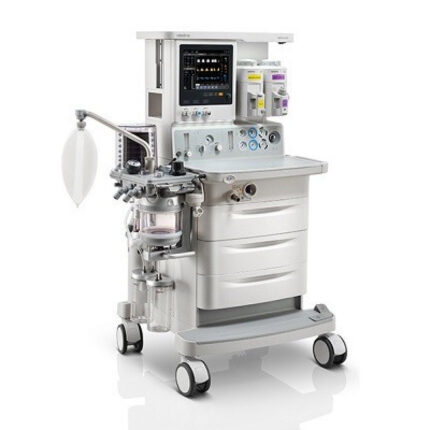
Anesthesia Workstation with VCV, PCV & SIMV-V | Oxygen, Nitrous Oxide & Air
A versatile, small anesthesia workstation for hospitals and surgical centres that features accurate triple gas delivery and adaptable ventilation control for both simple and complex cases.
Specifications:
- Ventilation Modes: VCV (Volume Controlled), PCV (Pressure Controlled), SIMV-V (Synchronized Intermittent Mandatory Ventilation)
- Gas Supply: Oxygen (O₂), Nitrous Oxide (N₂O), Medical Air
- Gas Delivery: Precision flow control with hypoxic guard protection
- Vaporizer Mount: Compatible with standard agent specific vaporizers
- Power Backup: Battery powered for continuous operation when the power goes out
- APL Valve: Adjustable pressure limiting valve for manual/spontaneous ventilation
- Flow Capability: Low flow capability for reduced gas consumption
- Design: Mobile trolley unit with cylinder mounts, no fixed pipeline required
- Application: Operating theatres, surgical centres, and clinics performing general anesthesia
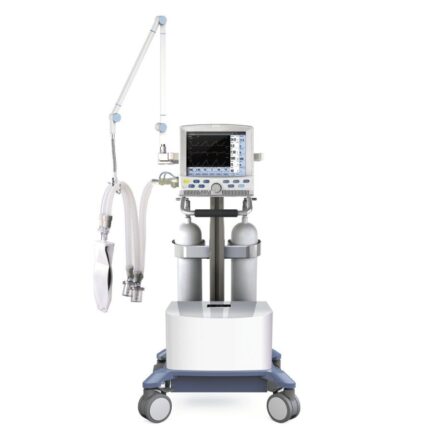
Critical Care Ventilator R50 –
The critical care ventilator R50 is an ICU grade ventilator designed for hospitals, clinics, and critical care transport teams where power fluctuations cannot be relied upon for providing respiratory support. It integrates several ventilation modes and battery backup to be suitable for fixed use in ICU or patient transport.
Specifications:
- Ventilation Modes: Volume Control (VC), Pressure Control (PC), SIMV, Pressure Support (PSV), CPAP
- Power Input: High voltage tolerance for bad grid supply
- Backup Power: Built in rechargeable battery for uninterrupted operation in the event of load shedding
- Oxygen Control: Adjustable FiO₂ (21% to 100%)
- PEEP Range: Adjustable, clinician set Positive End Expiratory Pressure
- Display: High resolution real time waveform monitoring touchscreen
- Alarms: Disconnection alarm, high/low pressure alarm, low oxygen supply alarm
- Design: Self contained and mobile trolley mounted with a compact footprint for easy movement between wards
- Use Setting: ICU, emergency department, operation theatre or ambulance transport

Digital Display Anesthesia Machine with 3 Hours Battery Backup
Electronic control of anesthesia machine with digital display of accurate gas flow, ventilation, and patient monitoring. For hospitals and surgical clinics with a poor power supply, it creates a more dependable system that delivers anesthesia with advanced digital display anesthesia technology.
Specifications
- Digital display: size, 10.4" LCD/TFT
- Ventilation modes: VCV, PCV, SIMV, Manual/Spontaneous
- Tidal volume: 20–1500 ml
- Respiratory rate: 4–100 bpm
- Vaporizer stations: 1 or 2
- Monitoring: SpO2, ETCO2, airway pressure, O2 concentration
- Alarms: Low O₂, high pressure, apnea, power failure
- Power: AC 220V with battery backup
- Gas supply: O₂, N₂O, Air (pipeline/cylinder)
- CO₂ absorber capacity: 1000 g
- Mobility: Trolley mounted, lockable wheels
- Warranty: 1 to 2 years with support from Capasee Electro Medical Engineering
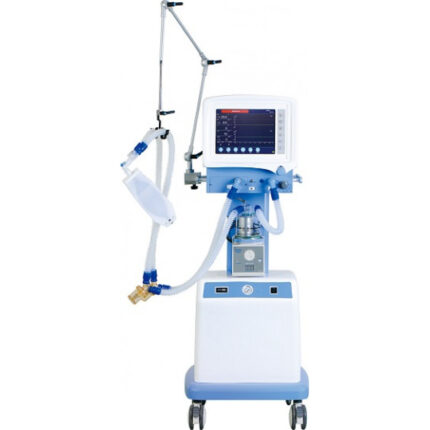
ICU Ventilator VCV and PCV Modes
Mechanical ventilators for the ICU ventilator, HDU, and OT can be used in both Volume Control Ventilation (VCV) and Pressure Control Ventilation (PCV) and VG for lung protection and volume guaranteed breaths. For use with adult and paediatric patients who need invasive and/or non invasive respiratory support.
Specifications:
- Ventilation Modes: VCV, PCV, VG, SIMV, PSV, CPAP
- Tidal Volume Range: 20–2000 mL (adult/paediatric)
- Respiratory Rate: 1–100 breaths/min
- PEEP Range: 0–50 cmH₂O
- FiO₂ Range: 21–100%
- I: E Ratio: Adjustable, 1:9 to 4:1
- Display: High resolution colour touchscreen with real time waveforms (pressure, flow, volume)
- Battery Backup: Internal battery, 60–90 minutes runtime
- Power Input: 220–240V AC with voltage fluctuation tolerance
- Alarms: Apnea, high/low pressure, high/low minute volume, disconnection
- Humidification: Compatible with heated humidifier circuits
- Mobility: Trolley mounted, compact footprint for ICU/ward transfer
- Connectivity: Nurse call/monitor output (model dependent)
O2 AIR Veterinary Anesthetic Machine – LCD Color Screen
The O2 AIR veterinary anesthetic machine is a continuous flow anesthesia delivery system, suitable for veterinary clinics, hospitals, and mobile practice. Its LCD colour display provides current gas flow, vapourizer, and circuit pressure readings to assist vets in providing accurate and consistent anaesthetic during companion animal and livestock surgery.
Specifications:
- Display: LCD color screen with live monitoring
- Flow type: Continuous flow gas delivery system
- Flow rate range: 0.5–3 L/min (adjustable for patient size)
- Vaporizer compatibility: Compatible with standard vaporizers for isoflurane and halothane.
- Safety feature: Built in pressure release valve to prevent overpressure
- Power tolerance: Voltage fluctuation and unstable power supply are taken into account
- Build: Portable frame and wheels on base to move from room to room or field for use
- Circuit: Leak checked breathing circuit for reliable gas delivery
- Use case: Ideal for small animal surgery, livestock, and practice training procedures
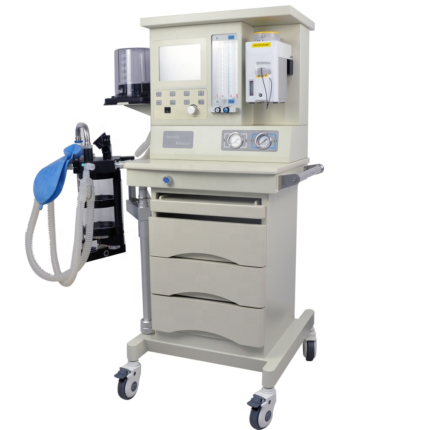
Pneumatic Anesthesia Gas Machine with 3 Hour Battery Backup
An effective anesthesia delivery system designed for the operating room where power failures are not an exception. The core gas delivery of the pneumatic anesthesia gas machine is maintained by a pneumatic drive and not just mains electricity, and the pneumatically driven power to the core gas is supplemented by a built in 3 hour battery backup that keeps the surgeries safe if the power goes out for any reason, even during load shedding.
Key Specifications:
- Drive system: Pneumatic (gas pressure driven)
- Backup power: Integrated battery, up to 3 hours continuous operation
- Flow control: Oxygen and anesthetic gas mixing precision rotameters
- Vaporizer compatibility: Standard agent specific vaporizer mounts
- Safety alarm: Built in oxygen failure/low pressure alarm
- Mobility: Trolley mounted base with locking wheels
- Gas supply: Compatible with standard cylinder and pipeline gas supply systems
- Maintenance: Low electronics design to minimize maintenance
- Ideal for: All hospitals, surgical clinics and day care surgery centres where the power supply is not reliable

Veterinary Gas Anesthesia Machine X45A with 10.2 Inch TFT Touchscreen
X45A is a precision veterinary gas anesthesia machine for hospitals, surgical clinics, and mobile veterinary units. Reliably controlling procedures performed on small to medium animals, it delivers accurate gas delivery and real time monitoring on a large touchscreen display.
Specifications:
- Display: 10.2 inch TFT touchscreen with real time gas flow, pressure, and parameter readout
- Ventilation modes: Spontaneous and controlled ventilation support
- Vaporizer: Precision adjustable anesthetic gas concentration control
- Alarms: Low oxygen and low gas supply alerts (audible + visual)
- Circuit design: Sealed breathing circuit to minimize gas leakage
- Power stability: Stable performance when voltage fluctuates
- Build: Compact trolley frame with lockable wheels for easy movement between rooms
- Suitable for: Small to medium sized dogs, cats, and other animals
- Ideal use setting: Veterinary hospital, surgical clinic, teaching hospital, or mobile unit
Reviews
There are no reviews yet.