
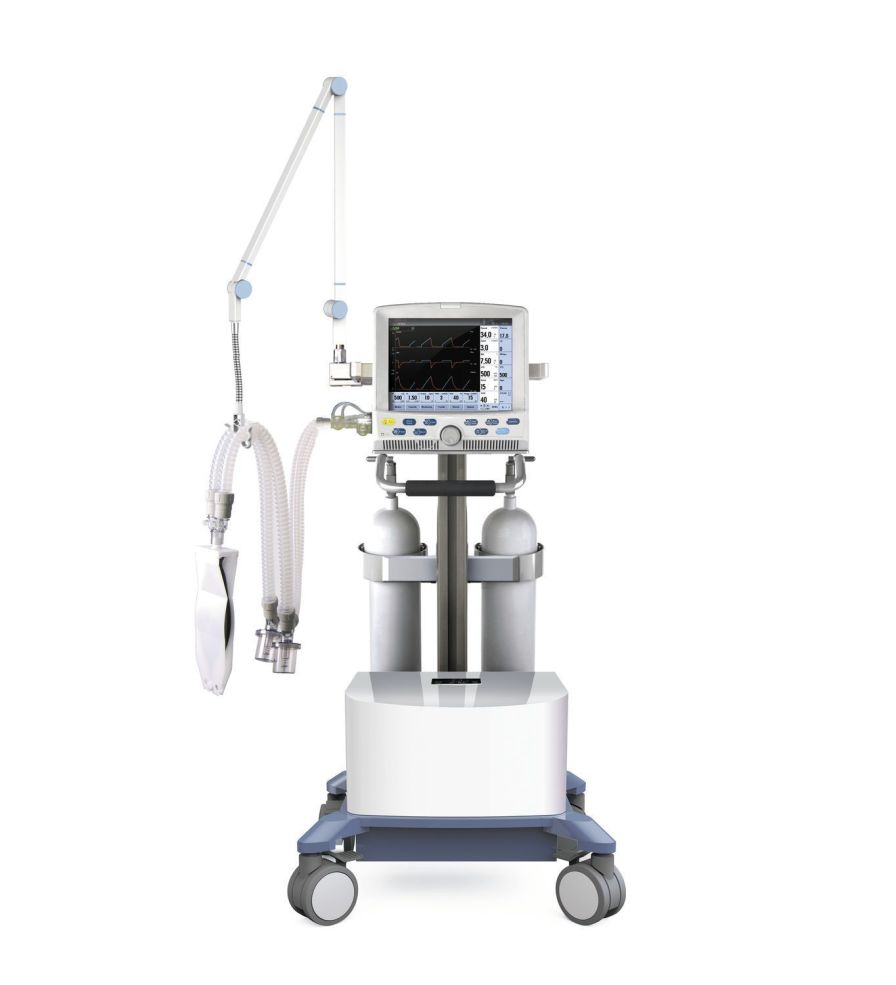

Critical Air Ventilator R50 Plus
₨ 1,650,000
The critical air ventilator R50 Plus is a level of the ventilator of the ICU class, suitable for hospitals and clinics with a critical need for reliable respiratory support even with an unstable power supply. It’s designed for critical applications and is powered by an adjustable ventilation system with a backup power source for use during voltage fluctuations that are frequent throughout Pakistan and during periods of power outage.
Key Specifications:
- Ventilation modes: Volume Control, Pressure Control, SIMV
- Power backup: Internal battery for continued operation during outages
- Voltage protection: Built in surge and fluctuation stabilization
- Display: Digital screen that can be monitored in real time
- Alarms: Pressure, flow, and disconnect alarms
- Design: Compact, mobile, ready for use in the ICU, emergency ward or ambulance
- Maintenance: Low service cycle design for reduced downtime
- Warranty: 1 to 2 Years
Indicative price — contact us for today’s exact price, stock and delivery for your location.
WhatsApp for Final Price & Delivery
Description
Critical Air Ventilator R50 Plus: ICU Grade Respiratory Support for Pakistani Hospitals and Clinics
The Critical Air Ventilator R50 Plus is an ICU grade ventilator designed for hospitals, clinics, and other healthcare settings that require consistent respiratory care in the event of a power outage. It is intended for critical care teams who have patients who need constant, stable ventilation even if the grid is not reliable in Pakistan.
Key Features and Benefits
- Battery backup for load shedding conditions: This is important where there are still many load shedding events in the city or town, as the critical air ventilator R50 Plus keeps working during load shedding.
- Voltage fluctuation protection: Internal surge and voltage stabilization safeguards sensitive electronic components against irregular voltage fluctuations found in Pakistan’s power grid, thus minimizing breakdown risk for the critical air ventilator R50 Plus.
- Adjustable ventilation modes: Clinicians can use adjustable modes to respond to patient specific respiratory requirements for both short term post operative recovery and longer term use in critical care settings.
- Compact, mobile ready design: Designed for mobility between the environs of the ICU bays, emergency wards and ambulances, allowing the health facility to share the same unit between separate departments and environments efficiently in limited space.
- Alarm and monitoring system: Real time alerts of pressure or flow irregularities from the critical air ventilator R50 Plus provide nursing staff with quicker response times during critical periods.
- Low maintenance servicing cycle: The critical air ventilator R50 Plus minimizes downtime and repair expenses for smaller clinics that have tight budgets.
The aim of each feature is simple, to make the critical air ventilator R50 Plus reliable to run in real hospital conditions in Pakistan rather than in a controlled lab.
Who Should Use the Critical Air Ventilator R50 Plus
This critical air ventilator R50 Plus is suitable for ICUs in tier 1 & tier 2 city hospitals during summer peak load conditions, when there will be frequent voltage drops. It is also suitable for smaller clinics in locations with an unreliable power grid, ensuring there’s no loss in care when the power goes out because the critical air ventilator R50 Plus can operate during a power outage.
As it is mobile, it is useful to ambulance services and emergency services when transporting patients. It is ideal for distributors who provide hospitals in the government and private sectors in Punjab, Sindh, and KPK with the old equipment of the Intensive Care Unit (ICU) to upgrade them in preparation for accreditation inspections.
Why Choose Capasee Electro Medical Engineering
Capasee Electro Medical Engineering has had hands on experience with hospital procurement departments and biomedical engineers in Pakistan, providing the company with a first hand understanding of what works and doesn’t work in the field. This hands on experience helps to form the build and service of the critical air ventilator R50 Plus.
Capasee provides a structured after sales support system for each unit through on site technical visits and availability of spares to keep the hospital from having to wait weeks for the repair of the critical air ventilator R50 Plus. The company strives for reliability not only in their spec sheet but also during actual power conditions in Pakistan as well.
Frequently Asked Questions
What is a critical care ventilator?
A critical care ventilator is a machine that helps or completely replaces a patient’s breathing if they are unable to breathe on their own. It is used for patients with severe respiratory failure in ICUs, patients after surgery, or patients who are experiencing critical illness, providing controlled oxygen and air at controlled pressures and volumes.
What is the cost of Proton Plus ventilator?
Please contact us to get the prices as per configuration, features included, order volume, etc. Request the manufacturer or service dealer to provide you with an up to date offer and prices for service packages.
What are the different types of ICU ventilators?
CU ventilators are typically one of several categories, invasive ventilators, where the patient has to be connected to an endotracheal tube for full respiratory support; non invasive ventilators, where the patient can breathe partially on their own and a face or nasal mask is used for this; transport ventilators, compact ventilators for patients transported between departments or in an ambulance; and high frequency ventilators, specialized ventilators for certain complex respiratory conditions, often used in neonatal care.
What is the most common ICU ventilator?
In ICUs, invasive mechanical ventilators are the most commonly used ventilators. They provide the most direct and controlled respiratory support to patients who have a critical illness that prevents them from breathing appropriately on their own.
How long can an ICU patient stay on a ventilator?
The length of time varies greatly depending on the individual patient. In some cases, a patient’s breathing must be supported for a few hours following surgery and for days or weeks in the case of a patient who has had severe respiratory illness. Treatment is not a set period, and its length will depend on the lung function and overall recovery of the patient.
Get the Critical Air Ventilator R50 Plus for Your Facility
Request a quotation, a product demonstration, or a bulk order for your hospital, clinic, or distribution network by contacting Capasee Electro Medical Engineering today to secure the critical air ventilator R50 Plus.
Reviews (0)
Shipping & Delivery
Related products

8.4 Inch Veterinary Anesthesia Machine with Electronic Display and Flowmeter
An effective veterinary anesthesia machine capable of providing accurate and controlled gas anesthesia to animals during surgical and/or diagnostic procedures. It is designed for clinics and hospitals that cater to both small and large animals with its accurate flow control feature, while being compact and mobile enough to be used on a daily basis in Pakistan.
Specifications:
- Gas delivery: Precision flow meter with fine adjustment for oxygen and anesthetic gas
- Vaporizer compatibility: Works with standard inhalant agents (isoflurane, sevoflurane)
- Circuit type: Rebreathing and non-rebreathing circuit options
- Safety feature: Built-in pressure-relief (pop-off) valve
- Ventilation control: Manual and mechanical ventilator bag options
- Design: Compact mobile trolley with lockable wheels
- Animal range: Suitable for small animals through to large/farm animals
- Power handling: Stable performance under variable voltage conditions
- Use setting: Clinics, animal hospitals, mobile/farm veterinary practice
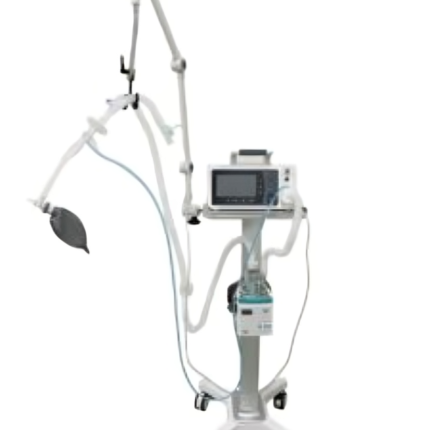
Compact Size Ventilator
A mechanical ventilator that can be carried on foot and does not require extra space for reliable respiratory support. A compact size ventilator can be used in hospitals, clinics, ambulances, and home care settings.
Specifications:
- Type: Compact, portable mechanical ventilator
- Ventilation modes: Several different modes for different patient requirements
- Power supply: AC mains and internal battery back up for power outages
- Design: Lightweight build for easy transport between rooms or facilities
- Alarms: Disconnection, pressure fault, and power failure warnings
- Interface: Simple controls for quick staff and caregiver training
- Support: Backed by after sales service and technical support

Critical Care Ventilator R30
A reliable ICU ventilator for hospitals and clinics with the consistent demand for respiratory support and for power failures, using the critical care ventilator R30.
Key Specifications:
Ventilation modes: Volume Control, Pressure Control, SIMV, CPAP FiO₂ range: 21% – 100% PEEP range: 0 – 50 cmH₂O Respiratory rate: 4 – 80 breaths/min Tidal volume: 20 – 2000 mL Battery backup: built in, for uninterrupted operation Real time monitoring display Alarms: pressure, disconnection, power failure Compact, mobile ready design Warranty: 1 to 2 Years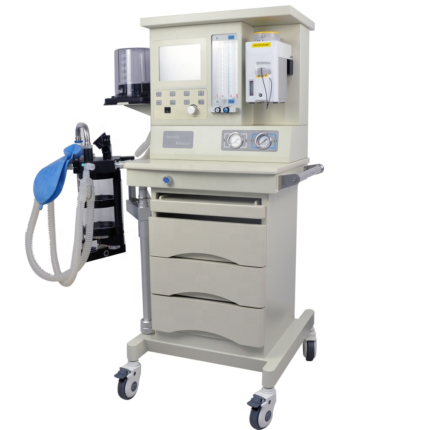
Pneumatic Anesthesia Gas Machine with 3 Hour Battery Backup
An effective anesthesia delivery system designed for the operating room where power failures are not an exception. The core gas delivery of the pneumatic anesthesia gas machine is maintained by a pneumatic drive and not just mains electricity, and the pneumatically driven power to the core gas is supplemented by a built in 3 hour battery backup that keeps the surgeries safe if the power goes out for any reason, even during load shedding.
Key Specifications:
- Drive system: Pneumatic (gas pressure driven)
- Backup power: Integrated battery, up to 3 hours continuous operation
- Flow control: Oxygen and anesthetic gas mixing precision rotameters
- Vaporizer compatibility: Standard agent specific vaporizer mounts
- Safety alarm: Built in oxygen failure/low pressure alarm
- Mobility: Trolley mounted base with locking wheels
- Gas supply: Compatible with standard cylinder and pipeline gas supply systems
- Maintenance: Low electronics design to minimize maintenance
- Ideal for: All hospitals, surgical clinics and day care surgery centres where the power supply is not reliable
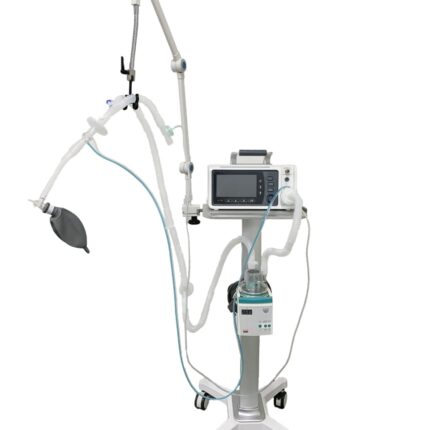
R55 Ventilator Machine For Hospital
The R55 is a hospital mechanical ventilator designed for high dependency units, emergency rooms, and intensive care units, where reliable and continuous respiratory care is required, even when faced with an unreliable power supply, as in most hospitals in Pakistan. This ventilator machine is built for dependable performance in critical care settings.
Specifications:
- Ventilation Modes: Volume controlled and pressure controlled
- Tidal Volume Range: Adjustable, with adult and paediatric settings supported
- Power Backup: Integrated battery with automatic switchover on grid failure
- Voltage Tolerance: Wide input range to handle local voltage fluctuations
- Alarm System: Real time alerts for disconnection, low pressure, and power faults
- Respiratory Rate Control: Adjustable per patient requirement
- Display: Real time monitoring of ventilation parameters
- Design: Compact footprint suited for standard ICU bed spacing
- Maintenance: Low upkeep with accessible, serviceable components
- Warranty & Support: 1 to 2 years and local after sales service through Capasee Electro Medical Engineering

Veterinary Gas Anesthesia Machine X45A with 10.2 Inch TFT Touchscreen
X45A is a precision veterinary gas anesthesia machine for hospitals, surgical clinics, and mobile veterinary units. Reliably controlling procedures performed on small to medium animals, it delivers accurate gas delivery and real time monitoring on a large touchscreen display.
Specifications:
- Display: 10.2 inch TFT touchscreen with real time gas flow, pressure, and parameter readout
- Ventilation modes: Spontaneous and controlled ventilation support
- Vaporizer: Precision adjustable anesthetic gas concentration control
- Alarms: Low oxygen and low gas supply alerts (audible + visual)
- Circuit design: Sealed breathing circuit to minimize gas leakage
- Power stability: Stable performance when voltage fluctuates
- Build: Compact trolley frame with lockable wheels for easy movement between rooms
- Suitable for: Small to medium sized dogs, cats, and other animals
- Ideal use setting: Veterinary hospital, surgical clinic, teaching hospital, or mobile unit
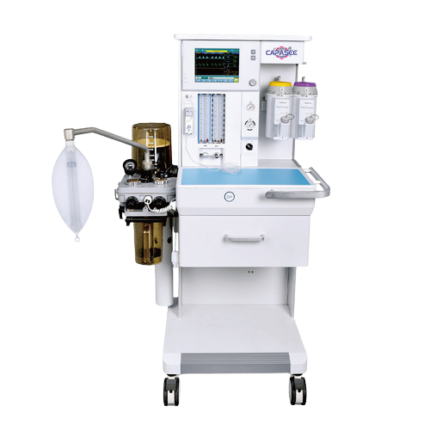
X40 Veterinary Anesthesia Machine with Touch Screen Control –
The X40 veterinary anesthesia machine is designed for precise and safe administration of anesthesia during surgery, which is controlled by a touch screen. It has a pneumatically driven, electronically controlled system that allows vets to maintain stable gas delivery and have clear visual feedback during a procedure.
Specifications:
- Display: 8.4" TFT LCD color touch screen for easy, intuitive control
- Flow Sensor: Unique variable orifice flow sensor for accurate measurement
- Tidal Volume Range: 50–1500 ml (optional 20–1500 ml for smaller patients)
- Drive System: Pneumatically driven, electronically controlled with built in battery backup
- Ventilation Modes: IPPV, SIMV, Manual, Manual (Bag), Closed
- Waveform Display: Multi waveform monitoring, P-T, F-T, V-T, and lung mechanics loops
- PEEP Control: Accurate electronic PEEP valve
- Auxiliary Flowmeter: Inbuilt auxiliary flow meter (O2 port)
- CO₂ Absorption: Integrated CO₂ absorber circuit
- Power Supply: AC 220V
- Application Range: Suitable for pediatric and adult patients (3 kg and above)
- Device Class: Class III medical equipment
- Certification: CE, ISO, FSC
- Warranty: 1 year
Reviews
There are no reviews yet.