
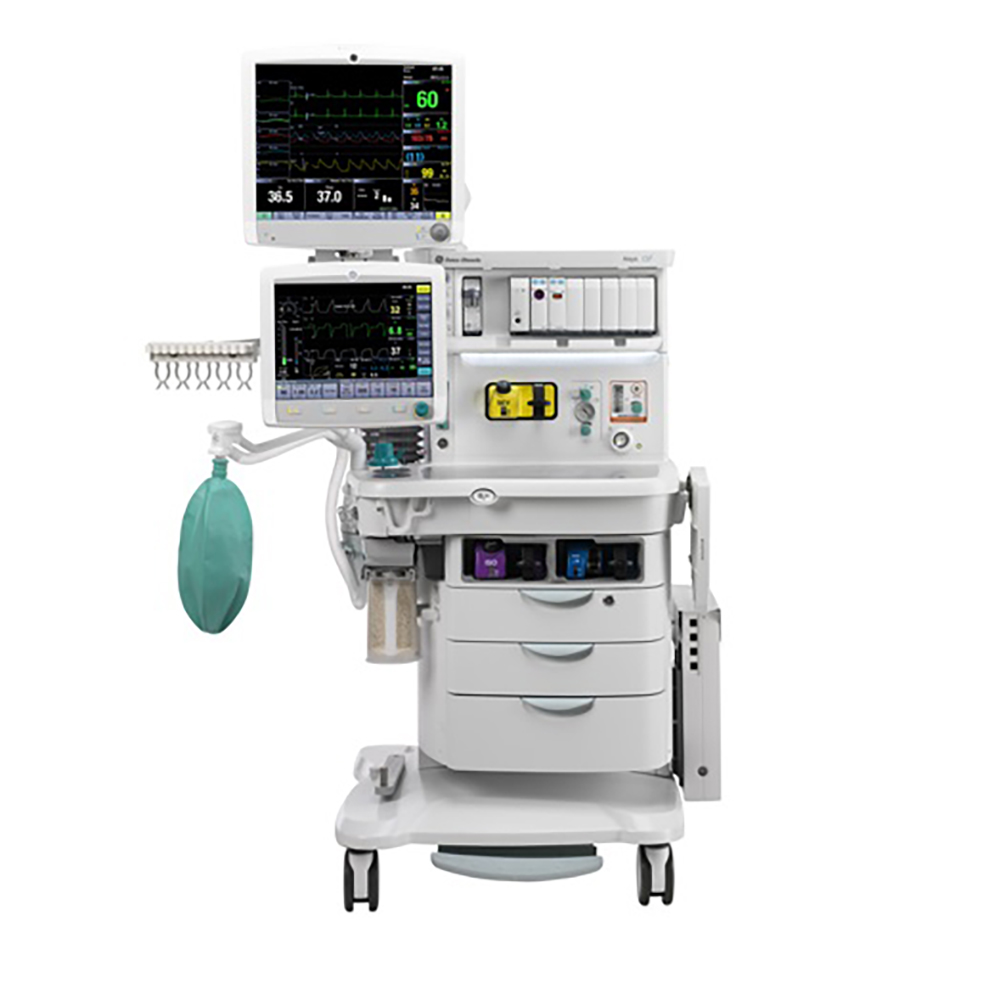
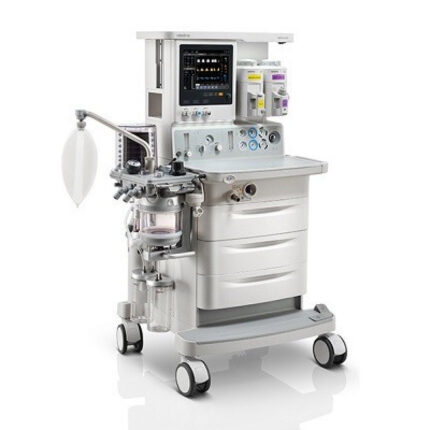

OR Anesthesia Machine Ventilator
₨ 850,000
An anesthesia machine ventilator designed for use in operating rooms for providing accurate mechanical ventilation along with anesthetic gas control. Provides the surgical team with accurate breathing support and continuous patient monitoring and works reliably even with an unstable power supply.
Specifications:
- Ventilation modes: Volume control, pressure control, SIMV (synchronized intermittent mandates ventilations)
- Tidal volume range: 20–1500 ml
- Respiratory rate: 4–100 breaths/min
- Oxygen concentration control: 21–100%
- Real time and digital display of waveforms
- Battery backup for power outages
- Wide voltage tolerance for fluctuating mains supply
- Alarms: disconnection, high/low pressure, low oxygen
- Gas compatibility: O₂, N₂O, air
- Mobile wheeled base for easy transport between theatres
- Warranty and after sales support included
Indicative price — contact us for today’s exact price, stock and delivery for your location.
WhatsApp for Final Price & Delivery
Description
Anesthesia Machine Ventilator in Pakistan
During surgery, the anesthesia machine ventilator provides precise and controlled ventilating assistance to patients under general anesthesia. It is designed for hospitals, surgical centres, and clinics, where dependable respiratory control is required in the operating room.
Key Features and Benefits
- Integrated ventilation and anesthesia delivery: Provides the delivery of both ventilation and gas in a single system; the anesthetist can therefore control a patient’s ventilation and anesthetic depth from a common control panel rather than having to operate two separate systems. An anesthesia machine ventilator combines these functions for efficient clinical use.
- Adjustable tidal volume and respiratory rate: Allows clinical personnel to customize breathing support for any patient based on age, weight, and clinical condition, important for a wide range of patient cases from babies to those with compromised lung capacity.
- Battery backup for power interruptions: Some areas of Pakistan still experience power cuts, and an internal battery ensures that patients continue to be kept ventilated in the event of an outage, providing them with peace of mind when the generator hasn’t yet turned on. An anesthesia machine ventilator with battery support helps maintain ventilation during such interruptions.
- Voltage fluctuation tolerance: The inbuilt stabilisation circuit can deal with power supply fluctuations commonly experienced in hospital mains circuits to prevent sudden shutdowns or damage to components.
- Digital monitoring display: Patient status is immediately evident to staff as they look at the real time readout of the oxygen concentration, airway pressure and flow rates. The display allows staff to monitor the anesthesia machine ventilator during procedures.
- Alarm systems for disconnection and low pressure: Alerts staff immediately when a circuit disconnects, or pressure is too low or too high, which is important in long, complex surgeries. These safety alerts support reliable operation of an anesthesia machine ventilator.
- Compact, mobile design: Wheeled units can be transported from operating room to operating room, ideal for smaller hospitals and clinics that must share equipment among multiple operating rooms.
Who Should Buy This
Hospitals with multiple surgeries per day require a ventilator that will not fail during unreliable power, particularly in cities with ongoing power issues. Digital monitoring and alarms offer added safety for private surgical clinics upgrading from the older, purely mechanical anesthesia setups. Some semi urban and rural locations have unreliable voltage supplies and require the voltage level to be stabilized and the battery backup provided by a proper anesthesia machine ventilator. The category of these machines is also required by the distributors supplying operation theatre equipment to government and private hospitals in Pakistan with regard to tender and procurement.
Why Choose Capasee Electro Medical Engineering
Capasee Electro Medical Engineering has been directly engaged with hospitals and clinics all over Pakistan and provided and supported operation theatre (O.T.) equipment that meets local power supply requirements and clinical procedures. The team is aware of the practical requirements of healthcare facilities in Pakistan, such as voltage instability, the need for speedy local after sales and spares, etc. Each anesthesia machine ventilator supplied includes installation recommendations and technical support, giving hospitals the knowledge they need to help with any equipment issues once the ventilator is in use.
Frequently Asked Questions
Is an anesthesia machine a ventilator?
An anesthesia machine is a more comprehensive machine than a stand alone ICU ventilator, as it supplies anesthetic gases as well as monitors patient parameters and is equipped with a built in ventilator.
What are the three types of ventilators?
There are a variety of types of ventilators, typically classified as either volume controlled, pressure controlled, or dual mode/hybrid ventilators, which differ in their methods for controlling airflow and pressure to the patient.
Which is more serious, an ICU or a ventilator?
These aren’t directly comparable. An ICU is a hospital ward for the treatment of patients in serious condition; a ventilator is a piece of equipment installed in that ward (or operating theatre) which assists breathing.
What are the 4 types of anesthesia?
General, regional, local, and sedation anaesthesias are the four major categories, all appropriate for the nature and degree of the procedure.
Which type of anesthesia is safest?
No single anaesthetic is universally safe; it is dependent upon the patient’s condition, the procedure performed, and clinical judgement. The choice of the option is made by an anesthesiologist on a case by case basis.
Get Started
Looking to equip your hospital or clinic with a dependable anesthesia machine ventilator? Call Capasee Electro Medical Engineering for a quote, specifications, and installation for your facility.
Reviews (0)
Shipping & Delivery
Related products

8.4 Inch Veterinary Anesthesia Machine with Electronic Display and Flowmeter
An effective veterinary anesthesia machine capable of providing accurate and controlled gas anesthesia to animals during surgical and/or diagnostic procedures. It is designed for clinics and hospitals that cater to both small and large animals with its accurate flow control feature, while being compact and mobile enough to be used on a daily basis in Pakistan.
Specifications:
- Gas delivery: Precision flow meter with fine adjustment for oxygen and anesthetic gas
- Vaporizer compatibility: Works with standard inhalant agents (isoflurane, sevoflurane)
- Circuit type: Rebreathing and non-rebreathing circuit options
- Safety feature: Built-in pressure-relief (pop-off) valve
- Ventilation control: Manual and mechanical ventilator bag options
- Design: Compact mobile trolley with lockable wheels
- Animal range: Suitable for small animals through to large/farm animals
- Power handling: Stable performance under variable voltage conditions
- Use setting: Clinics, animal hospitals, mobile/farm veterinary practice

Critical Care Ventilator R30
A reliable ICU ventilator for hospitals and clinics with the consistent demand for respiratory support and for power failures, using the critical care ventilator R30.
Key Specifications:
Ventilation modes: Volume Control, Pressure Control, SIMV, CPAP FiO₂ range: 21% – 100% PEEP range: 0 – 50 cmH₂O Respiratory rate: 4 – 80 breaths/min Tidal volume: 20 – 2000 mL Battery backup: built in, for uninterrupted operation Real time monitoring display Alarms: pressure, disconnection, power failure Compact, mobile ready design Warranty: 1 to 2 Years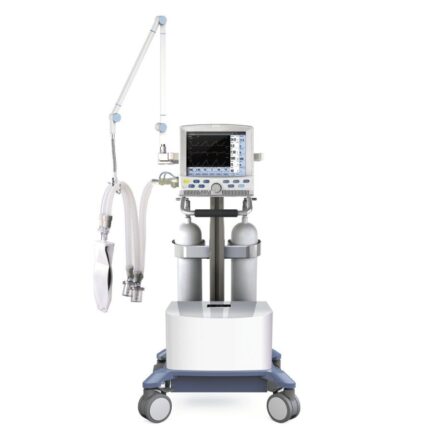
Critical Care Ventilator R50 –
The critical care ventilator R50 is an ICU grade ventilator designed for hospitals, clinics, and critical care transport teams where power fluctuations cannot be relied upon for providing respiratory support. It integrates several ventilation modes and battery backup to be suitable for fixed use in ICU or patient transport.
Specifications:
- Ventilation Modes: Volume Control (VC), Pressure Control (PC), SIMV, Pressure Support (PSV), CPAP
- Power Input: High voltage tolerance for bad grid supply
- Backup Power: Built in rechargeable battery for uninterrupted operation in the event of load shedding
- Oxygen Control: Adjustable FiO₂ (21% to 100%)
- PEEP Range: Adjustable, clinician set Positive End Expiratory Pressure
- Display: High resolution real time waveform monitoring touchscreen
- Alarms: Disconnection alarm, high/low pressure alarm, low oxygen supply alarm
- Design: Self contained and mobile trolley mounted with a compact footprint for easy movement between wards
- Use Setting: ICU, emergency department, operation theatre or ambulance transport
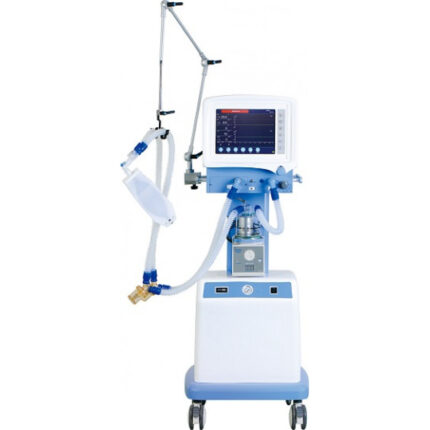
ICU Ventilator VCV and PCV Modes
Mechanical ventilators for the ICU ventilator, HDU, and OT can be used in both Volume Control Ventilation (VCV) and Pressure Control Ventilation (PCV) and VG for lung protection and volume guaranteed breaths. For use with adult and paediatric patients who need invasive and/or non invasive respiratory support.
Specifications:
- Ventilation Modes: VCV, PCV, VG, SIMV, PSV, CPAP
- Tidal Volume Range: 20–2000 mL (adult/paediatric)
- Respiratory Rate: 1–100 breaths/min
- PEEP Range: 0–50 cmH₂O
- FiO₂ Range: 21–100%
- I: E Ratio: Adjustable, 1:9 to 4:1
- Display: High resolution colour touchscreen with real time waveforms (pressure, flow, volume)
- Battery Backup: Internal battery, 60–90 minutes runtime
- Power Input: 220–240V AC with voltage fluctuation tolerance
- Alarms: Apnea, high/low pressure, high/low minute volume, disconnection
- Humidification: Compatible with heated humidifier circuits
- Mobility: Trolley mounted, compact footprint for ICU/ward transfer
- Connectivity: Nurse call/monitor output (model dependent)

O2 N2O Anesthesia Machine with 2 Vaporizers Without Ventilator
A manual anaesthetic delivery system for hospitals and surgical clinics requiring a reliable anaesthetic gas and vapor delivery system without a built in ventilator. It is a combination of oxygen and nitrous oxide flow control and dual vaporizer mounting, providing flexibility to the anesthetist to change the agent during the procedure and also allowing manual bag ventilation or an external ventilator. The O2 N2O anesthesia machine with 2 vaporizers is designed for facilities requiring this practical configuration.
Specifications:
- Gas supply: O2 and N2O can be taken from pipeline or cylinder sources
- Vaporizer capacity: 2 (agent specific, e.g., Isoflurane/Sevoflurane)
- Flow control: Rotameter based flow meters for accurate O₂ and N₂O mixing
- Ventilation mode: No mechanical ventilator, manual bag ventilation
- CO2 absorption: Circle absorber system with soda lime canister
- Cylinder fitting: Pin index or bull nose yoke, standard local cylinder compatibility
- Working pressure: Regulated to the standard pipeline pressure (approx. 50 to 55 psi)
- Frame/build: Body is stainless steel and power coated, trolley mounted
- Power dependency: Primarily pneumatic, functions without continuous electricity
- Footprint: Compact trolley base suitable for use in small operation theatres
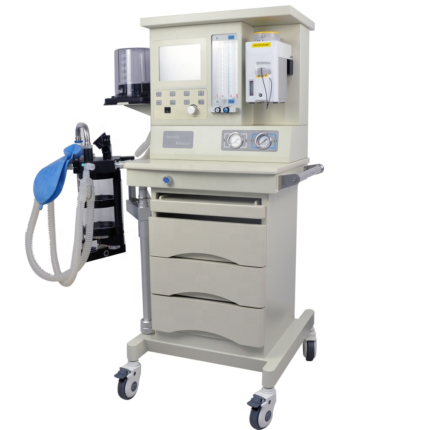
Pneumatic Anesthesia Gas Machine with 3 Hour Battery Backup
An effective anesthesia delivery system designed for the operating room where power failures are not an exception. The core gas delivery of the pneumatic anesthesia gas machine is maintained by a pneumatic drive and not just mains electricity, and the pneumatically driven power to the core gas is supplemented by a built in 3 hour battery backup that keeps the surgeries safe if the power goes out for any reason, even during load shedding.
Key Specifications:
- Drive system: Pneumatic (gas pressure driven)
- Backup power: Integrated battery, up to 3 hours continuous operation
- Flow control: Oxygen and anesthetic gas mixing precision rotameters
- Vaporizer compatibility: Standard agent specific vaporizer mounts
- Safety alarm: Built in oxygen failure/low pressure alarm
- Mobility: Trolley mounted base with locking wheels
- Gas supply: Compatible with standard cylinder and pipeline gas supply systems
- Maintenance: Low electronics design to minimize maintenance
- Ideal for: All hospitals, surgical clinics and day care surgery centres where the power supply is not reliable
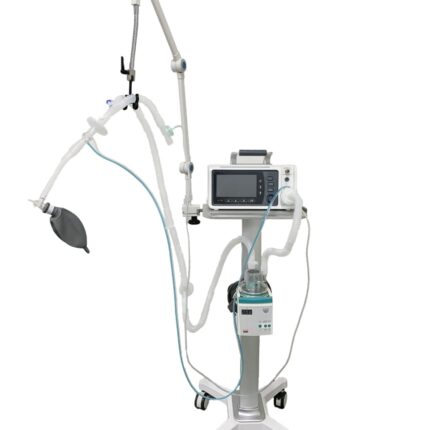
R55 Ventilator Machine For Hospital
The R55 is a hospital mechanical ventilator designed for high dependency units, emergency rooms, and intensive care units, where reliable and continuous respiratory care is required, even when faced with an unreliable power supply, as in most hospitals in Pakistan. This ventilator machine is built for dependable performance in critical care settings.
Specifications:
- Ventilation Modes: Volume controlled and pressure controlled
- Tidal Volume Range: Adjustable, with adult and paediatric settings supported
- Power Backup: Integrated battery with automatic switchover on grid failure
- Voltage Tolerance: Wide input range to handle local voltage fluctuations
- Alarm System: Real time alerts for disconnection, low pressure, and power faults
- Respiratory Rate Control: Adjustable per patient requirement
- Display: Real time monitoring of ventilation parameters
- Design: Compact footprint suited for standard ICU bed spacing
- Maintenance: Low upkeep with accessible, serviceable components
- Warranty & Support: 1 to 2 years and local after sales service through Capasee Electro Medical Engineering

X30 Anesthesia Workstation
Compact, all in one delivery and monitoring system for operating theatres and surgical units, incorporating ventilation, gas delivery and patient monitoring in a single mobile unit, designed for reliable performance even under an unstable power supply. The X30 anesthesia workstation provides an integrated solution for operating environments.
Specifications:
- Ventilation modes: Volume Control, Pressure Control, SIMV
- Gas supply: O₂, N₂O, Air (pipeline supply with cylinder backup)
- Vaporizer compatibility: Isoflurane, Sevoflurane
- Flow range: 0.2–15 L/min
- Tidal volume range: 20–1500 mL
- Respiratory rate range: 4–100 bpm
- Battery backup: Up to 90 minutes
- Monitoring parameters: SpO2, ETCO2, NIBP, ECG, temperature
- Display: 12" color touchscreen
- Alarm system: Audible and visual (disconnection, pressure, low agent)
- Mobility: Locking castors, compact footprint
- Power input: Wide range tolerance of 180 to 260V AC
- Warranty: 1 year standard
Reviews
There are no reviews yet.