
General Surgical Instruments: Types, Uses and Functions

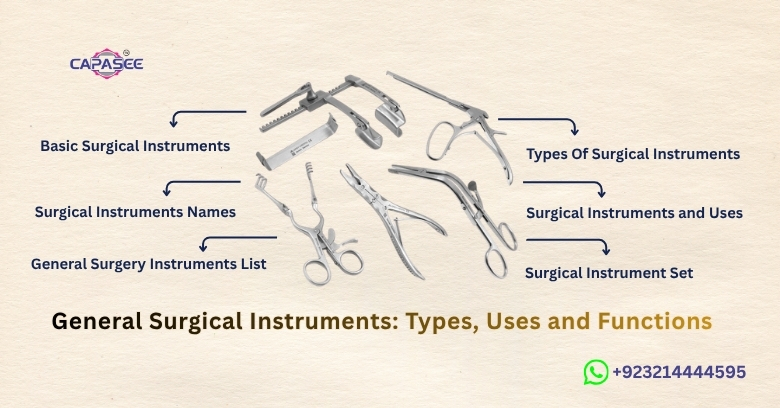
Surgical techniques rely on correct surgical instruments for accuracy, control, and safety. In hospitals, clinics, and operating theatres, general surgical instruments are vital, assisting surgeons in various procedures like cutting, grasping, holding, clamping, and suturing tissues. But with the right instruments, it can be a difficult process, particularly if they offer the quality, usability, and cost of good instruments in Pakistan.
Knowing their types and uses aids doctors, hospitals, and medical equipment buyers in making informed decisions. This guide will show you the various types of general surgical instruments, their names, their functions, and common uses. You’ll also discover what considerations are essential to choosing the right surgical instruments, such as the quality of the materials, durability, design, sterilization needs, and appropriateness for various surgical techniques.
What Are General Surgical Instruments?
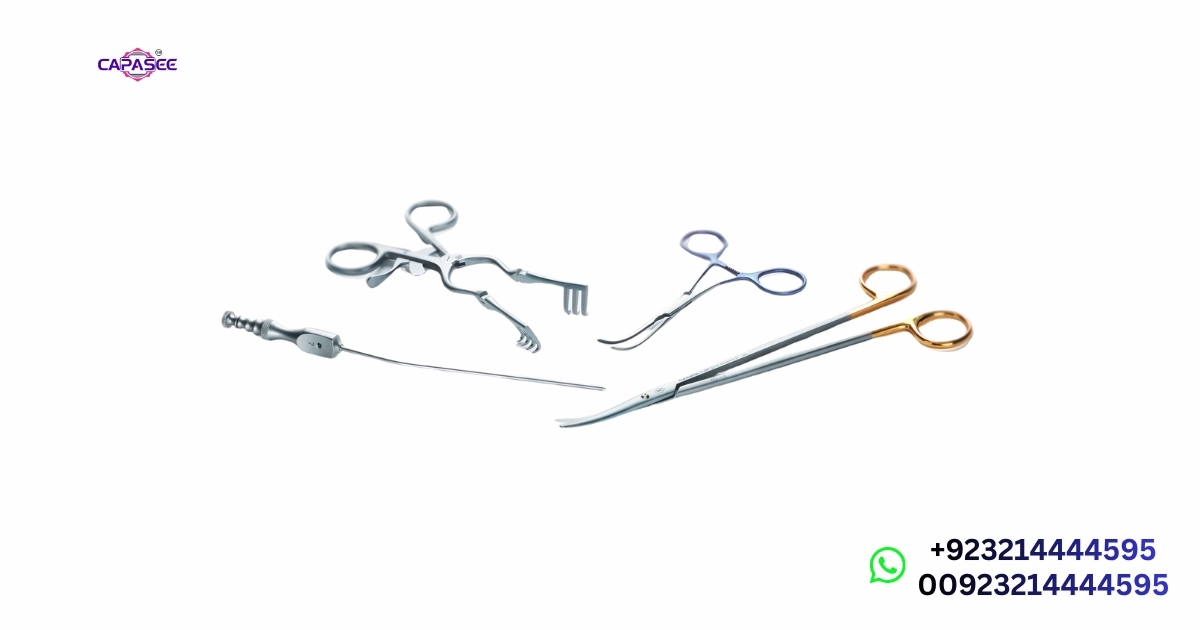
General surgical instruments are a set of medical instruments used by surgeons and health care providers for various tasks during surgery. They are used to cut, hold, clamp, retract, dissect, suture, and remove fluids from the surgical site. They are a vital component of hospital, clinic, ED, and surgical centre instruments in the operating room.
General surgery instruments are applicable to a variety of surgical procedures, as opposed to speciality instruments that serve a specific purpose in a medical procedure. For instance, surgeons use scalpels to cut, forceps to pick up tissues, hemostatic clamps to deal with bleeding, and retractors to provide visibility.
What Are General Surgical Instruments?
General surgical instruments are the medical instruments that surgeons and health care professionals use to do various tasks during a surgical procedure. These instruments are used to make cuts, grasp, clamp, retract, suture, and expose tissues. These are the basis for most operating room instruments used by general surgeons in the emergency room, minor surgical procedures, and theatres.
General surgery instruments are used in a variety of surgeries and not for a specific procedure like speciality instruments. Doctors use a scalpel to cut into tissues, clamps to stop bleeding, forceps to grab tissues, and retractors to open the surgical area so that they can see it.
You can read this too: Surgical Instruments Manufacturers in Pakistan: Guide
Basic Surgical Instruments Every Operating Room Needs
Each operating room needs a proper set of basic surgical apparatus to support the regular surgeries carried out. The specific choices vary depending on the surgery, the surgeon’s preference, patient needs, and the needs of the surgical facility. Most general surgical setups, however, have cutting, grasping, clamping, retracting, and suturing instruments.
The following is a list of some of the components that might be found in a basic surgical instrument set for a clinic or minor operation room:
| Instrument Category | Common Examples | Primary Function |
| Cutting instruments | Scalpel handles, Mayo scissors, Metzenbaum scissors | Making incisions and cutting tissues |
| Grasping instruments | Tissue forceps, dressing forceps, Adson forceps | Holding tissues and dressings |
| Clamping instruments | Artery forceps, Kelly forceps, Kocher forceps | Controlling bleeding and holding tissues |
| Retracting instruments | Langenbeck, Deaver, Balfour retractors | Exposing the surgical area |
| Suturing instruments | Needle holders, suture scissors | Closing wounds and cutting sutures |
| Accessory instruments | Sponge holders, suction tips, instrument bowls | Preparing the surgical field and managing fluids |
Depending on the nature of the surgery, hospitals should choose instruments based on the amount of surgery they conduct and not buy them all. A minor surgery clinic requires a different array of instruments than a hospital that does abdominal and emergency surgeries, for instance.
Other factors to consider when buying hospital surgical equipment include the size of the instruments, the design of the handles, how the jaws align, the material used to make the instruments, and how they must be sterilized. A set of surgical instruments should include interchangeable instruments that are compatible with the surgical procedures to be performed without duplication.
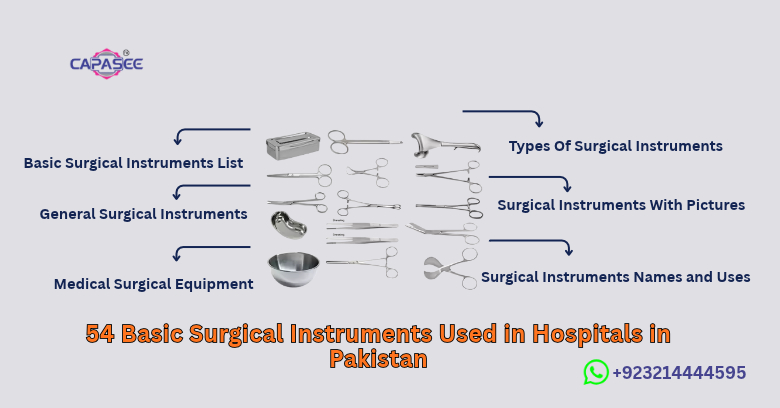
Surgical Instruments Names and Uses
Understanding the names and uses of surgical instruments enables medical practitioners to determine which instrument to use at every stage of a surgical procedure. The shapes, tips, cutting edges, and locking mechanisms are what make different instruments work, and there are numerous instruments that look alike.
Below are the common general surgical instruments and some of their uses explained by categories.
Cutting Instruments: Scalpel Blades, Handles and Surgical Scissors
During surgery, cutting instruments are used to make accurate incisions, to separate tissues, and to cut sutures. The blades and handles make up some of the most significant tools, as they enable controlled cutting at various tissue depths.
A scalpel is comprised of a handle and a compatible blade. Common handles are No. 3 and No. 4. These handles come in different shapes and sizes, and blades have to fit the specific handle, so prospective customers need to make sure they are compatible before they buy replacement blades.
The most common types of scalpel blades are:
- No. 10 blade: This is the standard size blade used for larger skin incisions and in general surgical cutting.
- No. 11 blade: Has a pointy tip for small and precise cuts, as well as stab incisions.
- No. 15 blade: Has a small curved cutting edge which is useful for making short, controlled incisions and for delicate work.
Surgical scissors are also used in the dissection and cutting of tissues. They can be designed in different shapes based on the type of material being cut and the precision needed.
| Scissor Type | Main Function | Common Application |
| Mayo scissors | Cutting heavier tissues and sutures | General surgical procedures |
| Metzenbaum scissors | Cutting delicate tissues | Soft tissue dissection |
| Iris scissors | Fine, precise cutting | Delicate surgical work |
| Operating scissors | General cutting and tissue separation | Routine surgical procedures |
In addition, there are straight and curved scissors. Straight scissors are useful for making most types of cuts, including sutures, and can be used to cut accessible materials, while curved scissors can be used in areas of surgery that are deeper and require access around material.
For buyers, the blade compatibility, sharpness, cutting alignment, handle comfort, and instrument finish are the most significant points to consider. Surgical forceps and scissors should also slide easily from opening to closing and vice versa without any friction.
Grasping, Clamping and Hemostatic Instruments
Knowledge and use of clamping instruments enable surgeons to hold tissues, control bleeding, and maintain a clear surgical field. While both types may feature the same hand shape, they have different hand profiles and uses.
Surgical forceps are used to grasp tissue or other materials during surgery. The designs are either smooth for delicate structures or toothed for tougher tissues. Hemostatic clamps, however, are used during surgery to stop bleeding by squeezing blood vessels.
Some examples of these general surgical instruments are Adson, DeBakey, Babcock, Allis, mosquito, Kelly, Pean, and Kocher.
| Instrument | Type | Typical Use | Selection Consideration |
| Adson forceps | Grasping forceps | Holding skin and dense tissues | Toothed or non toothed tips |
| DeBakey forceps | Atraumatic forceps | Handling delicate and vascular tissues | Jaw width and length |
| Babcock forceps | Atraumatic grasping forceps | Holding delicate tubular structures | Jaw shape and grip |
| Allis forceps | Traumatic grasping forceps | Holding tissues during dissection | Tooth pattern and length |
| Mosquito forceps | Hemostatic clamp | Controlling small blood vessels | Straight or curved design |
| Kelly forceps | Hemostatic clamp | Clamping medium sized vessels | Jaw length and serrations |
| Pean forceps | Hemostatic clamp | Grasping and clamping tissues or vessels | Jaw design and locking mechanism |
| Kocher forceps | Traumatic clamp | Securing tougher tissues | Interlocking tooth design |
There are two types of instruments; atraumatic and traumatic. When using delicate structures, atraumatic forceps like DeBakey and Babcock will minimize the amount of tissue compression. Traumatic instruments (Allis and Kocher forceps) offer a greater bite but may harm tissue when used incorrectly.
The hemostatic clamps are also essential in surgery. Depending on the size and design, mosquito forceps will fit on smaller vessels, and Kelly and Pean forceps will be more appropriate for larger vessels.
Customers should consider the following features when purchasing surgical clamps and retractors; jaw alignment, ratchet locking, quality of serrations, and smooth operation. The instrument must be easy to lock up if needed but must also be easy to unlock if needed.
When hospitals and clinics opt for stainless steel surgical instruments from a reputable supplier, it also facilitates the reuse of surgical instruments. Check tips, joints, locking, and surface finish prior to purchase. All tools should be cleaned, inspected, and sterilized as appropriate and according to the instructions of the manufacturer.
Retractors, Needle Holders and Suturing Instruments
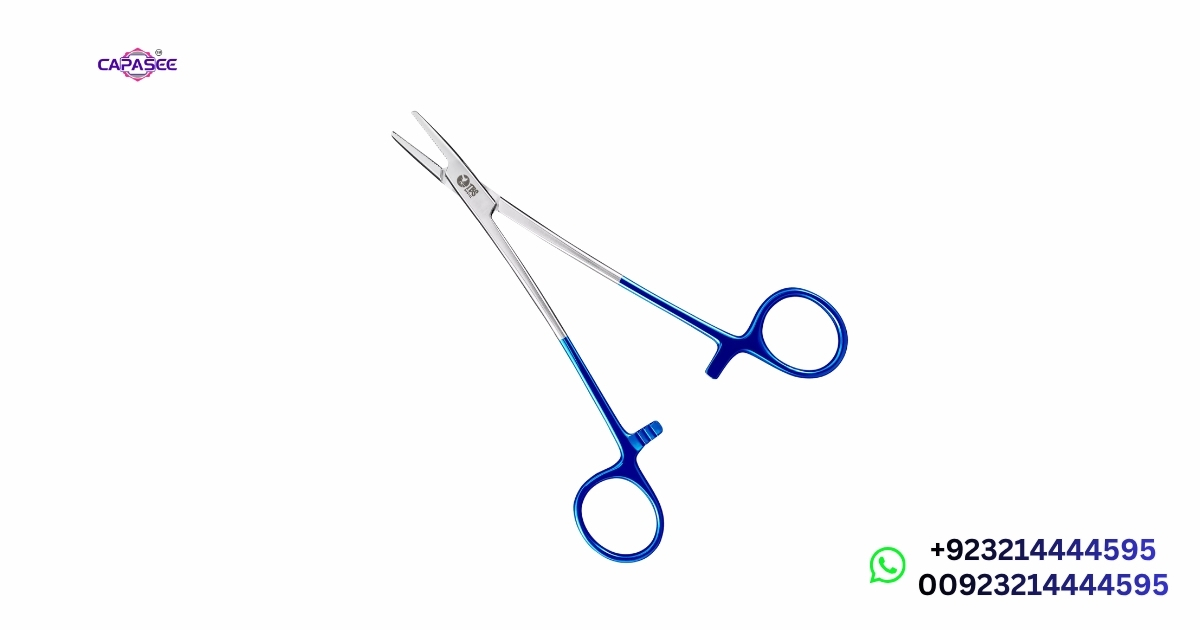
Retractors, needle holders, and suturing instruments support important stages of general surgery. Retractors maintain access to the operative area, while needle holders help surgeons control suturing needles during wound closure. Selecting the correct instruments improves handling, visibility, and procedural efficiency.
Surgical Clamps and Retractors: Exposure and Access
Surgical clamps and retractors have different but complementary functions during operation. Clamps are used to regulate blood flow or to secure tissues; retractors are used to push skin, muscles, and organs away from the operating area. This exposure helps surgeons to view and reach the location they should be operating in.
There are two basic types of retractors:
- Hand held retractors: They are held by a surgeon or assistant during the procedure. They are flexible since the operator can adjust their angle and pressure according to their needs.
- Self retaining retractors: These will have a locking mechanism or ratchet to keep the tissue separated without needing to be hand held. They are handy for surgical exposure when lasting is important.
The exposure and access to surgical clamps and retractors. The exposure and access to surgical clamps and retractors.
| Retractor | Type | Main Function |
| Langenbeck | Hand held | Retracting superficial tissues and wound edges |
| Deaver | Hand held | Retracting deeper tissues and abdominal organs |
| Richardson | Hand held | Providing exposure during abdominal procedures |
| Weitlaner | Self retaining | Holding wound edges apart during superficial procedures |
| Balfour | Self retaining | Maintaining abdominal incision exposure |
The correct retractor depends on the surgical procedure and the depth of the operative field. The appropriate retractor will depend on the operation and the depth of the operating field. For instance, a Langenbeck retractor might be used to expose superficial tissue, and a Deaver retractor should be used on deeper abdominal tissue. A Balfour retractor is used to keep the abdomen open during certain operations.
Some of the key points for the hospital to consider when buying general surgical instruments are the depth of the blades, the length they provide, the type of handle, and the size of the instrument itself. The blade needs to be long enough to be sure to expose the area, but not so long as to put undue pressure on adjacent tissues. The smoothness of the edges and the correct construction also minimize the risk of tissue damage.
When buying medical equipment, hand held versus self retaining is a choice for the procedure, the nature of surgical assistance, and the surgeon’s needs.
Needle Holders and Suture Instruments for Wound Closure
Needle holders and suture instruments are used by a surgeon to close surgical incisions, to repair tissues, and to hold wounds tight with sutures. A needle holder holds the needle in place tightly so that the needle can move through the tissue in a controlled way when stitching.
A variety of needle holder designs are used in various procedures. Mayo Hegar needle holders are frequently used in general surgery because the jaws are able to hold the needle securely for normal suturing. The Crile Wood needle holders are smaller in design and are used for finer suturing.
Other key features include jaw design, instrument length, locking system, and grip material.
| Instrument | Main Use | Key Specification to Check |
| Needle holder | Holding the suturing needle | Jaw type, length, ratchet, and TC insert |
| Suture scissors | Cutting suture material | Straight or curved design and tip shape |
| Needle counter | Managing used surgical needles | Magnetic or foam based design |
| Skin closure instruments | Supporting wound approximation | Forceps type and needle holder size |
Needle holder jaws can have serrated surfaces or tungsten carbide (TC) inserts. Serrated jaws provide grip, and TC inserts are wear resistant and provide an extra holding surface. But the right answer is based on the type of needle, the procedure, and how often it will be used. These features are important when selecting general surgical instruments for different surgical procedures.
The length of the instrument also plays a role. Generally, shorter needle holders are better for superficial procedures, and longer ones are better for deeper ones.
Selection of suture is also crucial. There are several common designs of needles, such as the following:
- Curved needles: Let them pass through the tissue in a controlled manner and are extensively used in both internal and external suturing.
- Straight needles: Provide direct needle passage in appropriate procedures.
- Cutting needles: Cutting edges that can cope with tougher tissue such as skin.
- Reverse cutting needles: Position the cutting edge to help reduce the risk of tissue cut through in appropriate applications.
Suture scissors are used to remove excess suture after the knot has been tied. Needle counters can be used to count and control used needles and to help with surgical counts.
Hospitals need to ensure that needle holders are compatible with the needles they are likely to operate with during the surgical procedure and that they meet the hospital’s needs for suturing. A good fit of the jaw, ease of ratchet movement, and comfortable handles ensure accurate instrument positioning when using general surgical instruments.
Check & Buy: Our Products
Stainless Steel, Reusable Instruments and Sterilization
The quality of the materials used and their effective use, maintenance, and care are directly linked to the performance and service life of reusable surgical tools. Initial cost and long term cleaning, sterilization, inspection, and replacement needs should be taken into account when considering hospitals.
Stainless Steel Surgical Instruments: Material and Quality Standards
Operating rooms often use stainless steel surgical instruments due to their strength, corrosion resistance, and compatibility with the proper medical instrument reprocessing processes. These qualities are essential when choosing durable general surgical instruments for hospitals.
The mechanical and corrosion resistance properties vary among different grades of stainless steel. So it is not always reliable to rely on the quality of the instrument advertised as premium stainless steel.
Several factors affect instrument performance:
1. Material grade: Steel composition determines the hardness, corrosion resistance, and durability. When possible, buyers should specify the manufacturer’s specified grade of the material.
2. Surface finish: Instruments can have satin, matte, or mirror finishes. Black coatings are also used on some specialized instruments to minimize glare. The finish should be even and impervious to defects.
3. Joint construction: Scissors, clamps, and forceps rely on well formed joints. Loose connections or too much resistance may impact instrument handling.
4. Jaw alignment: The working tips of forceps and clamps must fit snugly together. Misalignment can cause loss of grip and affect performance.
5. Ratchet quality: Locking instruments should have a reliable yet gentle locking and unlocking action.
6. Sterilization compatibility: Reusable instruments should be appropriate for the cleaning and sterilization technique that the manufacturer recommends.
A hospital buying a general surgery set should check the tips of the forceps, the alignment of scissors, the locking systems of the clamps, the surface finish, and markings on the instruments. These checks enable procurement teams to compare general surgical instruments on their practical quality as well as their looks.
Appropriate reprocessing guidelines provided by the manufacturer and correct processing by the hospital can encourage repeated use of surgical instruments. Single use instruments are instruments that can only be used once and should not be reused unless the instrument manufacturer allows for it or regulations otherwise require.
Choosing a Surgical Instrument Supplier in Pakistan
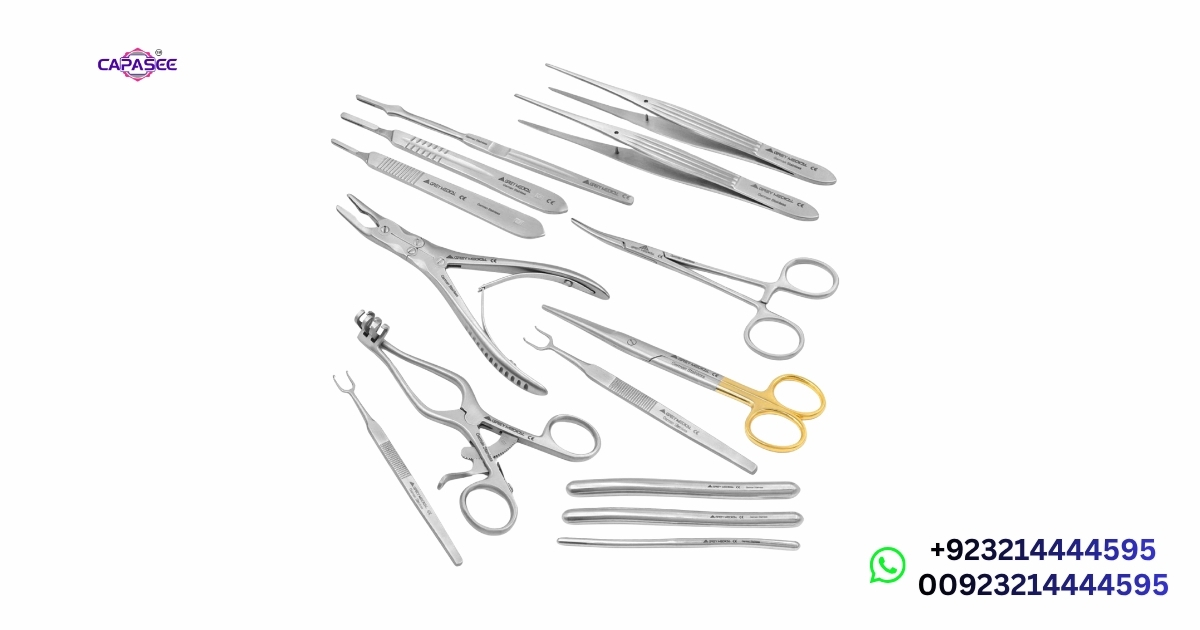
Choosing between product prices is not the only way to choose the right supplier. Hospitals and clinics require instruments that are compatible with their workflow and quality standards and are on hand when replacements are needed.
A competent surgical instruments supplier ought to have the ability to give you a transparent product specification, appropriate instrument options, constant availability, and responsive post sales support for general surgical instruments.
How to Select the Right Surgical Instrument Set
Surgical instrument sets allude to the proper surgical instruments a facility needs, taking into mind the nature of the surgical workload, the types of surgery performed, the sterilization facilities and the purchasing budget. The instrument sets required for a minor surgery clinic are not necessarily the same as those used by a hospital in major abdominal surgery.
As customers plan what they need, they can take the time to make the following comparisons:
| Facility Type | Recommended Focus | Example Set |
| Clinic or minor OT | Basic cutting, grasping, suturing, and dressing instruments | Minor surgery set |
| General hospital | Broad coverage for routine general surgery | General surgery instrument set |
| Specialist surgical centre | Instruments for specific surgical procedures | Abdominal, gynecology, or orthopedic set |
| Distributor or exporter | Consistent product specifications and bulk availability | Customized reusable instrument range |
These are some practical points to keep in mind before buying:
- Procedure requirements: Create an instrument list based on the procedures performed at your facility. Provide necessary cutting, grasping, clamping, retracting, and suturing tools.
- Instrument quantity: Calculate the number of operating rooms required using the procedure volume, turnover time, and capacity of the operating room for sterilization. When a lot of procedures are conducted at the same time, more instruments might be needed.
- Individual instruments versus complete sets: Purchasing single instruments is a great option for replacing damaged instruments or adding to a collection. Full sets might be more ideal for equipping a new theatre with General surgical instruments.
- Material and specifications: Check the material grade, size, finish, type of jaws, and its suitability for the sterilization system in the facility.
- Replacement availability: Inquire if the supplier has the ability to replace the original instruments in the future. When using standardized specifications, inventory management becomes easier.
Local availability and delivery arrangements are also of concern to hospitals in Pakistan. Before placing an order, procurement teams should obtain a detailed quotation, product specifications, available quantities, and warranty/replacement terms in respect of the product.
Why Choose Capasee Electro Medical Engineering?
Capasee Electro Medical Engineering supplies medical equipment and other procurement needs to hospitals, clinics, and healthcare facilities in Pakistan. Buyers do not just want to know the name or price of a surgical tool or piece of equipment; they want to know more than that. They require explicit instructions and direction in selecting general surgical instruments that best fulfil their clinical needs.
If an enquiry is being made for surgical instruments, it is important to confirm the type of instruments offered, material specifications, dimensions, and instrument sets prior to an order. All facilities planning a new operating theatre can come up with a list of instruments required for the procedure and anticipated case volume.
Capasee will help customers to select the appropriate equipment and offer advice on products based on their facility needs. Hospitals and clinics can provide their preferred instrument list, quantity, and application needs to get a preferred quotation.
Buyers should ensure product availability, consistency of instrument sets, delivery arrangements, and after sales support before making a decision on procurement for bulk purchases or customised requirements.
Frequently Asked Questions
What are surgical instruments made from?
The most common materials used to construct reusable surgical tools are medical grade stainless steel, which is corrosion resistant, and materials that can withstand multiple sterilizations.
What are the five basic categories of surgical tools?
Instruments used during surgery come in the five basic types; cutting, grasping, clamping, retracting, and suturing.
What are the popular surgical instruments?
Typical surgical tools consist of a scalpel, scissors, forceps, hemostasis forceps, retractors, needle holders, and suction tips.
How are general surgical instruments cleaned and sterilized?
Staff clean instruments, collect debris, check instruments, pack, and sterilize heat tolerant instruments in an autoclave.
How are surgical instruments cleaned and sterilized?
All surgical instruments are cleaned, rinsed, dried, inspected, packaged, and validated in accordance with the instrument manufacturer’s guidelines at the point of use.
What makes a high quality surgical instrument?
A good instrument is made of sturdy material, is accurately aligned, runs smoothly, has secure joints, and is corrosion resistant.
What are the five basic tool categories?
These five tool categories perform various surgical operations, including cutting, grasping, clamping, retracting, and suturing.
How should surgical instruments be cleaned?
Remove soil that is visible as soon as possible, sterilise using approved methods, rinse thoroughly, dry before sterilisation, and follow the manufacturer’s instructions.
Should surgical instruments be lubricated?
Yes, lubricate moving joints with approved lubricant, as recommended by the manufacturer, particularly after cleaning.
What are laparoscopic surgical instruments?
Laparoscopic instruments are long, specialized tools that are inserted through small incisions and used for surgery with the use of a camera.
Final Thoughts
Choosing suitable general surgical instruments can facilitate surgical teams operating more precisely, controlling their movements, and working more efficiently. When hospitals and clinics need to buy surgical instruments, they can do so with knowledge of the type of instrument, its name, function, material of the instruments, and the sterilization process.
When choosing a particular instrument or a full surgical instrument set, think about the procedures that are carried out, instrument compatibility, durability, and cleaning. If you want guidance about suitable surgical instruments or hospital equipment in Pakistan, you can contact Capasee Electro Medical Engineering to discuss your requirements and can ask them for product details and quotations.

One thought on “General Surgical Instruments: Types, Uses and Functions”