Premium Electrosurgical Instruments – Capasee Pakistan

An improperly functioning electrosurgical pencil can make an ordinary procedure a lengthy and stressful emergency. However, in Pakistan, numerous hospitals and clinics purchase electrosurgical instruments for a price tag with no idea of the issues they may encounter, such as weak cutting, poor coagulation, and no one to call when equipment breaks down. That error will manifest itself as operating lists that are late, damaged tissue, and repair bills that recur. It becomes even more important to make a good purchase decision the first time around for all local buyers due to import delays and a volatile exchange rate.
It discusses how electrosurgical instruments function, which instruments are used for which procedures, what to look for before purchase, and how local service support benefits your investment. No matter if you are a surgeon, biomedical engineer, or a first time buyer, you will end up with definite guidelines to choose from at Capasee Electro Medical Engineering.
What Are Electrosurgical Instruments and How Do They Work?
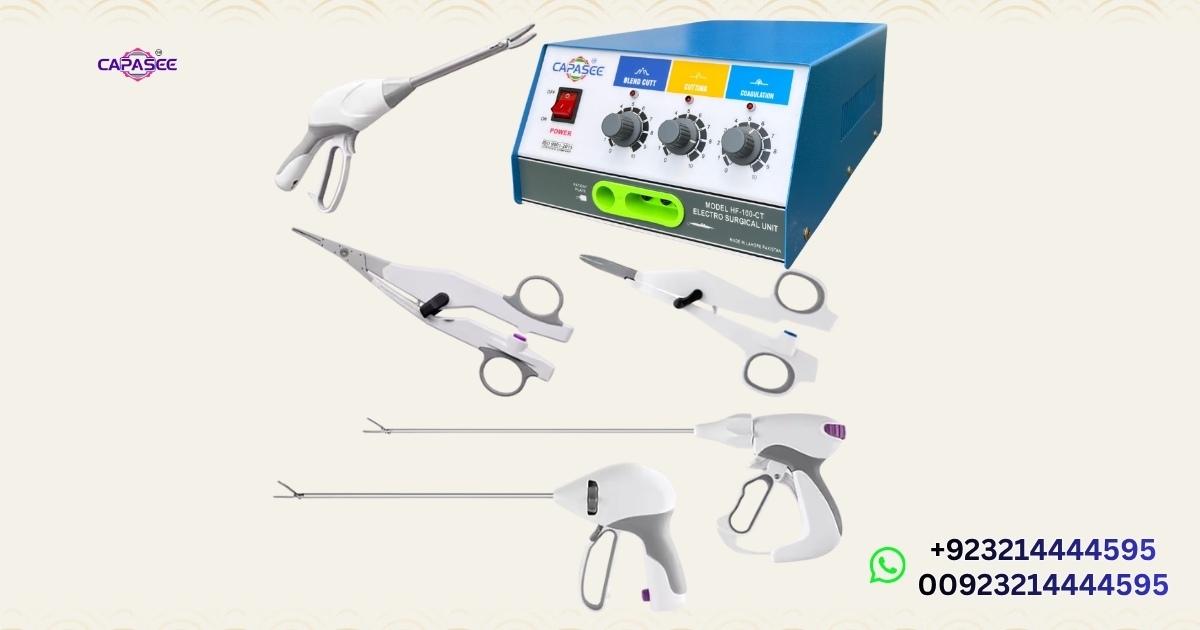
Electrosurgical instruments are designed to cut, coagulate, or seal tissue using high frequency electrical current. The current cuts the tissue gently, which means that the surgeon loses less blood than if he used just a scalpel.
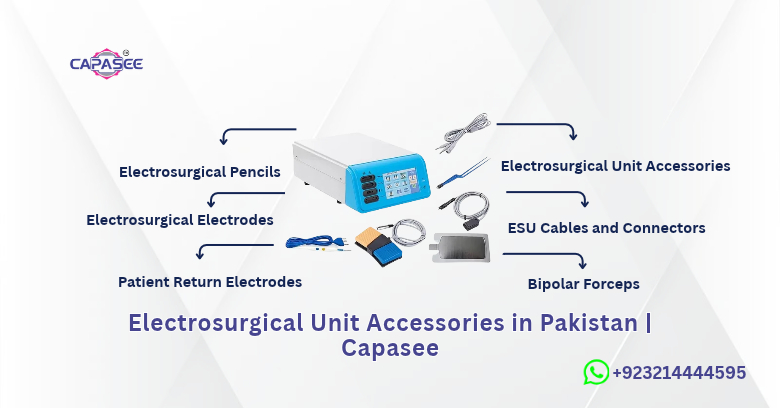
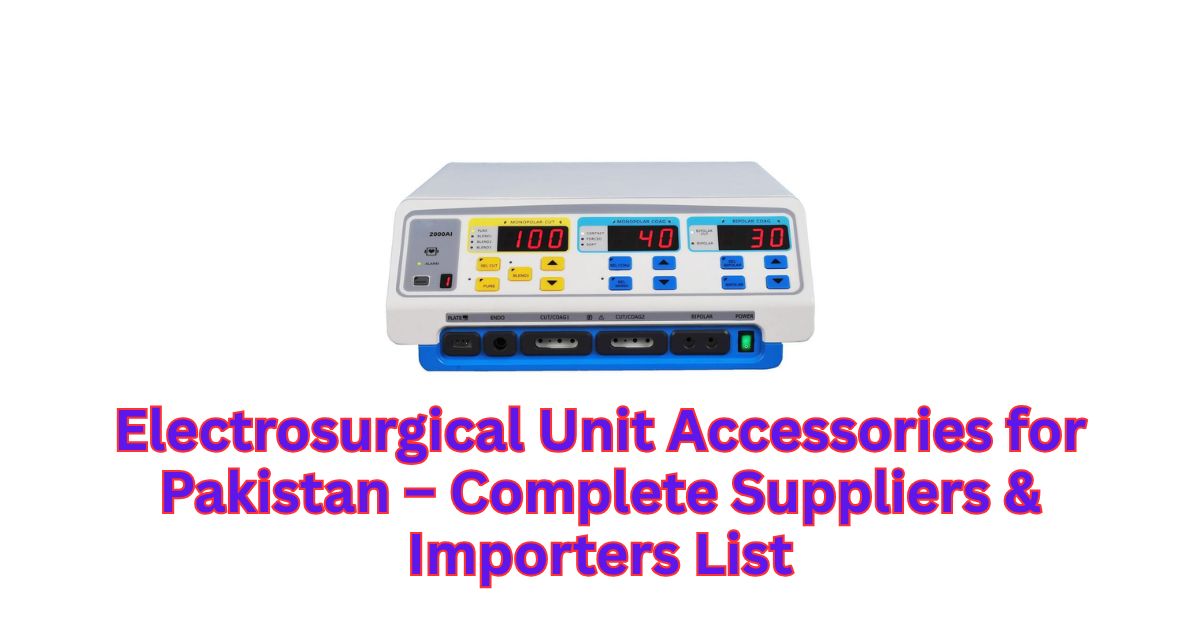
There are two components of a complete setup; the electrosurgical unit (ESU), which generates the current, and the accessories, which carry the current. Purchasing both simultaneously can prevent a lot of compatibility issues that can slow down countless operating room setups.
Which Electrosurgical Instruments Are Used in Hospitals and Surgical Clinics?
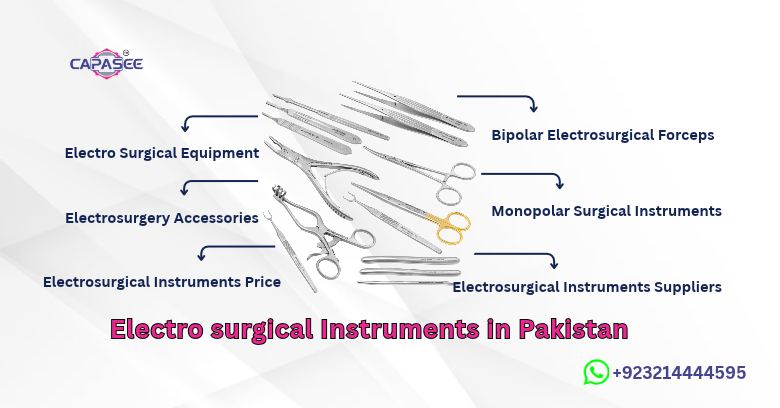
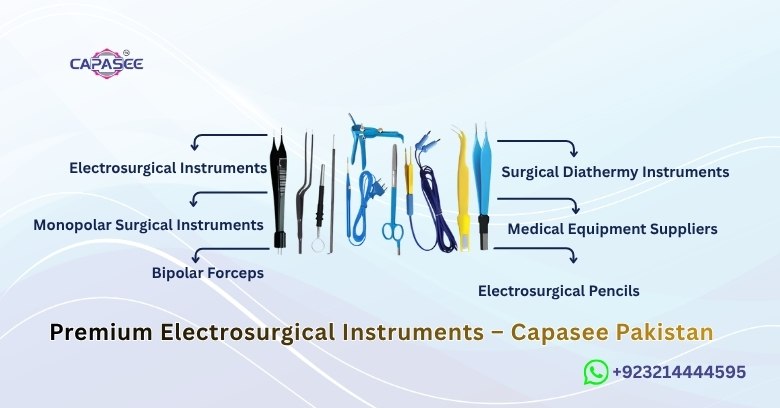
Monopolar instruments direct current from a hand held pencil to a return plate on the patient. Bipolar instruments conduct current between both of their tips of forceps, which means they affect only a few millimetres of tissue. The circuit is completed by electrodes, cables and patient return plates.
Both have some specialities to which they fit. Monopolar pencils are used in general surgery and in gynaecology for dissection and bleeding control; bipolar forceps are used in ENT and neurosurgery, close to delicate structures. In dermatology, the fine electrodes are used for skin lesions, and in dentistry, the small tips are used for gum contouring and haemostasis. A clinic that is dedicated to removing skin tags requires low power, a fine electrode, and no theater setup.
You can also read this blog: Electro Medical Equipment for Hospitals & Clinics – Capasee
How Does an Electrosurgical Unit Support Cutting and Coagulation?
Cutting involves a continuous waveform that vaporises tissue in the path of the electrode. Coagulation is an interrupted waveform that dries tissue and seals small vessels. Blended modes are a mixture of both, which allows the surgeon to make one pass in cutting and controlling bleeding. These functions are essential when selecting suitable electrosurgical instruments for different surgical procedures.
The power setting, the size of the electrode, and the duration of contact will all have an impact on tissue effect. The most control is with bipolar coagulation, as current does not flow through the wider body. The job number and each item are matched below.
| Instrument / Accessory | Primary Surgical Function | Best Use Case in Pakistan |
| Monopolar electrosurgical pencil | Cutting and coagulation | General surgery, minor OT procedures |
| Bipolar forceps | Precise coagulation | Neurosurgery, ENT, delicate tissue work |
| Patient return plate | Safe current return path | Required for monopolar electrosurgery |
| Electrosurgical cable | Connects handpiece to ESU | Hospital and clinic OT setup |
| Bipolar coagulation unit | Controlled bipolar energy output | Skin surgery, dental and minor surgery |
Premium Electrosurgical Instruments by Capasee Electro Medical Engineering
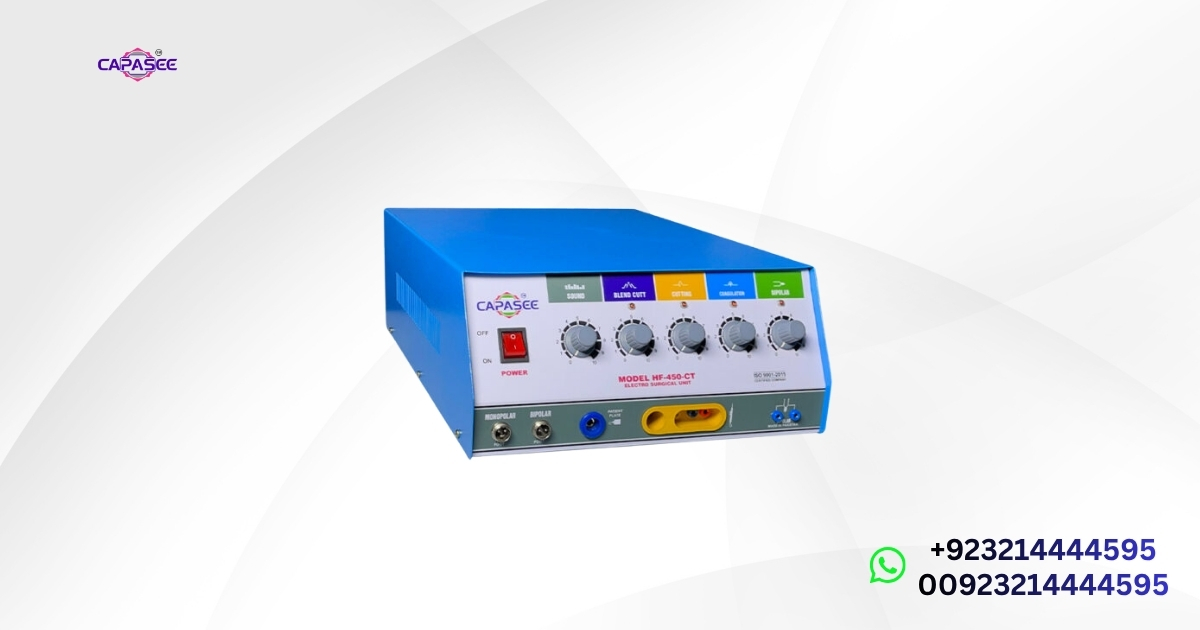
Capasee Electro Medical Engineering is based in Pakistan and supplies and manufactures cauterisation machines, electrosurgical units and suitable accessories. The buyer is not dealing with an overseas intermediary but a local team that understands the requirements for quality electrosurgical instruments.
This is when a unit requires maintenance or a cable that breaks in the middle of a list. A local supplier will also be able to respond the same day, keeping operations on schedule. That’s a long time compared to a part being imported in a couple of weeks.
Capasee Electrosurgical Units for Hospitals, Clinics, and Dental Practices
Capasee offers the HF-100 CT, HF-250 CT, HF-300 CT, HF-450 CT, and HF-500 CT. Select according to use; there are different requirements between a dental practice and a minor procedure room versus a busy surgical theatre. Please check with the Capasee team for output and mode specifications before ordering.
Consider the needs and frequency of use by users. A small clinic with a small number of procedures per week doesn’t require the same capacity as a hospital theatre with a high number of procedures per day. Matching the model to the workload safeguards your budget and your outcomes when purchasing electrosurgical instruments.
Where Can You Buy Electrosurgical Accessories in Pakistan?
Capasee offers replacement and consumable accessories like pencils, bipolar forceps, cables, and return plates for patients. Avoid cancelling procedures; hospitals can have spares on hand when a pencil or cable is worn out.
The primary purchase criteria is compatibility. Please contact Capasee with your unit’s make and model, and they will verify what accessories will work before you place an order. Please give Capasee Electro Medical Engineering a call for a quotation for units, accessories, or both.
How to Choose the Right Electrosurgical Instruments in Pakistan
There are four points to consider; the specialties in your surgery, Energy modes required, accessory compatibility, and the local support behind the product. Make sure to do this before you start looking at quotations, and the shortlist will emerge.
A lot of buyers begin with the price and then figure out what they’re paying for. How clinics get a machine that can’t do what their surgeons want. Go with the clinical need and then restrict the choices within the need from a budget constraint.
Electrosurgical Unit Price in Pakistan: What Affects the Cost?
The cost of an electrosurgical unit varies with the power output, the number of cutting and coagulation modes (monopolar and bipolar), the warranty, and what’s included in the box. Also, exchange rates and import costs move prices, so a price can be quoted 6 months ago, and that can change today.
For this reason, Capasee cannot include a fixed price in an article. Please contact Capasee Electro Medical Engineering, and they will send you a bespoke quote which will reflect your particular speciality, workload & accessory requirements.
Checklist Before Buying an Electrosurgical Machine
Before requesting a quote, go through these five points. A clinic that offers only skin and dental services, for instance, doesn’t need to invest in high power theatre but can make use of the extra money to purchase a few extras as spares.
| Checklist Item | What to Confirm |
| Required surgical specialities | General surgery, gynaecology, ENT, dermatology, dental, or a mix |
| Monopolar vs bipolar requirement | Whether you need one mode or both in a single unit |
| Power output and mode selection | Output range and available cut, coagulation, and blend modes |
| Accessory compatibility | Assorted pencils, forceps, cables, and plates for your selected unit |
| After sales service and spare parts | Access to local technicians, warranty, and spare availability |
Explore & Shop: Our Products
How Do You Keep Electrosurgical Equipment Safe and Working Properly?
Safe use relies on proper patient plate placement, periodic checks of insulation and cables, cleaning procedures, and trained personnel. Most incidents with electrosurgery are due to a missed check rather than due to a faulty machine. Regular inspection also helps maintain the performance of electrosurgical instruments.
For the return plate, apply it to the skin, far from the surgical site, to well vascularised skin, and never on bone, scar tissue, or metal implants. Before each list, check cables for cracks or bare wires, and pencil insulation for cracks or wear. Once a case has been used, clean reusable components according to the manufacturer’s instructions and only use those that are rated for your specific method of sterilisation. Conduct a brief training session for new theatre personnel, as a trained assistant detects faults earlier.
In Pakistani theatres, there are three recurring issues:
- Poor coagulation: Plate contact and electrode tip (check for charred tissue) and power setting.
- Cable faults: This is generally caused by a damaged cable or loose connector. Change it, rather than tape it.
- Wrong accessory: A mis matched pencil or plug may result in low output or unsafe arcing. Please check with Capasee before ordering.
Why Do Pakistani Hospitals and Clinics Choose Capasee?
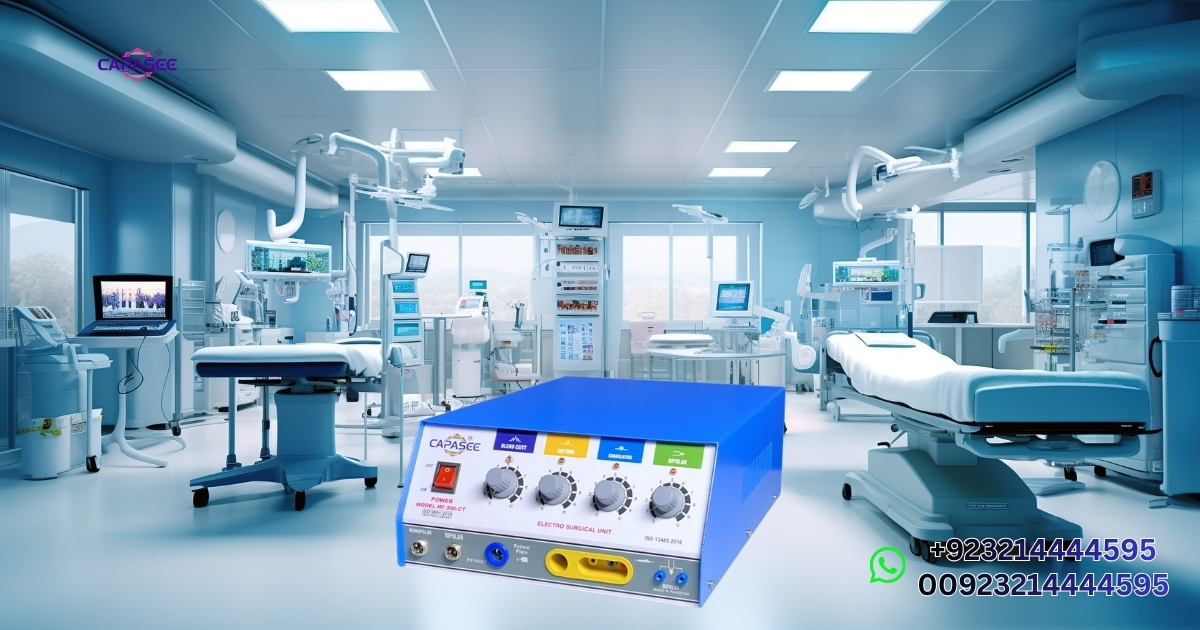
Hospitals and clinics select Capasee for local supply, technical support, and accessories in line with the machine. The team is located in Pakistan, and buyers can deal directly with them, knowing how operating theatres work in Pakistan. This support helps healthcare facilities maintain their electrosurgical instruments.
That closeness is evident when things go wrong. If the cable is bad or the setting is not clear, a response is provided by a party familiar with the equipment, not a ticket sent overseas.
What Local Supply, Technical Support, and Warranty Assurance Does Capasee Offer?
Capasee provides hospitals, clinics, medical equipment distributors, electrosurgical units, accessories, and OT tips to help you get the job done. Local stock and a local team mean that you don’t have to wait for a problem to have a solution.
When requesting a quotation, make sure to ask the proper questions regarding warranties to know what’s covered and for how long. A written, clear cut agreement is more important than a verbal one.
How Do You Request a Quote for Electrosurgical Instruments in Pakistan?
Please get in touch with Capasee Electro Medical Engineering with your requirement, and they will respond to you with a customised quotation. This applies to any hospital, surgeon, dental office, or medical equipment dealer looking for reliable electrosurgical instruments.
When obtaining a quote on the initial response, consider the following:
- Product requirement: Unit, accessories, or both
- City: So delivery and support can be planned
- Quantity: Single unit for a clinic or bulk for a dealer
- Preferred model: HF-100 CT, HF-250 CT, HF-300 CT, HF-450 CT, HF-500 CT, or “advise me”
Your questions today will be met with a quotation that will be specific to your theatre, not a price list.
FAQs
What are the 10 instruments used in the hospital?
In the hospital, several instruments are commonly used, such as a scalpel, forceps, scissors, clamps, retractors, a needle holder, a suction tube, a speculum, a stethoscope and an electrosurgical pencil.
What is a bipolar instrument?
A bipolar instrument carries current through both of its tips, keeping energy contained in a relatively small area of tissue.
What instrument is used for electrocautery?
A handpiece with an electrocautery pen is used. Current is applied to a metallic tip to heat the tip to such a degree that it can be used to burn tissue directly.
What are the different types of electrosurgery?
Monopolar and bipolar are the main types. The bipolar requires no return plate, as current passes between the tips of the forceps.
What is the difference between electrosurgery and electrocautery?
Electrosurgery is the delivery of high frequency electric currents through tissue, and electrocautery is the heating of a metal tip; no current is sent into the patient.
What is the difference between monopolar and bipolar electrosurgery?
Monopolar current flows through the body to a return plate, and bipolar current remains between the tips of the forceps.
What are the most common problems with electrosurgical instruments?
Common problems are weak coagulation, damaged cables, poor plate contact, and mismatched accessories. Most of them are prevented through routine checks.
What are the critical safety rules for using electrosurgery?
Ensure the return plate is in place, ensure cables are checked, ensure tips are kept clean, ensure no flammable liquids are used, and ensure trained staff are used.
Conclusion
There are three key factors to consider when choosing electrosurgical instruments. The instrument is appropriate for your speciality and workload, the accessory fits the unit, and you have a supplier who will respond to the telephone when something goes wrong. Correctly answer these questions, and your operating room will be ready on time, your surgeons will be confident, and your money will be spent on equipment rather than repairs that are repeated.
Looking to move on to the next level? Please call Capasee Electro Medical Engineering and outline your need, area, number, and desired model, and they will quote a price based on your theatre. Surgery is already a tremendous achievement in a country with limited resources, providing the surgeons with tools and local support that are commensurate with their skill.