How to Calculate UPS Load for Home Appliances


Most Pakistani homeowners purchase a UPS, connect their appliances, and then ask themselves the following questions; After how much time does the battery quit with the UPS, and after how much time does the UPS trip on load? The actual issue is not the UPS brand or even the battery, but the fact that no one took the time to calculate UPS load for home appliances. You don’t know just how much power you’re consuming, and in Pakistan, load shedding can last up to 6 to 10 hours during the summer months, so you might make a wrong guess, and it will cost you.
The math that goes into sizing your UPS properly is easy to do, and with only one correct size, you will save yourself thousands of rupees. After reading this guide, you will definitely understand how to determine the total load and which capacity of UPS to choose, and you will know about the common sizing errors made by households in Pakistan when they calculate UPS load for home appliances.
Understand UPS Load Before You Buy
Before investing any rupee in a UPS, it is very important to understand what a load is and how it will impact the battery life, the inverter’s performance, etc. This is because an undersized UPS will keep switching on and off or will simply blow fuses in a matter of months, resulting in a loss of investment that could have been saved from a 10 minute calculation at the beginning.
Here at Capasee, we have seen hundreds of households return UPS units not due to the product’s fault but due to incorrect load calculation before the purchase of the product. This is the first, and most crucial, step in the entire purchase when you calculate UPS load for home appliances.
What UPS Load Means for Home Appliances
UPS load is the sum of all electrical power in watts consumed by the appliances or devices connected to the UPS at any single moment. Each appliance you switch on contributes to this number, and the UPS must be able to safely power them all without overheating or going into a power off mode.
Imagine it to be a water pipe. When you force too much water to move through the pipe, it will blow. Your UPS also operates similarly. If the sum of the loads you use (which includes your appliances, computers, or other equipment) is greater than the rated capacity of the UPS, the UPS will experience a fault or will perform poorly, which will shorten battery life.
Why Load Calculation Matters for Pakistani Homes
Load calculation is extremely important in the context of Pakistan’s electricity scenario, as compared to other countries having a stable electricity grid. In many cities and towns, load shedding takes place for 4 to 10 hours a day; your UPS is not a backup but rather your primary power source for a good chunk of the day.
If you operate the wrong size UPS under intensive load shedding cycles, it will shorten battery life, stress the inverter, and shorten the life of the entire UPS. The correct calculation will, however, yield predictable runtimes, safeguard your appliances, and provide for your household for 4 to 6 years with few problems when you calculate UPS load for home appliances correctly.
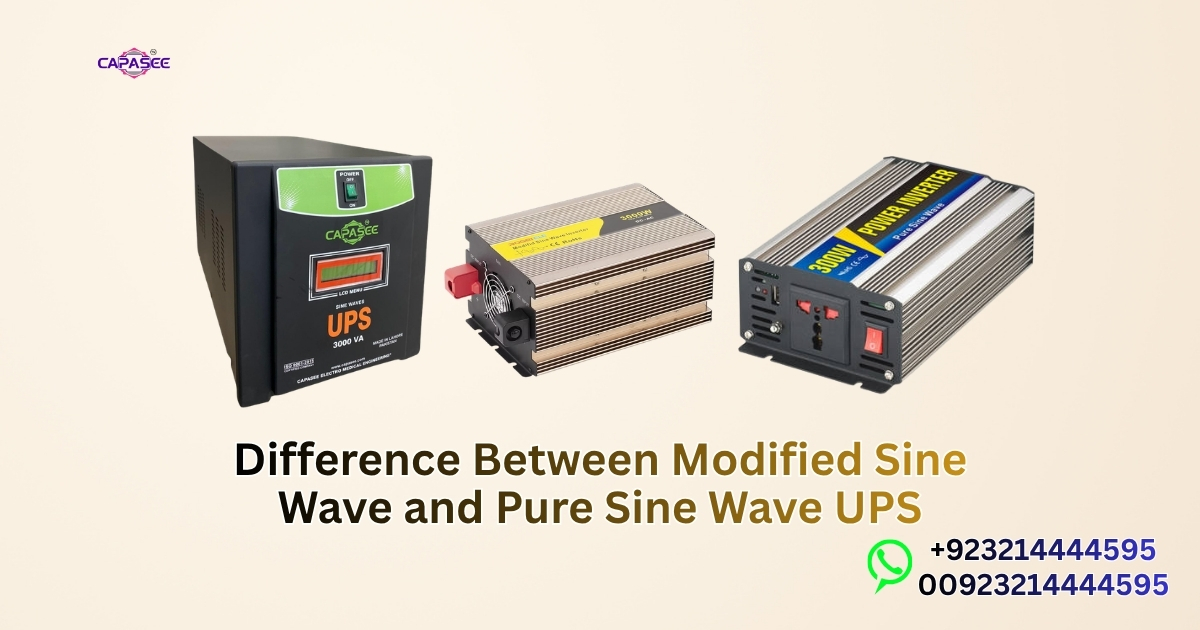
You May Also Read This Blog: Difference Between Modified Sine Wave and Pure Sine Wave UPS
How to Calculate UPS Load for Home Appliances
The calculate UPS load for home appliances is done by summing up the wattage of each appliance that will be used at one time, followed by a 20% to 25% safety margin. This will provide you with the minimum wattage that your UPS needs to have.
It is not a hard formula, but most buyers don’t bother with it at all. There are three numbers you need to know; watts, volt amperes (VA), and amperes. Everyone has a specific function in sizing your UPS appropriately.
Formula for Watts, VA, and Amperes
To accurately determine the home UPS load and calculate UPS load for home appliances, follow these steps:
Step 1: Identify all appliances to be powered on by the UPS. Add fans, lights, a TV, a router, etc., that you use when load shedding.
Step 2: Determine the wattage of the appliance. This is typically found in the back of the appliance or its manual. Otherwise, use the reference values listed in the table in Section 2.
Step 3: Sum all the wattages. This will give you a total wattage rating for your running load.
Step 4: Add 20% safety margin. Multiply your total by 1.2. This includes startup surges, future additions to your appliances and battery ageing.
Step 5: Calculate the watts to VA. Divide your adjusted watt figure by the UPS power factor, usually 0.8.
Formula:
Required VA = (Total Watts x 1.2) / 0.8
Practical Example: In a typical home in Pakistan, 3 ceiling fans (75 W), 5 LED lights (10 W), 1 LED TV (100 W), and 1 WiFi router (15 W) consume a combined load of the following:
225 + 50 + 100 + 15 = 390 Watts With a 20% margin: 390 x 1.2 = 468 Watts Required VA: 468 / 0.8 = 585 VA
This home requires a UPS of 600 VA to 700 VA at a minimum when you calculate UPS load for home appliances accurately.
Home Appliance Load Calculation Table for Pakistan
Every Pakistani household has a different combination of appliances, but the first step to calculating UPS is to know the actual wattage consumption of the appliances used. Below is a table of actual power consumption of the commonly used home appliances across the home in Pakistan, from small apartments in Karachi to big family homes in Lahore, Faisalabad and Rawalpindi.
Use this table as your reference sheet. Identify each appliance you use during load shedding, and list the wattage of each. For every appliance you use during load shedding, record its wattage and then add all the wattages up. Add up that total, and that’s your base running weight.
Look up the standard power consumption of common appliances in Pakistan in the following table:
| Appliance | Typical Power (Watts) | Estimated Running Load | Important Notes |
| LED Bulb | 9W to 15W | Very Low | Easy to include in total load calculation |
| Ceiling Fan | 60W to 90W | Medium | Always account for startup surge current |
| LED TV | 80W to 150W | Medium | Actual watts vary by screen size and brand |
| WiFi Router | 10W to 20W | Very Low | Safe to run even on a small UPS |
| Refrigerator | 150W to 300W | High | Startup surge can be 3x to 5x running watts |
| Tube Light (LED) | 18W to 36W | Low | Older choke type users have significantly more power |
| Laptop Charger | 45W to 90W | Low to Medium | Varies by laptop model and battery status |
| Water Pump (small) | 200W to 500W | Very High | Requires a high capacity UPS or dedicated setup |
| Pedestal Fan | 50W to 75W | Medium | Lower draw than ceiling fans |
| LED Energy Saver Bulb | 12W to 18W | Very Low | Best choice for maximizing battery runtime |
This table is based on the real consumption figures of the households of Pakistan. If it is an older appliance or a non inverter model, always give an extra 10% to 15% on top of the values listed.
Choose the Right UPS Size for Your Home
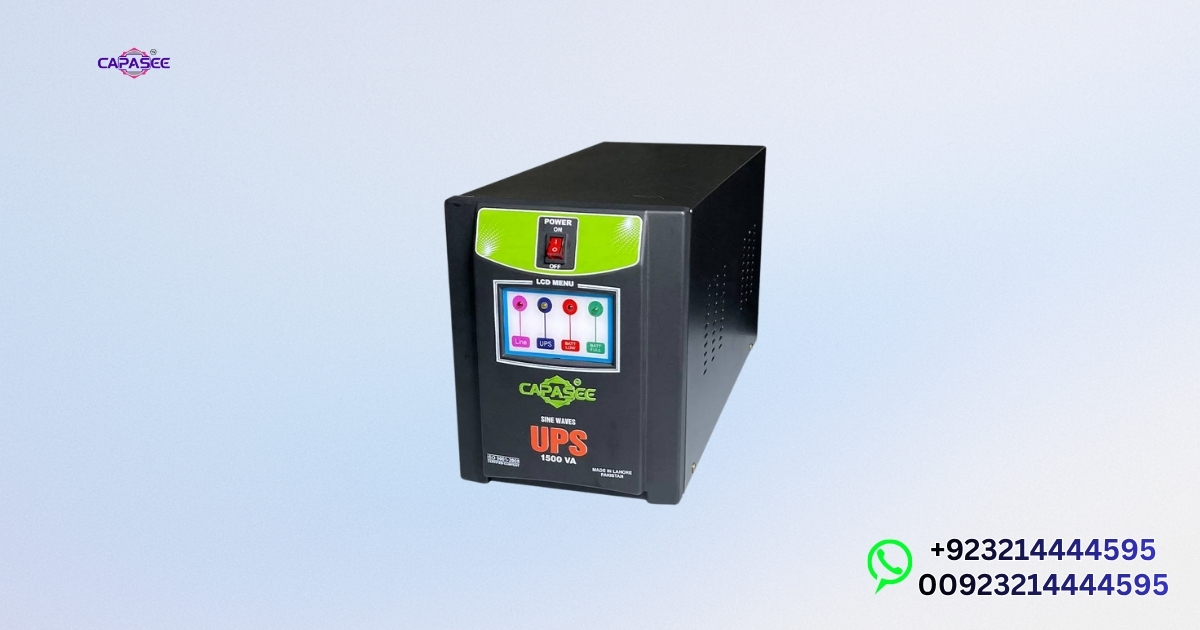
Selecting the appropriate UPS size is about matching the calculated load size to the appropriate VA (or watt) UPS size, and the battery size to the runtime you require. A good sized and good power source, such as Capasee Electro Medical Engineering, will not only survive load shedding but will do so without any strain when you calculate UPS load for home appliances.
The most common mistake most buyers make is to select UPS because of its price. The right way to do it is to do the maths first, then go shopping. The units costing 1000 VA will be more expensive than units that cost 800 VA; however, if the load requires 950 VA, the less expensive unit will be defeated during the first season.
Check More & Purchase: Our Products
How to Match UPS Capacity With Appliance Load
After determining your required VA, round up to the next available UPS size. UPS units typically come in standard ratings; 600 VA, 800 VA, 1000 VA, 1500 VA, 2000 VA, and higher.
Do not purchase a UPS of the same power as your load. Always purchase an extra size bigger than what you need. This leaves space for the inverter to expand, extends battery life and means there is no need for the inverter to be replaced later on when adding a new appliance or two when you calculate UPS load for home appliances.
Quick Sizing Guide:
| Calculated Load | Recommended UPS Size |
| Up to 400W / 500 VA | 600 VA to 800 VA UPS |
| 400W to 600W / up to 750 VA | 1000 VA UPS |
| 600W to 900W / up to 1125 VA | 1500 VA UPS |
| 900W to 1400W / up to 1750 VA | 2000 VA UPS |
Common UPS Sizing Mistakes to Avoid
Mistake 1: Ignoring startup surge. Electrical appliances such as air coolers, water pumps and refrigerators consume 3 to 5 times their operating power when they start. This is a surge that your UPS might not be able to cope with and will cause it to trip every time the compressor turns on.
Mistake 2: Making calculations for today, not for tomorrow. Appointees are added to the house over time. If you have your current load exactly at 500 W and purchase a 600 VA unit, you’ll have virtually no room to expand. Think in terms of 2 years, not just 2 days.
Mistake 3: Ignoring battery capacity. The UPS VA rating is an indication of the amount of load it will carry. The time it will run is indicated by the battery capacity in ampere hours (Ah). These are two separate decisions. Your load would operate for a much longer period of time on a 1000 VA UPS than on a UPS rated at 1000 VA with a 65 Ah battery.
Mistake 4: Randomly combining old and new appliances. Older appliances (not using inverter technology) use significantly more energy than contemporary models. The power consumption of one old split AC is 2000W, and a modern inverter AC delivers the same cooling at 900W. Make sure to check the actual wattage of older appliances before adding to your load.
Load Calculation Reference Table
This reference table provides a quick and accurate overview of the power requirements of the most common household appliances before buying any UPS. These are actual values of use found in Pakistani households and not only the theoretical values given by the product manuals.
Compare your own appliances to this table, record the wattage of each appliance that you intend to operate during load shedding, and input the totals directly into the calculator in Section 2 below to calculate UPS load for home appliances.
| Appliance | Typical Power | Estimated Running Load | Notes |
| LED Bulb | 9W to 15W | Low | Easy to add in total load |
| Ceiling Fan | 60W to 90W | Medium | Check startup load |
| LED TV | 80W to 150W | Medium | Varies by screen size |
| WiFi Router | 10W to 20W | Very Low | Usually safe on a small UPS |
| Refrigerator | 150W to 300W | High | A startup surge must be considered |
UPS Load Calculator: Quick Reference
This handy calculator walks you through the exact steps to properly size your UPS. Enter your own numbers in the appliance table above and use the formula in a row by row manner. There are no specific prerequisites for engineering.
Here is the simplified form of the calculator to calculate UPS load for home appliances and determine your own UPS requirement:
| Input | Your Example | Purpose |
| Appliance Watts (total) | 600W | Sum of all running appliance loads |
| Safety Margin (20%) | 120W | Covers surges, aging, and growth |
| Adjusted Load | 720W | Total load after adding safety buffer |
| Power Factor (0.8) | Divide by 0.8 | Converts watts to VA |
| Required UPS Size | 900 VA minimum | Final minimum UPS capacity to purchase |
In Capasee, our tech team assists clients in going through this exact calculation before offering a UPS module. The formula is the same for the Lahore small house as well as the Islamabad house for sale, Islamabad mid size houses, and multi floor houses in Karachi. The numbers simply move around when you calculate UPS load for home appliances.
Frequently Asked Questions
How do I calculate UPS load for home appliances?
Calculate the sum of the watts for all the appliances you will be using simultaneously. Use 1.2 as a safety factor, then multiply by 0.8 to convert watts to VA. The outcome is the smallest UPS capable of powering your house. Always purchase one size larger.
What size UPS do I need for a fan, lights, and TV?
This total running load is approximately 350W to 400W for 2 ceiling fans, 4 LED bulbs and one 43″ LED TV. Once the safety margin or power factor is considered, a 600 VA to 800 VA UPS can easily handle this load for most households in Pakistan.
Is a 1kVA UPS enough for a Pakistani home?
A 1000 VA UPS is suitable for a medium load consisting of 3 fans, 5 to 6 LED bulbs, a TV, a router and a laptop charger. If you are thinking of installing a refrigerator, you won’t be able to get by with this. On setups where the fridge is included, Capasee Electro Medical Engineering recommends upgrading to a minimum of 1500 VA.
How much backup time will my UPS give?
Backup time depends on your battery capacity. Ah, and your overall running load (W). With a 500 W load, a 100 Ah battery will provide about 3 to 4 hours. Minimize load or use a bigger battery to help provide a longer run time during extended periods of load shedding.
Can I run a refrigerator on a UPS?
Yes, but only as long as you have enough peak surge capacity in your UPS. The start up surge for a refrigerator can be as high as 3 to 5 times the running wattage. A typical 800 VA UPS will fail. A minimum of 1500 VA with a high rating for surges is required and verified before purchase.
What is the difference between VA and watts in a UPS?
Watts are the true power used by appliances. VA is the apparent power that needs to be managed by the UPS. For most home UPS, the power factor is 0.8, and to convert VA to watts, divide the watts by the power factor. When purchasing a UPS, don’t only look for the watt rating but also the VA rating.
Final Thoughts
In Pakistan, calculate UPS load for home appliances is a must, and there is a big difference between a UPS that will endure through 8 hours of load shedding and a UPS that will fail in 40 minutes. The basic steps are simple; list your appliances, add up the watts, add a safety margin, convert the watts to VA, and purchase one size larger than what you need.
Use this calculation next time you buy a new item, and you will save money, save your appliances and avoid making the same expensive mistake thousands of Pakistani households make each year.Looking to purchase the best UPS for your house? Take a tour of Capasee Electro Medical Engineering and have our tech team help you get your setup just right from the start. A correct calculation now will ensure continued power supplies tomorrow.