


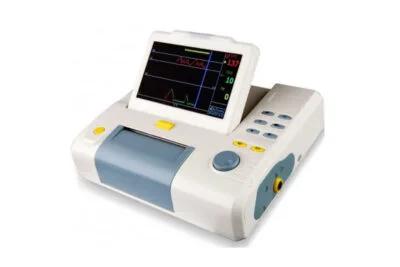
AED Defibrillator
₨ 785,000
A portable, automatic external defibrillator that applies a controlled electric shock when sudden cardiac arrest occurs and provides step by step prompts with voice and sight. Ideal for use in hospitals, clinics, offices, schools, and public buildings where an urgent and reliable emergency response is required with an AED defibrillator.
Specifications
- Device Type: Automated External Defibrillator (AED)
- Shock Delivery: Biphasic waveform, automatic rhythm analysis
- User Modes: Adult and pediatric energy settings
- Guidance: Voice and visual step by step prompts
- Battery: Lithium Battery Pack for Long Standby
- Display: LED and status indicators for readiness, battery, and pad connection
- Housing: Rugged, dust and moisture resistant casing
- Weight: Portable and lightweight (approx. 2 to 3 kg depending on the model)
- Storage Conditions: Can be used with standard humidity and temperature in a room
- Accessories Included: Adult pads, carry case, wall bracket (model dependent)
- Ideal For: Hospitals and clinics, corporate offices, schools, factories, mosques, community centres
Indicative price — contact us for today’s exact price, stock and delivery for your location.
WhatsApp for Final Price & Delivery
Description
AED Defibrillator in Pakistan | Hospital Grade Emergency Cardiac Device
Portable medical device used for sudden cardiac arrest to provide a controlled electric shock to restore normal heart rhythm. An AED defibrillator has been designed for hospitals, clinics, offices, schools, and gymnasiums all over Pakistan, where time is of the essence.
Key Features & Benefits
- Automatic rhythm analysis: This is when the device reads the heart rhythm automatically and makes a decision, based on that reading, if there is a need for a shock. This translates to untrained personnel acting correctly in the event of an actual emergency without having to guess when using an AED defibrillator.
- Voice guided instructions: Step by step audio cues guide the user through pad placement, shock delivery, and timing of CPR. This eliminates hesitation and minimises the risk of making mistakes during a stressful moment. high stress moment, this removes hesitation and reduces the chance of error.
- Long life battery backup: This is because in Pakistan, an AED defibrillator might be sitting unused for months until it is needed for a real emergency.
- Rugged, dust and moisture resistant casing: Built to withstand Pakistan’s weather and climate conditions, from humid coastal cities to dry interior areas, so the AED defibrillator can be used in any office, factory, or vehicle without any special storage requirements.
- Compact, lightweight design: Can be mounted on an easy to install wall bracket or included in a first aid kit for use in corporate offices, schools, mosques, community centres, etc. that may have limited space.
- Pediatric and adult modes: Multiple energy delivery options for various patient sizes to provide an AED defibrillator unit for an office and a house.
- Clear visual and audio status indicators: Displays battery and pad readiness information at a glance, allowing the responsible staff member to be sure that the AED defibrillator is ready without opening a manual.
Who Should Buy This AED Defibrillator
Having an AED defibrillator on site is beneficial to the corporate offices of big cities such as Karachi, Lahore, and Islamabad with many employees, as cardiac events can occur to anyone during a working day. Hospitals and clinics require units as backup or additional ward equipment in situations where response time to the crash cart is important. Areas of high risk for sudden cardiac events include factories and industrial facilities where there are physically demanding jobs.
Large congregate settings, such as schools, universities, and mosques, also have an advantage when they can have a unit available to trained staff or volunteers. A distributor providing to hospitals or corporate clients throughout the country in Pakistan should have a reliable source of stock and a reliable after sales service.
Why Choose Capasee Electro Medical Engineering
Capasee Electro Medical Engineering provides hospitals, clinics, and corporates in Pakistan with medical equipment that is not only a paper specification but also has to fulfil the clinical and safety requirements.
The team is aware of the practical requirements of power generation in Pakistan and the local pattern of power consumption and selects AED defibrillator units appropriate for the storage and use situation. Buyers receive installation instructions, device specific training for staff, and post sales services to ensure the unit remains in working order and is ready for inspection when needed.
Frequently Asked Questions
What is an AED defibrillator?
An AED defibrillator (AED) is a portable, automatic device used to diagnose and treat cardiac arrest and, when necessary, deliver an electric shock to the person’s heart to restore a normal rhythm. It is designed to be used by medical staff and trained laypersons.
What are the 7 steps of AED?
The basic steps are; 1) Assess the scene and the patient’s unresponsiveness. 2) Call for help. 3) Turn on the AED. 4) Attach the pads to the bare chest as illustrated. 5) Allow the device to analyse the heart rhythm. 6) If the device advises, deliver the shock standing away from the patient. 7) Resume CPR immediately and follow the AED instructions until help arrives.
How is AED used in CPR?
The AED is not a replacement for CPR but is used in combination with it. Chest compressions are started and continued without pause, except when the AED is analyzing the rhythm and giving a shock; compressions are resumed immediately following the pause.
What is the AED 3 minute rule?
The instructions it provides are that survival rates become increasingly poor as time passes after cardiac arrest before an AED can be used. The first three to five minutes following cardiac arrest are the most critical to the ability to utilize an AED effectively.
What is first, CPR or AED?
Begin CPR immediately if the person is not breathing normally and not conscious, and use the AED as soon as it becomes available and is turned on. The device will inform the user when to pause compressions to analyze and deliver a shock.
Get Your AED Defibrillator From Capasee
Looking to place a quality AED defibrillator at your facility, clinic, or place of work? Call Capasee Electro Medical Engineering today to get product information, pricing, and installation assistance throughout Pakistan.
Reviews (0)
Shipping & Delivery
Related products
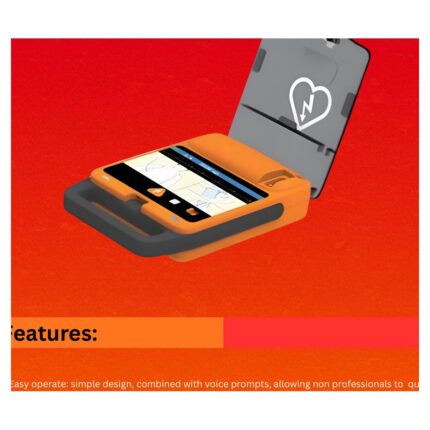
AED-03 Automated External Defibrillator for Hospitals & Clinics
A hospital and clinic ready, fully automated external defibrillator that provides step by step, voice and visual instructions to staff during a cardiac emergency, from patient assessment to shock administration. The AED-03 automated external defibrillator supports staff throughout this critical process.
Specifications:
- Type: Fully automated external defibrillator (AED)
- User guidance: Voice and visual step by step instructions
- Rhythm analysis: Automatic ECG detection with shock advisory
- Operation mode: Semi automatic / fully automatic shock delivery
- Pads: Adult and paediatric compatible electrode pads
- Portability: Compact, lightweight housing for ward, ICU, or ambulance use
- Power backup: Rechargeable battery for standby readiness
- Build: Durable housing suited to clinical and semi outdoor environments
- Intended use: Hospitals, clinics, diagnostic centres, corporate medical rooms
- Data capability: Incident recording for post event review
- Compliance: Meets applicable medical device safety standards
- Support: Installation, staff training, and after sales service through Capasee Electro Medical Engineering
Reviews
There are no reviews yet.