
AED-03 Automated External Defibrillator for Hospitals & Clinics
₨ 785,000
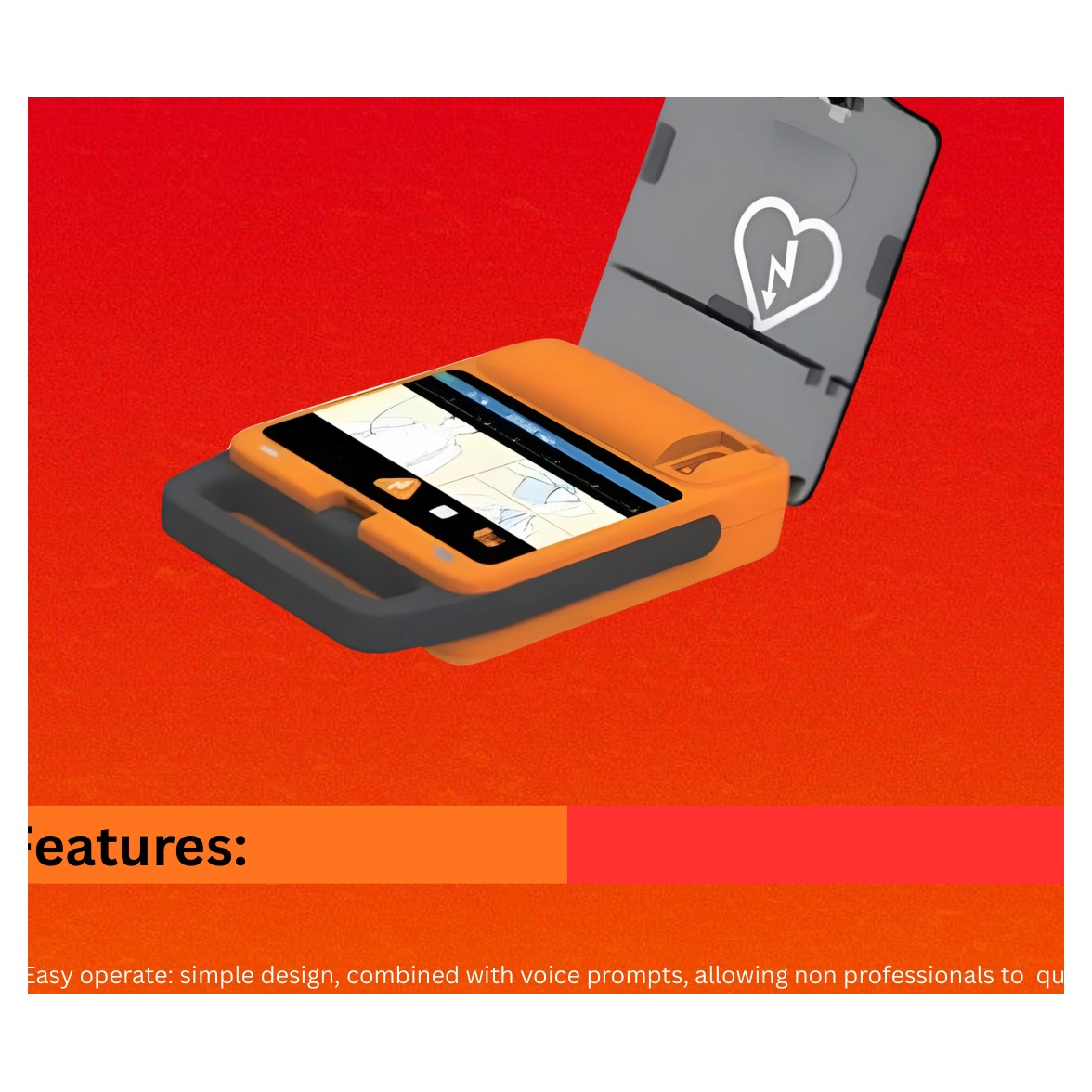
A hospital and clinic ready, fully automated external defibrillator that provides step by step, voice and visual instructions to staff during a cardiac emergency, from patient assessment to shock administration. The AED-03 automated external defibrillator supports staff throughout this critical process.
Specifications:
- Type: Fully automated external defibrillator (AED)
- User guidance: Voice and visual step by step instructions
- Rhythm analysis: Automatic ECG detection with shock advisory
- Operation mode: Semi automatic / fully automatic shock delivery
- Pads: Adult and paediatric compatible electrode pads
- Portability: Compact, lightweight housing for ward, ICU, or ambulance use
- Power backup: Rechargeable battery for standby readiness
- Build: Durable housing suited to clinical and semi outdoor environments
- Intended use: Hospitals, clinics, diagnostic centres, corporate medical rooms
- Data capability: Incident recording for post event review
- Compliance: Meets applicable medical device safety standards
- Support: Installation, staff training, and after sales service through Capasee Electro Medical Engineering
Indicative price — contact us for today’s exact price, stock and delivery for your location.
WhatsApp for Final Price & Delivery
Description
AED-03 Automated External Defibrillator for Hospitals & Clinics
The AED-03 automated external defibrillator is designed for hospitals, clinics, and emergency response agencies across Pakistan that require a reliable, pre packaged defibrillator in the event of a cardiac emergency. It’s ideal for clinical personnel, emergency responders, and facility managers who require a defibrillator that maintains performance during power failures or when patients generate rapid loads.
Key Features & Benefits
- Voice guided operation: Step by step voice instructions provide guidance to the staff members for each stage of the resuscitation procedure; this is particularly useful in high stress situations during which even trained staff can get lost in the procedure. The AED-03 automated external defibrillator provides this guided support during an emergency.
- Battery backup for load shedding conditions: As Pakistan’s power outages are common, a long standby battery ensures the AED 03 is always ready to be charged when a patient requires it.
- Automatic rhythm analysis: The AED-03 automated external defibrillator analyzes the patient’s heart rhythm and suggests if it is necessary to give a shock, limiting the risk of human error in triage.
- Compact, portable housing: The AED-03 automated external defibrillator is mobile and light enough to move from ward to ward or to take to an ambulance bay, yet not compromising on durability.
- Durable build for local conditions: Enclosures designed to resist the dust and heat that are prevalent in hospital settings in Pakistan, especially where there is no automatic climate control, making the AED-03 automated external defibrillator suitable for demanding local environments.
Who Should Buy This / Use Cases
The AED-03 automated external defibrillator is specifically designed for use in hospitals and clinics where a defibrillator is needed and ready to use in the emergency ward, intensive care unit (ICU), or reception area where cardiac events can occur at any time.
It is also a practical choice for facilities in cities with unreliable electric power from the grid, where load shedding schedules are a real problem rather than a feature to tick off on a list. Diagnostic centres, dialysis clinics and day care surgical centres that have a regular influx of at risk patients find a unit convenient.
Also found in industrial areas are corporate clinics and factory medical rooms that employ AEDs such as these as a first line response before paramedics arrive; ambulance response time can be lengthy in such areas, making the AED-03 automated external defibrillator a practical first response option.
Why Choose Capasee Electro Medical Engineering?
Capasee Electro Medical Engineering provides medical equipment to hospitals and clinics in Pakistan, with emphasis on those devices that are not only suitable in a laboratory environment but also in the local operating environment. The team helps the hospital customers with installation, orientation on device usage, and after sales services so that the hospitals don’t have to deal with breakdowns alone.
Procurement teams who deal with Capasee have a direct point of contact to make requests for maintenance and spares, which reduces downtime when a unit needs attention, making the AED-03 automated external defibrillator a practical choice for healthcare facilities.
FAQ’s
What are the 7 steps of AED?
The basic procedure follows these steps; power on, expose the patient’s chest, place the pads on the chest, have the patient’s heart rhythm analyzed by the device, clear the area, if instructed, give a shock, then resume CPR right away and follow the device’s instructions until help arrives.
How much does an AED cost?
The price varies depending on the model, features, and warranty. For an up to date AED 03 quote, contact Capasee Electro Medical Engineering.
What is the battery life of the ZOLL AED 3?
Once the ZOLL AED 3 battery is installed in the AED, it will provide a standby time of up to 5 years and deliver up to 140 shocks at maximum power or 6 hours of continuous monitoring per battery.
What is the 3-minute rule for AED?
The longer a shock is delayed following cardiac arrest, the less likely it is to save the victim’s life, and guidelines call for an AED to be within about 3 minutes of any site in a facility.
What is first, CPR or AED?
Attach and follow AED prompts immediately if an AED is immediately available. If it’s a little time before they can get it, begin CPR and use the AED when it arrives.
Get the AED-03 for Your Facility
Call Capasee Electro Medical Engineering for a quote, demo, or to find out how to install the AED-03 automated external defibrillator and train your staff.
Reviews (0)
Shipping & Delivery
Related products

AED Defibrillator
A portable, automatic external defibrillator that applies a controlled electric shock when sudden cardiac arrest occurs and provides step by step prompts with voice and sight. Ideal for use in hospitals, clinics, offices, schools, and public buildings where an urgent and reliable emergency response is required with an AED defibrillator.
Specifications
- Device Type: Automated External Defibrillator (AED)
- Shock Delivery: Biphasic waveform, automatic rhythm analysis
- User Modes: Adult and pediatric energy settings
- Guidance: Voice and visual step by step prompts
- Battery: Lithium Battery Pack for Long Standby
- Display: LED and status indicators for readiness, battery, and pad connection
- Housing: Rugged, dust and moisture resistant casing
- Weight: Portable and lightweight (approx. 2 to 3 kg depending on the model)
- Storage Conditions: Can be used with standard humidity and temperature in a room
- Accessories Included: Adult pads, carry case, wall bracket (model dependent)
- Ideal For: Hospitals and clinics, corporate offices, schools, factories, mosques, community centres
Reviews
There are no reviews yet.