
Dental Surgical Instruments

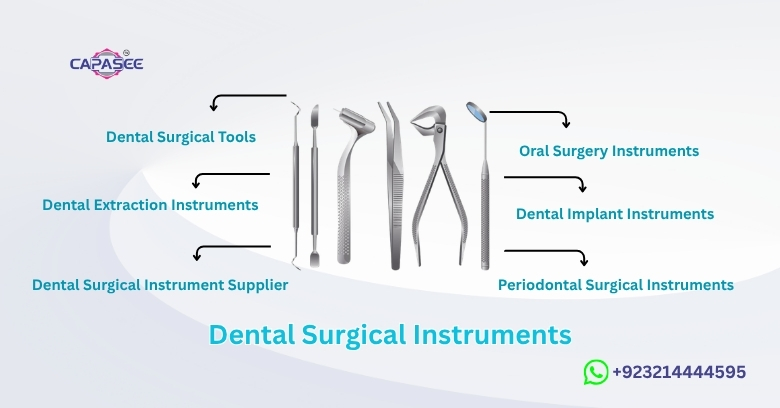
A sloppy, poorly finished forceps can quickly make an ordinary afternoon of dental surgery a long and painful afternoon for the dentist and the patient. However, many dental clinics in Pakistan continue to purchase dental surgical instruments based on the price, just to find the edges of the instruments dull, joints rusted, or sterilization cycles unsuccessful a few months later. New dental practices are springing up in Lahore, Karachi, Islamabad, and smaller cities each year, and patients are now asking tougher questions about how well your instrument tray is designed to prevent infections and thus form your reputation.
This guide explains the various types of instruments, the steel grades worth the extra cost, how to compare suppliers before ordering, and how to take care of a set so that it will last. Capasee Electro Medical Engineering has written it from first hand experience in Pakistan’s dental clinics, so you can buy it with confidence.
What Are Dental Surgical Instruments and Why Do Dental Clinics Need Them?
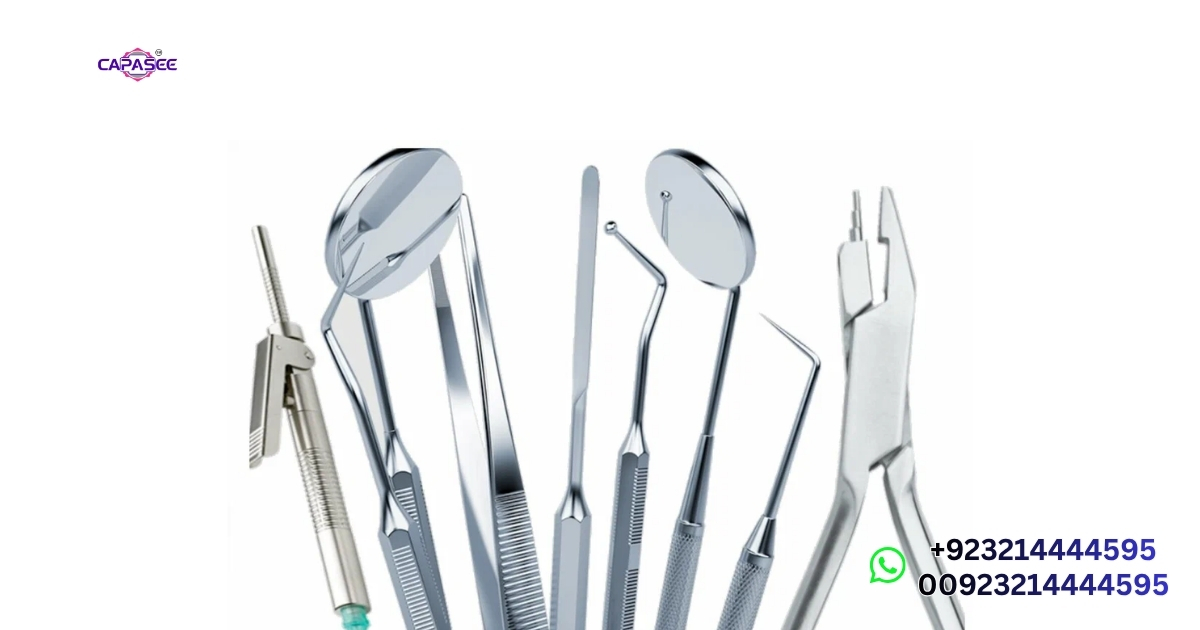
Dental surgical instruments are hand tools used by dental professionals for cutting, holding, retracting, and suturing tissue during invasive procedures. They are required for clinics during a tooth extraction, flap surgery, placing implants, gum treatment, and minor oral surgery.
Imagine that you have an examination room with no chairs, tables, or other furniture. The first affected molar case results in a referral and loss of patient and fee.
Complete List of Dental Surgical Instruments and Their Uses
Almost all surgical instruments serve one of four purposes; cutting, grasping, retraction, or suturing. This table shows the essential dental surgical instruments, such as common dental extraction instruments and oral surgery instruments, and the procedures they are used for.
| Dental Surgical Instrument | Primary Function | Common Dental Procedure |
| Extraction Forceps | Grip and remove teeth from the socket | Tooth extraction |
| Dental Elevators | Loosen teeth and separate them from the socket | Extraction and surgical removal |
| Periosteal Elevators | Reflect and retract mucoperiosteal flaps | Flap surgery and implant procedures |
| Scalpel Handles and Blades | Make precise incisions in soft tissue | Gum surgery and oral surgery |
| Surgical Scissors | Cut tissue, sutures, or flaps | Soft tissue surgery |
| Needle Holders | Hold suturing needles securely | Wound closure |
| Retractors and Mouth Gags | Keep the surgical area open and visible | Oral surgery and extractions |
| Bone Chisels, Files, and Rongeurs | Remove, smooth, or reshape bone | Implant and bone contouring procedures |
What Is the Difference Between Dental Surgical Instruments and General Dental Instruments?
General dental instruments are used for examination, cleaning, and filling, e.g., mirrors, probes, explorers, scalers, and restorative instruments. Dental surgical instruments are designed to work invasively, such as for extraction, incision, bone work, and suturing.
So what instruments are used in dental surgery? Forceps, elevators, scalpel handles, retractors, bone files, needle holders, and suture scissors. These surgical tools are tougher than examination tools and can withstand repeated sterilization and real force.
Here’s another blog you can read: Cautery Pen
Which Dental Surgical Instruments Are Essential for Dental Clinics in Pakistan?
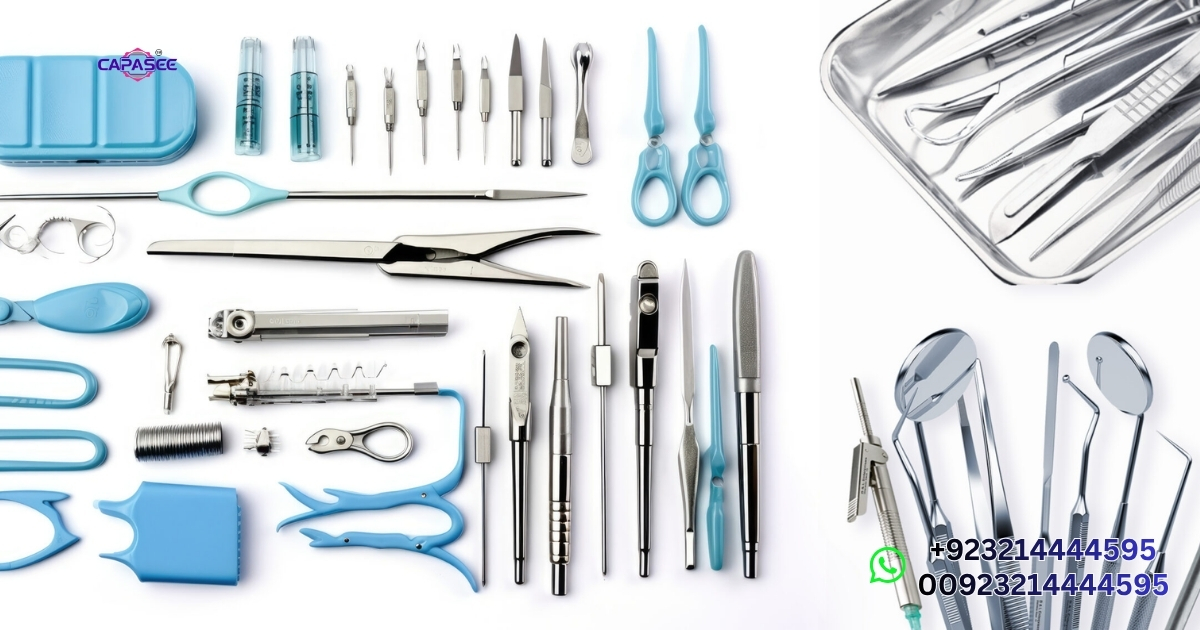
As a minimum, the dental surgical instruments required in every clinic include extraction forceps, elevators, luxators, periosteal elevators, retractors, needle holders, and suction tips. Insert implant and bone instruments when necessary for your caseload.
Purchase by volume, not by catalogue size. A general practice that primarily engages in extractions can develop a solid base set first and gradually add to it as they get more patients. And Capasee Electro Medical Engineering can help match that set to the clinic’s caseload.
Essential Dental Extraction Instruments: Forceps, Elevators, and Luxators
Each pattern fits different types of teeth, such as the upper molars or the lower incisors, and extraction forceps clasp the crown or root. Elevators and luxators loosen the tooth by first breaking the ligament fibres, then pulling.
The periosteal elevator prevents the gum from adhering to the bone, and suction tips maintain the field. The first step is to loosen the tooth, so you have less force on the tooth during removal, decreasing the chance of the root breaking.
Oral Surgery and Implant Instruments: Retractors, Bone Instruments, and Suturing Tools
For flap surgery and implant cases, it is necessary to use tissue forceps, retractors, bone chisels, bone files, and rongeurs. These dental implant surgical instruments will provide you with access, and then you can shape and smooth the bone.
The wound is closed with needle holders and the scissors used for suturing. Ensure that the needle holders have tungsten carbide inserts to give a good grip, and check that the ratchet locks easily before purchasing.
How to Choose High Quality Dental Surgical Instruments in Pakistan
Choose dental surgical instruments that are medical grade stainless steel with a smooth finish, good joint fit, and aligned tips, and are clearly autoclave rated. The specifications of a supplier and their support after the sale are as important as the steel itself.
Polished the idea with a clinic in Lahore that purchased an inexpensive set of forceps, and the price seemed like it was right. The dentist had to do the same job twice, as the joints became stiff within six months and the tips moved out of alignment.
What Should You Check About Stainless Steel, Autoclave Compatibility, and Instrument Durability?
Good steel will not corrode, will not dull, and will not become stiff at joints after being steamed repeatedly without discoloration. Inspect box joints to see if they move smoothly, tips to make sure they are aligned, and handles to see how balanced they are in your hand.
Bad instruments reveal their deficiencies quickly. If there are spots, rough edges, or a gritty hinge after one or more autoclave cycles, then the metal or the finishing was not of the required standard. The table below outlines some of the items. Capasee Electro Medical Engineering recommends checking prior to ordering.
| Buying Factor | What Capasee Electro Medical Engineering Recommends Checking | Why It Matters |
| Material Grade | Medical grade stainless steel suitable for dental use | Improves strength, corrosion resistance, and lifespan |
| Finish | Smooth, polished surface with no rough edges | Supports easier cleaning and sterilization |
| Autoclave Compatibility | Instruments rated for repeated steam sterilization | Prevents rusting, warping, and joint problems |
| Precision | Proper jaw alignment, sharp tips, and balanced handles | Improves control during delicate procedures |
| Instrument Range | Extraction, periodontal, oral surgery, and implant instruments | Helps clinics standardize their surgical kits |
| Supplier Support | Clear product specifications, warranty or after sales guidance, and bulk availability | Reduces purchasing risk for clinics and distributors |
Where Can You Buy Dental Surgical Instruments in Pakistan? A Clinic, Hospital, and Wholesale Buying Guide
In Pakistan, you can purchase dental surgical instruments from local medical suppliers, dental instrument suppliers, and wholesale suppliers. Capasee Electro Medical Engineering is a supplier to clinics, dental hospitals, distributors, and institutional buyers of extraction, periodontal, oral surgery, and implant instruments.
Single clinics typically begin with a basic kit, and hospitals and distributors place bulk orders for standard sets. Dental surgical instrument costs in Pakistan vary according to steel quality, surgical instrument finish, and the quantity of the order; therefore, request a written quote with all the details. In Pakistan, wholesale dental instruments are available at a lower price per instrument, provided they come with a grade and warranty from the supplier, which is confirmed in writing.
Buy Now: Our Products
Dental Surgical Instrument Care, Sterilization, and Common Buying Mistakes
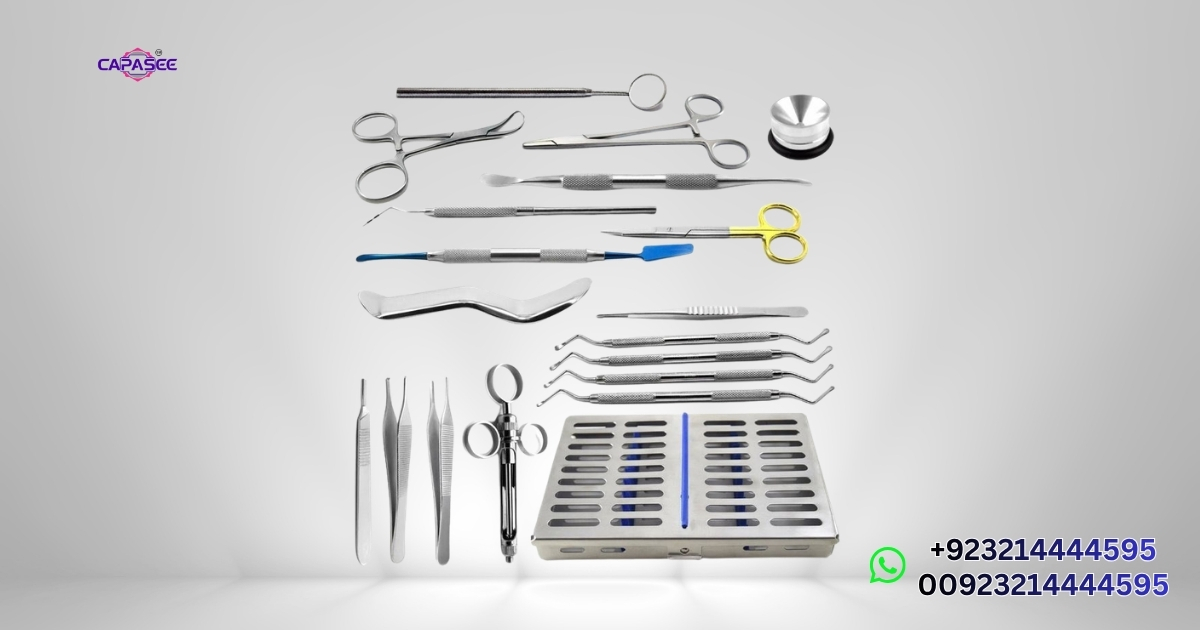
Proper care involves complete cleaning after use, drying thoroughly, and autoclaving in a proper load. Failure to carry out any of these steps reduces instrument life and increases the risk of infection. When you make a hasty purchase decision, most of the time you get the wrong item, but a quick checklist can save money in the end.
In a clinic in Karachi, the dried up blood corroded the hinges of the instruments within weeks of being used. No cost to fix the workflow; some cost to replace the set.
How Do You Clean and Sterilize Dental Surgical Instruments Safely?
Always do it this way:
- Pre clean: Rinse blood and debris off the metal as soon as possible after use to prevent the blood from drying onto the metal.
- Wash: Hand scrub with a soft brush or use an ultrasonic cleaner for hinges or serrations.
- Rinse and dry: Use clean water and wipe dry with a lint free cloth.
- Inspect: Check for cracks, stiff joints, bent tips, and residues.
- Package: Put the instrument in a sterilization pouch or a wrapped tray, holding the hinged instruments open.
- Autoclave: Perform a validated steam cycle, and allow the load to dry before storing.
Do not use strong chemicals like bleach, as this can also cause pitting of the steel. Avoid overloading trays, as steam needs to reach all instruments, and never place instruments on a tray while they are wet.
Common Mistakes When Buying Dental Surgical Instruments Online in Pakistan?
The most serious error is one based on the price. Others are failure to check the specifications, purchase of incomplete kits, failure to check compatibility, etc.
Always request and verify that the supplier is offering material, autoclave rating, and terms of warranty in writing before payment. Ensure that each type of forceps is consistent with the teeth that you typically treat and account for what is actually in each kit. Capasee Electro Medical Engineering provides specifications in advance for buyers to compare suppliers on facts.
Frequently Asked Questions (FAQs)
What are the 54 basic surgical instruments?
There is no official list of 54. Basic sets are collections of tools grouped according to the job they do; cutting, grasping, clamping, retracting, and suturing.
What are the 12 dental specialties?
The ADA has identified the following areas of specialization; endodontics, orthodontics, periodontics, prosthodontics, pediatric dentistry, oral surgery, oral pathology, oral radiology, oral medicine, orofacial pain, dental anesthesiology, and public health.
What are 10 common instruments used by doctors?
A stethoscope, scalpel, forceps, scissors, thermometer, otoscope, blood pressure cuff, syringe, hemostat, and reflex hammer are a few.
What are 23 forceps used for in dentistry?
Most frequently, they are used to remove molars and the back teeth. The beaks fit into the area between the roots. The names of patterns can also differ depending on the region; please check with your supplier.
What are the main categories of dental surgical instruments?
The main devices are extraction instruments, periodontal instruments, oral surgery instruments, implant instruments, and suturing instruments. Capasee Electro Medical Engineering is the supplier of all five.
What material are dental surgical instruments made of?
Most of them are constructed with medical grade stainless steel. Some tools include tungsten carbide inserts for grip or titanium for a lighter weight.
How should dental surgical instruments be cleaned and maintained?
Clean immediately after use, dry thoroughly, and autoclave. Clean and lubricate hinges regularly; change any instrument that has cracks or stiff joints.
What certifications should quality dental instruments carry?
Check for ISO 13485 manufacturing, CE marking, and DRAP registration in Pakistan. Request copies of the certificates from your supplier before ordering.
Conclusion
The best dental surgical instruments are made with the correct type of steel, carefully engineered to the right finish and backed by a supplier who knows and cares. Include an easy cleaning and sterilizing procedure, and a nice selection will last your clinic for months rather than years. You’ll save your patients, your reputation, and your budget by doing so.
When buying next, review the specifications, compare the kit to your caseload, and request everything you are interested in in writing. Once you are ready to construct or upgrade your tray, contact Capasee Electro Medical Engineering for a quote for your clinic, hospital, or distribution. Practices with strong instruments are strong practices, and every Pakistani dentist deserves trustworthy tools.
2 thoughts on “Dental Surgical Instruments”