
Have you ever thought about those medical tools that seem to be in practically every operating room but aren’t talked about too much? You’re not the only one who has asked, What is a cautery machine used for? It’s easy to get confused by how these machines function and why they’re so vital, whether you’re a student, a doctor, or just inquisitive.
We’ll talk about what cautery machines are used for, how they work, and why they’re so important in modern medicine in this blog. We’ll explain what they are and how they help in simple words, from surgery to wound care. By the end, you’ll know exactly how these machines help save lives and make medical care safer.
What is a Cautery Machine Used For? Expert Guide by Capasee
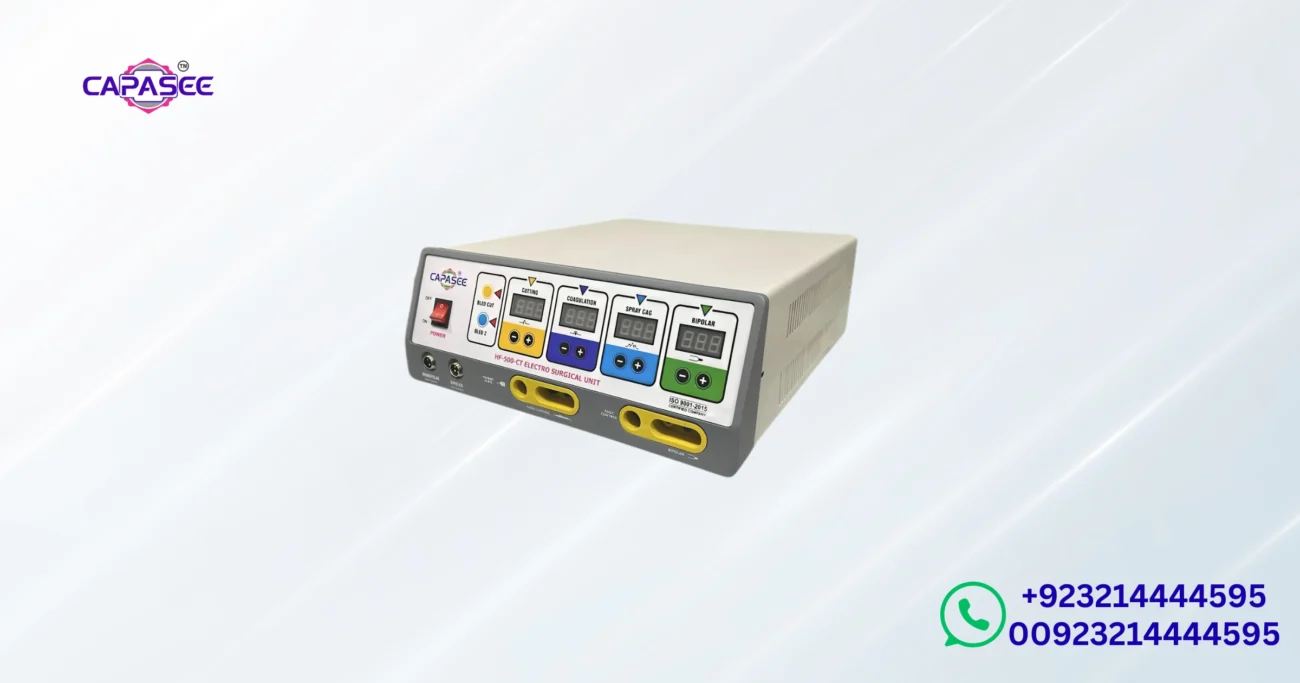
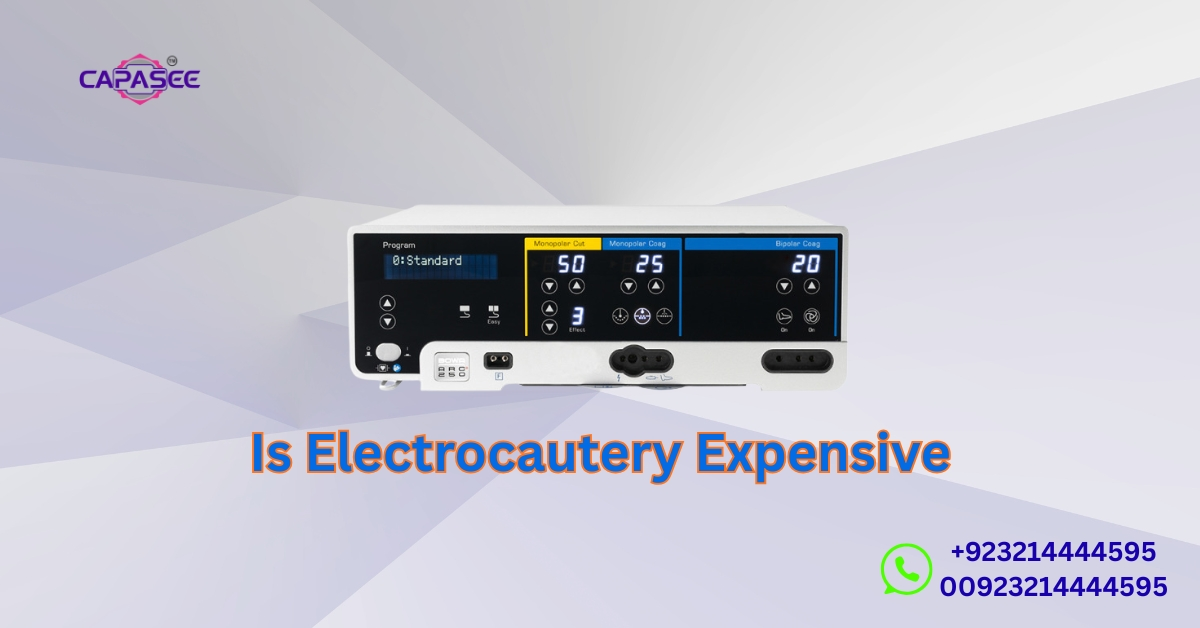
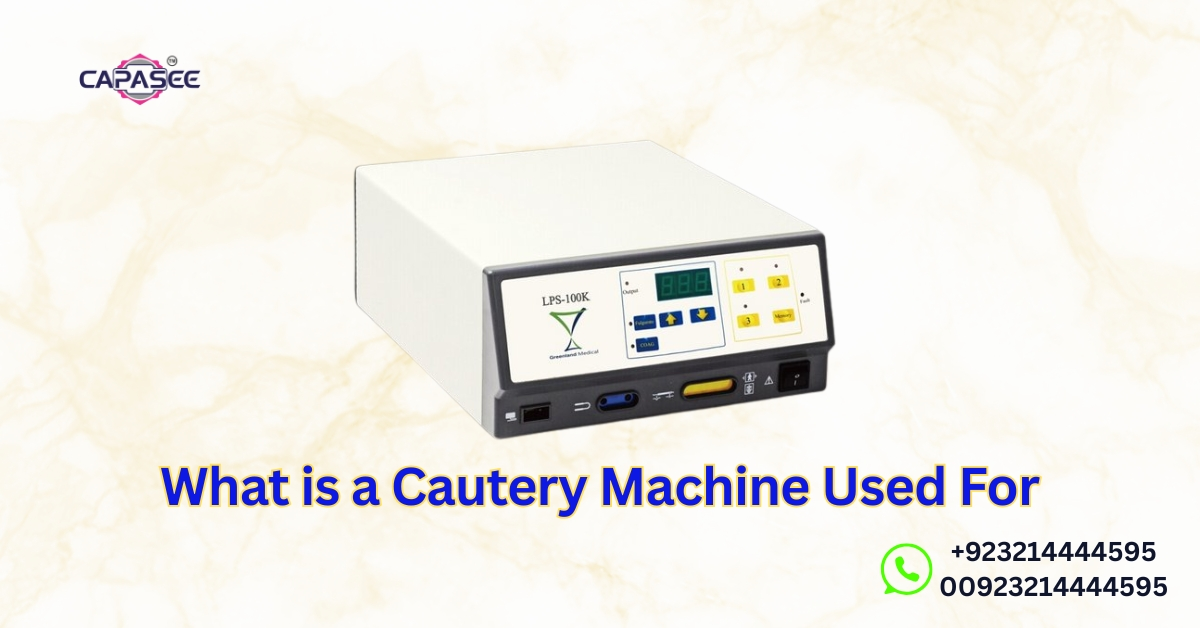
A cautery machine used in surgery is a tool that doctors often utilize during surgical procedures. It helps surgeons stop bleeding and cut by utilizing heat. This heat either slices through tissue or makes blood vessels stick together. The device operates by sending an electric current through a probe, which seals the tissue with heat. This means less bleeding and a quicker recovery after surgery.
Cautery machines are very important for many types of surgery, including simple ones. During surgery, they stop bleeding by sealing blood arteries. This is really important for stopping bleeding and making sure surgeries go well. These types of surgical cautery tools make surgeries go more smoothly and with fewer problems. Every doctor needs a cautery machine for electrosurgery.
Electrocautery Uses and Surgical Cautery Applications with Capasee
The cautery machine used by surgeons is a strong tool for cutting and sealing tissue. It is an important medical device for controlling bleeding because it seals blood arteries and helps stop bleeding. The Capasee Electro Medical Engineering cautery machine used in these procedures is well known for being very accurate in surgical cautery applications, and it gives trustworthy outcomes during electrosurgical treatments.
The electric cautery tool feature makes sure that electrothermal surgery is safe and effective. The cautery equipment utilized helps stop problems like too much blood loss by sealing tissue with heat. It works well for cauterizing surgical wounds and can be used for both small and large surgeries.
You May Also Read This Blog: Cautery Machine Price in Turkey
How Cautery Machines Work: Insights from Capasee Experts
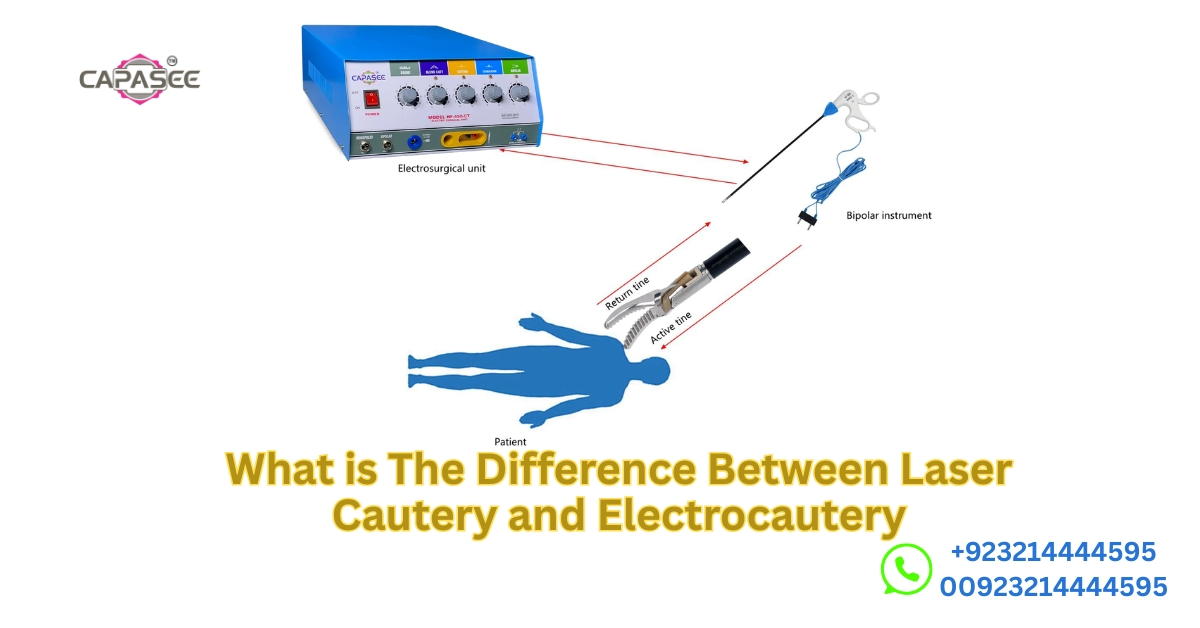
Cautery machines work by generating heat through electrical current. Surgeons can cut and coagulate tissue with surgical tools that have been heated up. The electric current is carefully managed so that just the area that needs it is impacted. This makes the technique particularly effective because it causes less damage to nearby tissues. Because the tool is so precise, it does very little tissue damage and speeds up healing.
One of the benefits of having a cautery machine used in surgical settings is that the heat it creates can be utilized to close blood vessels, which stops bleeding right away. This procedure, which is called thermal coagulation in surgery, is very helpful for delicate surgeries. The cautery machine used to cut and coagulate tissue helps ensure the patient will bleed less and heal faster. This electric cautery equipment used in modern medicine is an essential part of many operating rooms.
Types of Cautery Machines Offered by Capasee Electro Medical Engineering
Capasee Electro Medical Engineering makes a range of electrosurgical tools that doctors can employ. Monopolar and bipolar cautery machines are two examples. Monopolar machines are commonly employed in significant surgical procedures due to their efficacy in cutting and coagulating tissue. Bipolar cautery, on the other hand, is usually utilized for smaller, more delicate treatments since it gives the surgeon more control over the region being treated.
In the operating room, each type of machine has its own job to do. Surgeons pick the electrosurgical equipment that will provide them the highest accuracy based on the technique. Cautery tools for doctors make surgery easier and safer, and they also provide them with more options for surgical tools.
Monopolar vs Bipolar Cautery: Which Mode Does Capasee Recommend?
When choosing between monopolar vs bipolar cautery, the selection relies on the procedure being performed and the type of cautery machine used. Monopolar cautery is the best way to cut tissue and seal off large blood arteries during electrosurgery. It is more flexible and is used in both big and small surgeries.
Bipolar cautery, on the other hand, is generally suggested for smaller, more accurate treatments. It gives you better control over the flow of electricity, which makes it great for delicate electrocautery work in hard to reach places. Capasee Electro Medical Engineering says that both varieties work well, but you should talk to a doctor to find out which one is ideal for the procedure.
Benefits of Cautery Machines by Capasee: From Bleeding Control to Tissue Removal
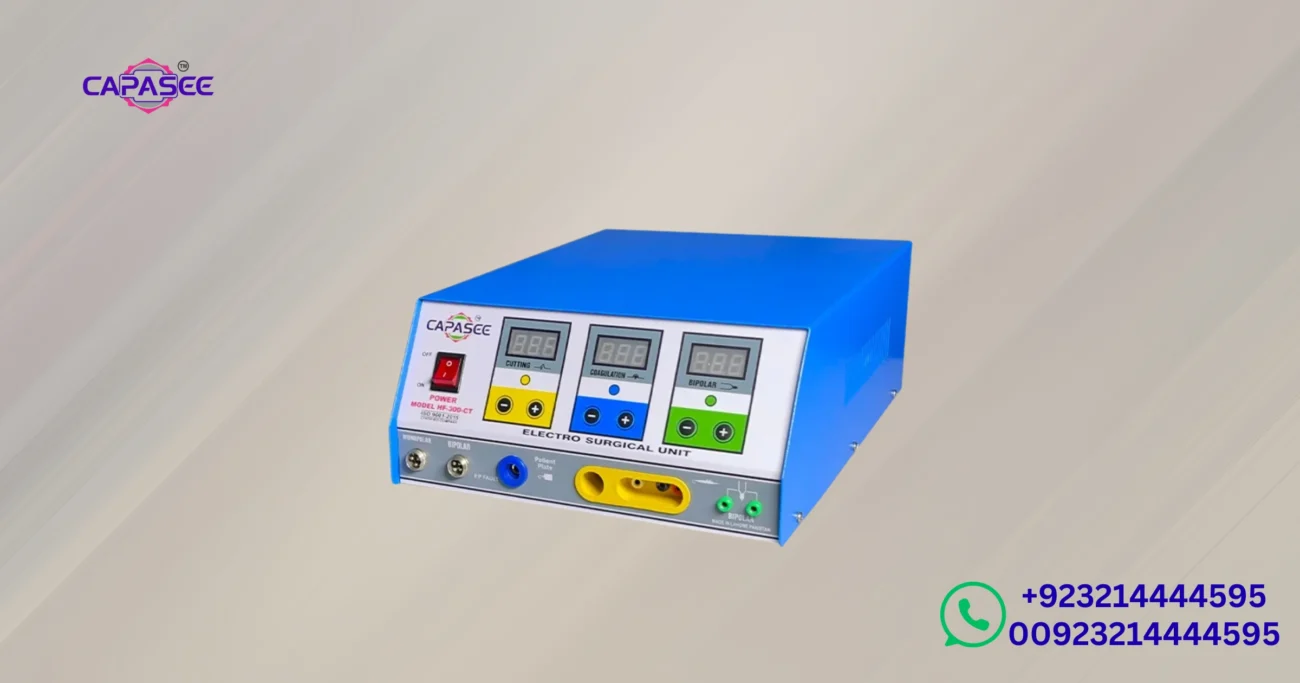
Cautery machines are significant in most procedures where they are required to cut and coagulate tissue. These devices, like our cautery machine, are applied to seal blood vessels and cauterize surgical wounds, which reduces bleeding during surgery. Cautery devices aid in the sealing of thermal tissues and enhance the safety of surgery by enhancing hemostasis. The electrosurgery technology is also used by surgeons to perform delicate procedures safely and successfully, which reduces bleeding and other recovery processes in patients.
Medical cauterization treatment with these machines is also easier. Doctor caution tools simplify the disposition of the unwanted tissue or skin blemishes in minor surgery. The use of electrocautery is increasing, especially in surgery of the dermatology and gynecology specialties, where thermal coagulation is of utmost importance in removing all tissue necessary. The electric cautery tool option allows you to perform electrosurgery with minimal damage to the tissue and is therefore suitable for most treatments.
Read More: Our Products
Cautery in Dermatology and Gynecology: Specialized Uses by Capasee
A cautery machine used in dermatology helps safely and effectively remove skin lesions. These tools use electrosurgery technology to exclusively treat the bad tissue, leaving the rest of the body intact. In gynecology, a cautery machine used for tissue removal and bleeding control offers the same level of accuracy. The Capasee surgical cautery device is very important in these fields since it gives patients a lot of precision with minimal pain.
The electrocautery has a wide variety of applications, which indicates the utility of the device. The advantages of cutting and coagulation of tissue with low risk of infection are known in medical cauterization, dermatology, and gynecology. This is the reason why many physicians in different specialties prefer the Capasee cautery machine.
Safety, Pricing, and Advanced Features of Capasee Electrosurgical Cautery Machine
Capasee Electro Medical Engineering has integrated the state of the art safety measures in their electrosurgical caution devices. Such machines are built to avoid any overheating and destruction, so that there is a controlled environment where cutting and coagulation of tissue takes place. Having user friendly controls, the Capasee cautery machine makes sure that surgeons can do electrosurgical operations safely and with confidence. Proper maintenance and quality ensure that the machine can run successfully during its lifetime.
The average cautery machine used in hospitals costs between PKR 60,000 and PKR 90,000, making it a stable investment in most hospitals and clinics. In light of the high quality features and security in electrocautery, it is very beneficial to medical practices interested in improving their surgical capacity. We provide a variety of cautery machines used to fit diverse clinical applications, which simplifies the process of locating a machine that fits your practice.
Cautery Machine Cutting Mode vs Coagulation Mode Explained
There are two basic modes on a Capasee cautery machine used in surgeries, cutting mode and coagulation mode. Cutting mode is used to carefully remove tissue during surgery, and coagulation mode is used to control bleeding by sealing blood vessels. You can quickly switch between these settings based on the type of procedure. Both modalities are flexible and precise, whether you’re doing electrosurgery or sealing tissue with heat.
Doctors need to know the distinction between cutting and coagulating tissue. The cautery machine’s cutting mode is great for getting rid of extra skin or tissue, and the coagulation mode helps seal blood vessels, which is important for stopping bleeding during surgery. Capasee devices are made to do both jobs well, so they may be used in any operating room.
FAQ’s
What is another name for a cautery machine?
An electrocautery or diathermy machine is another name for a cautery machine.
What happens to skin after cautery?
After cautery, the skin may create a scab or crust. This protects the area while it heals.
What is cautery and why is it used?
Cautery is a medical practice that employs heat to cut tissue or seal blood arteries. This stops bleeding during surgeries.
What kind of wounds can be cauterized?
Cautery is used on surgical wounds, skin lesions, and bleeding blood vessels to ensure that the wounds heal and the blood vessels cease bleeding.
Can I shower with a cauterized wound?
Close water contact on a cauterized wound is not to be had until the wound is healed to avoid infection.
Final Thoughts
A cautery machine used during surgery is important in improving the efficiency and safety of surgery. It can be used in the case of bleeding, tissue cutting, or vessel resealing. In any case, these machines provide more accurate control over the operation. Having high quality features and special uses in different diagnostics, such as dermatology and gynecology, cautery machines are indispensable in modern medicine. The knowledge of their functionality and advantages could enable the patients and the professionals to make wise decisions regarding their usage, which guarantees effectiveness and safety in medical procedures.